
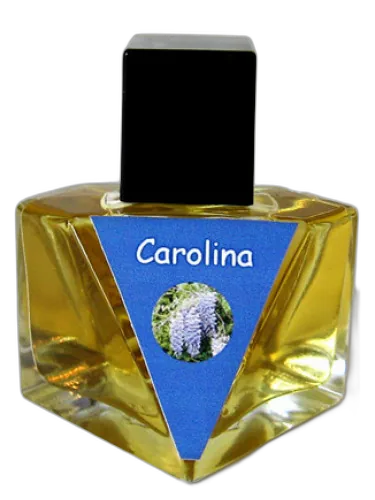
Carolina Olympic Orchids Artisan Perfumes
At a glance
Is Carolina Olympic Orchids Artisan Perfumes worth trying?
Carolina by Olympic Orchids Artisan Perfumes is a Aromatic fragrance for women and men.
- Best match
- Evening wear in Fall
- Performance feel
- Very Good longevity with Moderate sillage
- Signature profile
- green, white floral, floral with Hay, Honeysuckle, Tobacco
The first impression
Carolina by Olympic Orchids Artisan Perfumes is a Aromatic fragrance for women and men. Carolina was launched in 2010. The nose behind this fragrance is Ellen Covey.
What shapes the scent
The perfumer behind it

Ellen Covey
Ellen Covey is the founder and perfumer behind Olympic Orchids Artisan Perfumes. She has created a diverse range of fragrances including African Orchid, Arizona, and Blackbird. Her work often draws on natural and botanical inspirations, resulting in unique and evocative scents.
Notes pyramid
All Notes
Complete scent profile
 Hay
Hay
 Honeysuckle
 Tobacco
 Magnolia
 Jasmine
 Tonka Bean
 Pine
Pine
 Lavender
 Grass
Grass
 Kudzu
Kudzu
The mood it creates
The Alchemist Archetype: Portrait of Carolina Olympic Orchids Artisan Perfumes
Essence
This person is an Alchemist-a seeker of transformation, a connoisseur of the rare and the refined. They are drawn to fragrances that defy convention, scents that are not merely pleasant but evocative, layered, and intellectually stimulating. Carolina Herrera’s Olympic Orchids Artisan Perfumes is not a fragrance for the passive wearer; it is a statement of depth, complexity, and a refusal to be easily categorized. The Alchemist does not wear perfume to be liked; they wear it to be understood, or at least to provoke understanding.
Style & Aesthetic
Their tastes are deliberate, often veering toward the unconventional. They appreciate craftsmanship over mass appeal, seeking out niche perfumers, small-batch spirits, and artisanal goods. Their wardrobe is a curated blend of timeless elegance and subtle eccentricity-perhaps a well-tailored blazer paired with an unusual brooch, or a minimalist dress offset by a striking, asymmetrical necklace. They are drawn to textures that tell a story: raw silk, aged leather, untreated wood.
In art, they favor the abstract, the surreal, or the deeply symbolic-works that demand interpretation rather than passive consumption. Their bookshelf is a mix of philosophy, alchemical texts, and modernist poetry. They do not consume culture; they interrogate it.
Their daily life is a ritual. Mornings might begin with a carefully prepared pour-over coffee, evenings with a glass of something obscure-perhaps a smoky mezcal or an unfiltered sake. They keep odd hours, sometimes working late into the night when inspiration strikes. Their home is a sanctuary, filled with objects that hold meaning: a vintage alembic still, a first-edition book, a single dried orchid pressed between glass.
They are drawn to travel, but not to tourist traps-they seek places where history and mystery intertwine: an abandoned apothecary in Prague, a hidden perfumery in Grasse, a midnight jazz club in New Orleans.
Philosophy & Values
The Alchemist operates on the belief that life is a process of refinement. They are not content with surface-level truths; they dig, they experiment, they distill. Their guiding principle is transformation-not just of materials, but of the self. They value authenticity, but not in the simplistic sense of "being yourself." To them, authenticity is a pursuit, a constant act of becoming.
They are drawn to paradoxes: the idea that decay can be beautiful, that restraint can be decadent, that silence can be louder than noise. They distrust dogma but respect wisdom traditions, often synthesizing ideas from esoteric philosophies into their personal worldview.
Relationships
The Alchemist is not a social butterfly, nor are they a recluse. They move through the world with a quiet magnetism, attracting those who are intrigued by their depth. Their friendships are few but intense, built on mutual fascination rather than convenience. They are drawn to people who challenge them, who refuse to be predictable.
Romantically, they seek a partner who is both an equal and an enigma-someone who can match their intellectual curiosity but remains just out of reach, always revealing new layers. They are not possessive; they believe love, like perfume, should evolve over time.
Shadow
The Alchemist’s greatest strength-their relentless pursuit of refinement-can also be their downfall. Their obsession with depth can make them impatient with the mundane, leading to a subtle arrogance. They may dismiss those who prefer simplicity as "unawakened," forgetting that not everyone seeks alchemy in every moment.
Their love of transformation can also make them restless, always chasing the next revelation rather than appreciating what is already present. They may struggle with commitment, not out of fear, but out of an insatiable curiosity-always wondering if there is something more they are missing.
At their worst, they can become lost in their own labyrinth of symbols, mistaking obscurity for profundity. There is a fine line between the esoteric and the pretentious, and the Alchemist must tread it carefully.
Conclusion
To wear Olympic Orchids is to embrace the Alchemist within-to acknowledge that life is not static, that identity is not fixed, and that beauty is often found in the interplay of light and shadow. This person does not seek to be decoded; they seek to provoke decoding. In their pursuit of the extraordinary, they remind us that even the most ordinary things-a scent, a glance, a fleeting thought-can be transmuted into gold.
But like all alchemists, they must remember: the philosopher’s stone is not just about turning lead into gold. It is about recognizing that the lead itself was never truly base to begin with.
If you like this, try these
Fragrances with a comparable profile - shared accords, notes, and character.
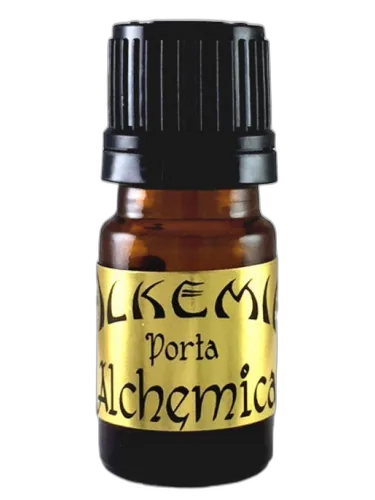
Alkemia Perfumes
Porta Alchemica Alkemia Perfumes
Shared top notes: hay, tonka bean

Hendley Perfumes
Mown Hendley Perfumes
Shared top notes: hay, tobacco
Soivohle
Tobacco Stick Soivohle
Shared top notes: hay, tobacco

The Zoo
Carré Blanc The Zoo
Shared top notes: hay, tonka bean

Pierre Guillaume Paris
Orchidivy 21.1 Pierre Guillaume Paris
Shared top notes: hay, tonka bean