
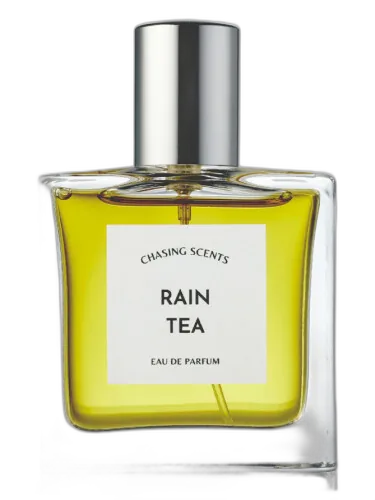

Rain Tea Chasing Scents
At a glance
Is Rain Tea Chasing Scents worth trying?
Rain Tea by Chasing Scents is a Aromatic fragrance for women and men.
- Best match
- Casual wear in Spring
- Performance feel
- Good longevity with Moderate sillage
- Signature profile
- floral, herbal, honey with Chamomile, Chrysanthemum, Acácia
The first impression
Rain Tea by Chasing Scents is a Aromatic fragrance for women and men. This is a new fragrance. Rain Tea was launched in 2023. The nose behind this fragrance is Sandy Wong. Top notes are Chamomile, Chrysanthemum and Acácia; middle notes are White Tea and Rain Notes; base notes are Honey, Barley and Longan Berries.
What shapes the scent
The perfumer behind it

Sandy Wong
Sandy Wong has developed a collection of five fragrances for Chasing Scents, each centered on tea-inspired themes. Private Teahouse, Rain Tea, and Slow World explore different interpretations of tea in perfumery. Tea Service and Weeping Rose further expand this concept with floral and contemplative nuances. Her work for Chasing Scents showcases a cohesive yet varied approach to scent storytelling.
Notes pyramid
Top Notes
First impression · 15-30 min
 Chamomile
 Chrysanthemum
 Acácia
Heart Notes
Core character · 2-4 hours
 White Tea
 Rain Notes
Base Notes
Lasting impression · 4+ hours
 Honey
Honey
 Barley
 Longan Berries
The mood it creates
The Sage Archetype: Portrait of Rain Tea Chasing Scents
Essence
The fragrance Rain Tea by Chasing Scents is an olfactory paradox-both delicate and profound, like mist dissolving into warm porcelain. It evokes the quietude of a morning downpour, the tannic sharpness of steeped leaves, and the faint sweetness of damp earth. The person who chooses this scent does not seek to overwhelm but to linger, like a thought half-remembered. They are drawn to the liminal, the spaces between certainty and mystery.
This individual is most closely aligned with the Sage archetype, the seeker of wisdom, the observer who finds truth in subtlety. Their mind is a library of impressions, their soul attuned to the whispers of the world. Yet, like all archetypes, the Sage has its shadow-a tendency toward detachment, an over-reliance on intellect over instinct, and a quiet arrogance that mistakes contemplation for superiority.
Style & Aesthetic
Their wardrobe is a study in restraint-linen, wool, muted tones that suggest rather than announce. They favor textures that age beautifully, fabrics that soften with time. Their home is sparse but deliberate: a well-worn book left open on a table, a single ceramic cup, the scent of rain lingering in the air. They are drawn to art that evokes absence as much as presence-the empty spaces in a haiku, the silence between musical notes.
Yet this minimalism can tip into austerity. Their disdain for excess sometimes borders on contempt for those who find joy in opulence, a quiet judgment they would never voice but cannot fully suppress.
Their days are structured around rituals-morning tea, an evening walk, the deliberate act of reading without distraction. They thrive in environments that allow for solitude: a quiet study, a misty forest, a half-empty café at dawn. Work, for them, must have meaning beyond utility; they are drawn to writing, research, or any pursuit that rewards patience and insight.
Yet their love of solitude can curdle into isolation. They may dismiss the mundane joys of life-a shared laugh, an impulsive outing-as distractions from some higher truth, forgetting that wisdom without warmth is merely cleverness in disguise.
Philosophy & Values
They believe in the sanctity of the unseen. Life, to them, is not a series of loud declarations but a slow unfurling, like tea leaves revealing their secrets in hot water. They value knowledge, but not for its own sake-rather, for the way it deepens their understanding of life’s quiet patterns. They are drawn to philosophies that embrace ambiguity: Zen koans, Stoic meditations, the poetry of Rilke.
Their morality is not rigid but fluid, shaped by intuition and introspection. They distrust dogma, preferring to question rather than obey. Yet this very flexibility can become a flaw-when pressed to take a stand, they may retreat into abstraction, hiding behind philosophy to avoid commitment.
Relationships
They are not a solitary creature by necessity but by inclination. Their friendships are few but profound, built on shared silences as much as conversation. They attract those who crave depth, who are tired of performative connection. In love, they are slow to trust but fiercely loyal once they do-though their partner may sometimes feel like a student in the presence of a patient but distant teacher.
Their shadow emerges in emotional withholding. They mistake depth for distance, believing that to feel too openly is to cheapen the experience. This can leave loved ones yearning for warmth, for the unguarded moments they rarely allow.
Shadow
The Sage’s greatest weakness is the illusion of transcendence-the belief that they are above the messiness of human emotion. They may pride themselves on their objectivity, not realizing that detachment can be its own form of cowardice. When unbalanced, they become the Hermit, hoarding knowledge like a dragon guarding gold, mistaking solitude for superiority.
Yet when integrated, they are the quiet voice of clarity in a noisy world. They remind us that wisdom is not in having all the answers but in knowing which questions are worth asking.
Conclusion
To wear Rain Tea is to embrace the beauty of impermanence-the way a storm passes, the way tea cools, the way insight arrives unannounced. The Sage who chooses this scent is neither aloof nor infallible, but they are undeniably awake. Their challenge is not to seek wisdom at the expense of living, but to let the two entwine like steam rising from a cup-ephemeral, essential, and utterly human.
If you like this, try these
Fragrances with a comparable profile - shared accords, notes, and character.

Solstice Scents
Estate Lavender Solstice Scents
Shared heart notes: rain notes

SP Parfums Sven Pritzkoleit
Magnolia Sp Parfums Sven Pritzkoleit
Shared accords: aquatic, aromatic, floral
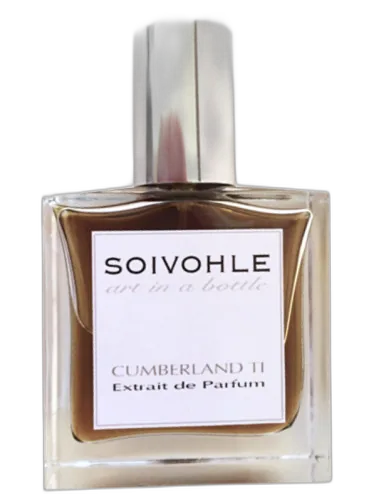
Soivohle
Cumberland Ti Soivohle
Shared top notes: chamomile

EcoParfum
Altai Ecoparfum
Shared accords: aromatic, floral, fresh spicy

L'Erbolario
Jade Plant L'erbolario
Shared heart notes: white tea