


Magnolia Sp Parfums Sven Pritzkoleit
At a glance
Is Magnolia Sp Parfums Sven Pritzkoleit worth trying?
Magnolia by SP Parfums Sven Pritzkoleit is a Floral Green fragrance for women and men.
- Best match
- Casual wear in Spring
- Performance feel
- Good longevity with Moderate sillage
- Signature profile
- citrus, ozonic, green with Yuzu, Kumquat, Magnolia
The first impression
Magnolia by SP Parfums Sven Pritzkoleit is a Floral Green fragrance for women and men. Magnolia was launched in 2019. The nose behind this fragrance is Sven Pritzkoleit.
What shapes the scent
The perfumer behind it

Sven Pritzkoleit
Sven Pritzkoleit is a German perfumer who founded SP Parfums, a line that emphasizes natural and seasonal ingredients. His fragrances include limited-edition Christmas scents like Cassis and Palo Santo, as well as year-round offerings such as Dark Rose and Green Tea. Pritzkoleit's work is characterized by a focus on clarity and purity, often highlighting single-note accords.
Notes pyramid
All Notes
Complete scent profile
 Yuzu
Yuzu
 Kumquat
 Magnolia
 Ivy
Ivy
 elemi
elemi
 Rain Notes
 Violet Leaf
 Musk
Musk
 Cedar
Cedar
 Amber
Amber
The mood it creates
The Sage Archetype: Portrait of Magnolia Sp Parfums Sven Pritzkoleit
Essence
Magnolia-elegant, luminous, yet with an undercurrent of quiet strength. It is not a scent that demands attention but rather one that lingers, leaving an impression of refined depth. The person who chooses Magnolia Sp by Parfums Sven Pritzkoleit is drawn to its duality: the soft floral sweetness balanced by a subtle, almost intellectual crispness. This fragrance is not for the ostentatious or the restless; it is for those who seek meaning beneath the surface, who value clarity and introspection as much as beauty.
Style & Aesthetic
Their aesthetic is minimalist yet intentional. They prefer clean lines, muted tones, and textures that reward closer inspection-cashmere, linen, unpolished wood. Their wardrobe is curated, not cluttered; each piece serves a purpose, whether functional or expressive.
In art, they gravitate toward subtlety over spectacle. They admire the precision of Agnes Martin’s grids, the quiet intensity of Tarkovsky’s films, the restrained elegance of a Japanese tea ceremony. Music is either deeply structured (Bach, Arvo Pärt) or so abstract it becomes meditative (ambient soundscapes).
Their life is structured but not rigid. Mornings are sacred-perhaps spent reading, journaling, or walking in solitude. They thrive in environments that allow for contemplation: a quiet study, a sunlit garden, a café where they can observe without being observed.
Work is either academic, artistic, or analytical-something that engages their mind without demanding unnecessary social performance. They may be a researcher, a writer, a curator, or a therapist. They do not chase status, but they do seek mastery.
Philosophy & Values
Their philosophy is one of measured depth. They do not believe in blind faith or impulsive passion; they trust only what has been examined, tested, and refined. They value truth, but not the brutal kind-rather, the kind that is polished like a gem, multifaceted and precise.
They are drawn to Stoicism, Zen Buddhism, or the quiet skepticism of Montaigne. They do not dismiss emotion, but they believe it must be understood before it can be trusted. Their morality is not rigid but adaptive, shaped by reason rather than dogma.
Relationships
They are selective in their connections, preferring a few meaningful relationships over many superficial ones. Their friendships are built on shared intellectual curiosity-long conversations about philosophy, art, or the hidden patterns of the world. They are not cold, but they do not wear their heart on their sleeve; vulnerability comes slowly, if at all.
Romantically, they seek a partner who is their equal in depth but perhaps their opposite in expression-someone who can draw them out of their mind and into the immediacy of feeling. They may struggle with intimacy, not because they fear it, but because they overthink it.
Shadow
The Sage’s greatest weakness is the illusion of control through knowledge. They may believe that if they can understand something, they can master it-including their own emotions. This can lead to emotional bypassing, a reluctance to engage with the messiness of life.
At their worst, they may become aloof, overly critical, or paralyzed by indecision. They may dismiss passion as irrationality, spontaneity as recklessness. The challenge for them is to step out of the observer’s chair and into the arena-to allow themselves to be imperfect, to feel without immediately dissecting.
Conclusion
This individual is, above all, a Sage-the seeker of wisdom, the observer, the one who values knowledge not for power but for its own sake. The Sage does not rush into life; they study it, dissect it, and distill it into understanding. They are drawn to the quiet authority of magnolia, a flower that does not scream but instead exudes a quiet confidence.
Yet, like all archetypes, the Sage has a shadow. The relentless pursuit of wisdom can become detachment, an over-intellectualization of emotion that keeps them at arm’s length from raw human experience. They may mistake understanding for living, analysis for engagement.
If you like this, try these
Fragrances with a comparable profile - shared accords, notes, and character.
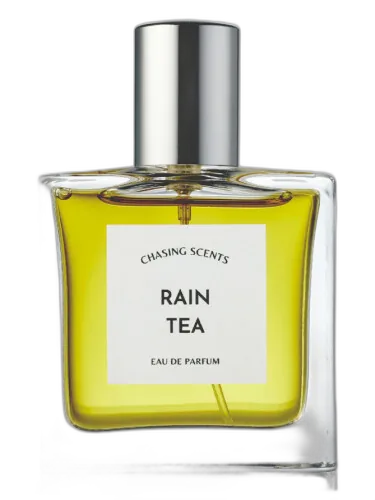
Chasing Scents
Rain Tea Chasing Scents
Shared accords: aquatic, aromatic, floral
Trussardi
Trussardi Delicate Rose Trussardi
Shared top notes: kumquat, yuzu

Salvador Dali
Black Sun Sport Salvador Dali
Shared top notes: amber, cedar, musk

Providence Perfume Co.
Branch & Vine Providence Perfume Co.
Shared accords: aquatic, aromatic, citrus

Davidoff
Good Life Davidoff
Shared accords: aromatic, citrus, floral