
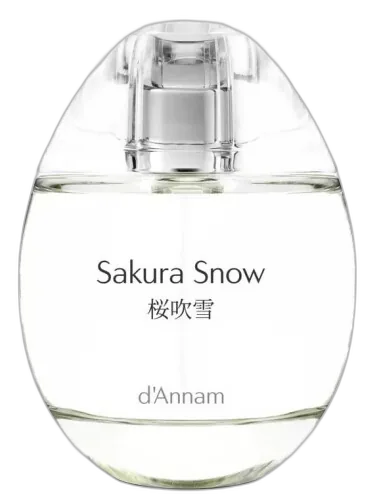

Sakura Snow D'annam
Fragrance Story
Sakura Snow by d'Annam is a Floral fragrance for women and men. Sakura Snow was launched in 2024. The nose behind this fragrance is Anh Ngo.
Composition Profile
About the Perfumer

Anh Ngo
Anh Ngo is a Vietnamese perfumer known for blending natural and synthetic notes with a poetic, narrative-driven approach. Her work for Mischief Academy reimagines classic stories through whimsical, character-inspired scents, while her Oneiros and d'Annam collections explore atmospheric landscapes and cultural memories. She often draws on her heritage and travels, as seen in d'Annam’s Da Lat and Arashiyama, which evoke specific places with subtle, evocative compositions.
Fragrance Notes
All Notes
Complete scent profile
 Cherry Blossom
 Snow
Snow
 Lily of the Valley
White Musk
Lily of the Valley
White Musk
 Solar Notes
Juniper Berries
Solar Notes
Juniper Berries
Sakura Snow D'annam by d'Annam offers a distinctive olfactory experience that stands out from other fragrances in its category.
Crafted with the finest ingredients and a blend of traditional and modern perfumery techniques, this fragrance represents the pinnacle of the perfumer's art.
Sakura Snow D'annam embodies the distinctive style of d'Annam while adding a unique chapter to their fragrance portfolio.
Character Profile
The Sage Archetype: Portrait of Sakura Snow D'annam
Essence
To wear Sakura Snow D’Annam is to embrace a paradox-a fragrance that marries the fleeting delicacy of cherry blossoms with the crisp, enduring purity of snow. The person who chooses this scent is drawn to the interplay of transience and permanence, beauty and restraint. They are, at their core, a Sage-an archetype defined by wisdom, introspection, and a quiet but unshakable pursuit of truth.
Style & Aesthetic
This individual moves through life with a measured grace, their presence neither loud nor domineering, yet impossible to ignore. Their tastes reflect a refined minimalism-clean lines in fashion, muted yet deliberate color palettes, spaces that breathe rather than suffocate. They prefer the understated elegance of Japanese design, where every object has intention, and emptiness is as meaningful as substance.
Philosophically, they are drawn to Zen Buddhism, Stoicism, or the writings of thinkers like Marcus Aurelius and Lao Tzu. They believe in the power of observation, in learning before speaking, in the quiet accumulation of insight rather than the brash assertion of opinion. Their values center on authenticity, depth, and the cultivation of inner stillness. Superficiality repels them; they seek meaning in the subtle, the overlooked, the whispers beneath the noise.
In relationships, they are selective but deeply loyal. They do not crave crowds, but they cherish the few who understand their contemplative nature. Their love is not effusive but steady-a quiet devotion that reveals itself in acts of thoughtful presence rather than grand gestures.
Their daily life is a carefully curated ritual. Mornings begin with meditation or journaling; evenings end with tea and a book. They prefer solitude but are not hermits-they seek out conversations that challenge them, art that unsettles them, experiences that expand their understanding. Travel, when they indulge in it, is purposeful-a pilgrimage to Kyoto’s temples, a silent walk through a snow-laden forest, a museum visited at dawn to avoid the crowds.
Professionally, they gravitate toward fields that reward depth-philosophy, psychology, design, or academia. They are not motivated by wealth or status but by the quiet satisfaction of mastery. If they create, their work is precise, layered, meant to be contemplated rather than consumed.
Shadow
Yet, the Sage is not without their shadows. Their pursuit of wisdom can sometimes become a retreat from the messiness of life. They may intellectualize emotions rather than feel them, analyzing heartbreak instead of grieving, dissecting love instead of surrendering to it. This detachment, though protective, can leave them isolated-a mind floating above the body, observing but not fully participating.
Their flaw is their reluctance to embrace chaos. Life, in its rawest form, is unpredictable, irrational, even ugly at times-but the Sage, in their quest for serenity, may avoid these truths. They might dismiss passion as folly, vulnerability as weakness, and spontaneity as recklessness. In doing so, they risk becoming a spectator of their own existence, wise but not fully alive.
Conclusion
The lover of Sakura Snow D’Annam is neither fragile nor cold-they are the meeting point of blossom and frost, warmth and restraint. Their strength lies in their ability to see clearly, to remain unshaken by trivialities, to find beauty in impermanence. Their weakness is their occasional refusal to let life bruise them, to risk folly for the sake of feeling.
But when they strike the balance-when wisdom does not stifle passion, when stillness does not forbid movement-they become something rare: a person who does not merely exist, but understands. And in that understanding, they find a kind of quiet immortality-not in defiance of time, but in harmony with it.
Similar Fragrances
Fragrances with a comparable profile - shared accords, notes, and character.
d'Annam
Sakura Snow D'annam
Shared accords: floral, fresh, musky
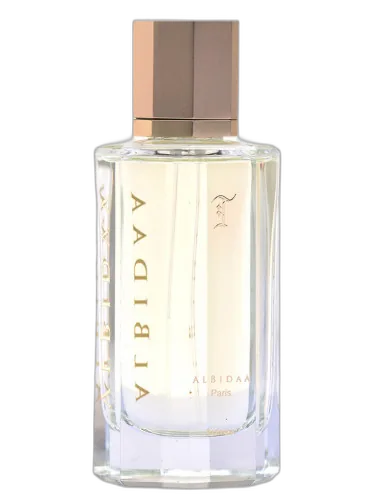
AlBidaa
T Albidaa
Shared accords: floral, fresh, musky

Oriflame
Scope Earth Wonder Oriflame
Shared accords: floral, fresh, musky
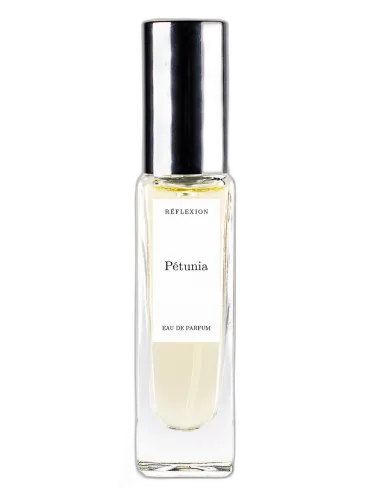
Reflexion
Pétunia Reflexion
Shared accords: floral, musky, white floral

aromag 岩兰
Magnolia De Bleu 青水木兰 Aromag 岩兰
Shared accords: floral, fresh, white floral