
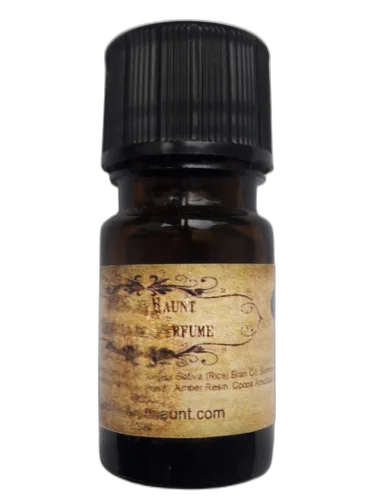
Alice's Nightmare In Wonderland Perfume Debaucherous Bath
At a glance
Is Alice's Nightmare In Wonderland Perfume Debaucherous Bath worth trying?
Alice's Nightmare in Wonderland Perfume by Debaucherous Bath is a Oriental Vanilla fragrance for women and men.
- Best match
- Evening wear in Fall
- Performance feel
- Good longevity with Moderate sillage
- Signature profile
- sweet, caramel, lactonic with Butterscotch, Pumpkin, Hay
The first impression
Alice's Nightmare in Wonderland Perfume by Debaucherous Bath is a Oriental Vanilla fragrance for women and men.
What shapes the scent
The perfumer behind it

Debaucherous Bath Team
The Debaucherous Bath Team crafts imaginative perfumes like Alice's Nightmare in Wonderland and Chocolade, merging fantasy with wearable artistry. Their work often plays with dark, sweet, or surreal contrasts, creating immersive olfactory experiences. They prioritize creativity and emotional resonance in their compositions. Their fragrances attract those who enjoy unconventional, narrative-driven scents.
Notes pyramid
All Notes
Complete scent profile
 Butterscotch
 Pumpkin
 Hay
Hay
 Peach
Peach
 Caramel
 Black Amber
 Spices
The mood it creates
The Alice Archetype: Portrait of Alice's Nightmare In Wonderland Perfume Debaucherous Bath
Essence
This person is most closely defined by the Trickster archetype-a shape-shifter who thrives on paradox, illusion, and the dissolution of boundaries. Like the perfume’s name suggests, they embody a duality: the whimsy of Wonderland and the unsettling undercurrent of a nightmare. The Trickster is neither purely mischievous nor purely destructive; they exist to disrupt norms, to question reality, and to reveal hidden truths through chaos.
Style & Aesthetic
Their appearance is an intentional contradiction-soft yet unsettling, elegant with a hint of decay. They favor vintage lace paired with leather, velvet gloves with chipped nail polish, or a pristine white dress smudged with ink. Their scent-Alice’s Nightmare in Wonderland-mirrors this duality: sweet top notes of candied fruit and vanilla give way to darker, resinous depths, like a tea party dissolving into madness.
They collect oddities: antique dolls with cracked faces, tarot decks with missing cards, pressed flowers from graveyards. Their home is a cabinet of curiosities, where nothing is purely decorative-every object tells a story, often one with a twist.
They thrive in liminal spaces-midnight cafés, abandoned theaters, the quiet hours before dawn. Their creativity is nonlinear: they may write poetry at 3 AM, paint over their canvases repeatedly, or compose music they never finish. Routine is their enemy; they are most alive when teetering on the edge of chaos.
Professionally, they gravitate toward roles that allow reinvention-artists, writers, performers, or even therapists who specialize in the unconscious. They are not suited for rigid structures; a 9-to-5 job would suffocate them.
Philosophy & Values
They reject the binary of good and evil, preferring the gray spaces where meaning is fluid. To them, morality is a performance, and truth is often found in the absurd. They believe in the power of transformation-not through force, but through destabilization. If society is a dream, they are the lucid dreamer, poking holes in its fabric just to see what leaks through.
Yet beneath their playful irreverence lies a deep yearning for authenticity. They despise hypocrisy, though they themselves may wear masks-not to deceive, but to provoke. Their greatest value is freedom, not in the sense of lawlessness, but in the refusal to be pinned down by expectations.
Relationships
They attract and repel in equal measure. Some find them enchanting; others find them unnerving. Their humor is sharp, often laced with irony, and they have little patience for small talk. They prefer conversations that spiral into the surreal-debates about whether madness is a form of genius, or whether love is just another kind of possession.
Romantically, they are drawn to those who can match their intellectual restlessness. They crave partners who are unafraid of their shadows, who understand that love is not about stability but about mutual unraveling. However, their fear of stagnation can make them elusive, vanishing when things become too predictable.
Shadow
The Trickster’s greatest weakness is their refusal to commit-to people, to ideas, even to themselves. Their love of chaos can become a prison, leaving them perpetually adrift. They may sabotage relationships or projects just as they near completion, fearing the death of possibility.
At their worst, they can be cruelly detached, treating people as puzzles to solve rather than souls to connect with. Their wit, once charming, can turn caustic-a defense mechanism against vulnerability. And if they are not careful, their fascination with darkness can consume them, leaving them lost in their own labyrinth.
Conclusion
This person is neither hero nor villain, but a provocateur of the soul. They remind us that reality is fragile, that identity is mutable, and that the most profound truths are often hidden in jest. Their life is a performance, but one with purpose-to shake others awake, even if it means plunging them into a beautiful nightmare.
They are, in the end, a living riddle-one that refuses to be solved.
If you like this, try these
Fragrances with a comparable profile - shared accords, notes, and character.
Solstice Scents
Kitchen Solstice Scents
Shared top notes: caramel, peach, pumpkin

Alkemia Perfumes
Peaches In The Summer Wind Alkemia Perfumes
Shared top notes: hay, peach

Somethin Special
Pumpkin Caramel Latte Somethin Special
Shared top notes: caramel, pumpkin
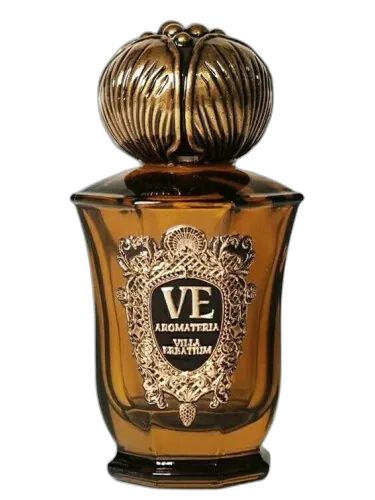
Villa Erbatium
Fig Whiskey Villa Erbatium
Shared top notes: hay, peach
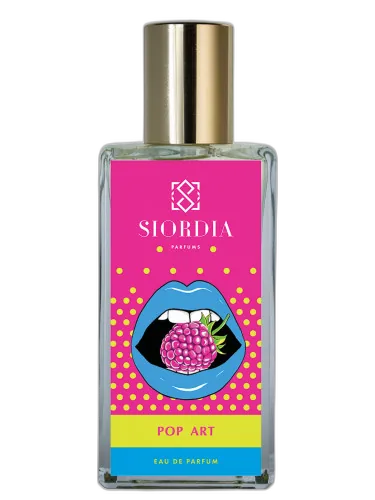
Siordia Parfums
Pop Art Siordia Parfums
Shared top notes: caramel