
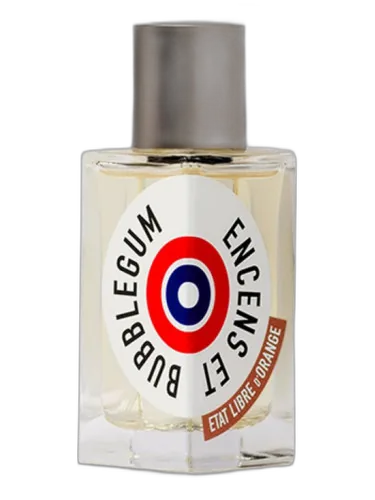
Encens Et Bubblegum Etat Libre D'orange
Fragrance Story
Encens et Bubblegum by Etat Libre d'Orange is a Oriental Floral fragrance for women. Encens et Bubblegum was launched in 2006. The nose behind this fragrance is Antoine Maisondieu.
Composition Profile
About the Perfumer

Antoine Maisondieu
Antoine Maisondieu is a French perfumer and a senior vice president at Givaudan, where he has worked for decades. He is known for creating refined, modern compositions that balance natural elegance with subtle complexity. His work includes the woody, leathery Bottega Veneta Pour Homme and the fresh, floral Acqua di Parma Magnolia Nobile.
Fragrance Notes
All Notes
Complete scent profile
 Peach
Peach
 Raspberry
 Incense
 Vanilla
 Musk
Musk
 Orange Blossom
 Lily-of-the-Valley
Character Profile
The Jester Archetype: Portrait of Encens Et Bubblegum Etat Libre D'orange
Essence
Encens Et Bubblegum by Etat Libre d'Orange is a fragrance of contradictions-incense and bubblegum, solemnity and playfulness, the sacred and the absurd. The person who adores this scent is a living paradox, embodying the Jester archetype-the trickster who disrupts norms, mocks pretension, and dances between wisdom and irreverence.
Style & Aesthetic
Their style is a deliberate clash of high and low culture. They might wear a vintage silk blouse with neon sneakers, or pair a tailored coat with a novelty pin. Their home is a curated collage-antique religious icons next to pop art, incense burning beside a bowl of candy. They reject minimalism as too sterile, maximalism as too indulgent-instead, they seek harmony in dissonance.
They are drawn to scents that defy expectations, just as they defy categorization. The sweetness of bubblegum is not childish to them-it is subversive, a way to reclaim joy in a world that takes itself too seriously. The incense is not merely spiritual-it is a reminder that even the sacred is constructed, yet still meaningful.
Philosophy & Values
This individual thrives on duality. They are neither fully serious nor entirely frivolous, but rather someone who uses humor as a scalpel, dissecting life’s absurdities while still finding beauty in its rituals. Their philosophy is one of playful skepticism-they question dogma but do so with a wink, never fully committing to cynicism or blind faith.
They are drawn to the liminal spaces-places where boundaries blur, where the sacred meets the ridiculous. A cathedral and a carnival are equally fascinating to them, not because they lack reverence, but because they see the artifice in both. Their humor is intellectual, often laced with irony, yet never cruel. They laugh at the world, but they also laugh at themselves.
Relationships
In relationships, they are magnetic but elusive. People are drawn to their wit and unpredictability, but few ever feel they truly "know" them. They are charming but guarded, using humor as both a bridge and a shield. They can be deeply loyal, but their irreverence sometimes unsettles those who prefer stability.
Romantically, they are drawn to partners who can match their intellectual playfulness-someone who understands that a debate about philosophy can end in a food fight. They despise pretension but are equally wary of those who mistake their humor for superficiality. Their love is fierce but never possessive; they value freedom too much to demand it from others.
Shadow
The Jester’s greatest strength-their ability to laugh at everything-can also be their downfall. Their refusal to take anything too seriously sometimes veers into avoidance, using humor to deflect pain rather than confront it. They may struggle with commitment, not out of fear of intimacy, but because they fear being pinned down by expectations.
At their worst, they can become cynical, mistaking detachment for wisdom. Their sharp wit, if unchecked, can wound, and their love of paradox can make them seem insincere. They must learn that not all truths need to be delivered with a smirk-sometimes, sincerity is the boldest rebellion.
Conclusion
This person is neither clown nor priest, but something in between-a holy fool who reminds us that wisdom and absurdity are not opposites, but two sides of the same coin. They do not seek to destroy tradition but to play with it, to test its boundaries and find the joy hidden within its cracks.
Their life is a performance, but not a shallow one-it is an act of defiance against a world that demands we choose between reverence and rebellion. In the end, they teach us that the most profound truths are often whispered through laughter.
Similar Fragrances
Fragrances with a comparable profile - shared accords, notes, and character.
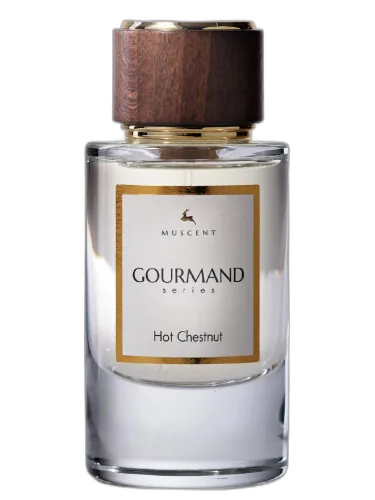
Muscent
Hot Chestnut Muscent
Shared accords: amber, balsamic, fruity

Laboratorio Olfattivo
Vanagloria Laboratorio Olfattivo
Shared accords: amber, balsamic, powdery
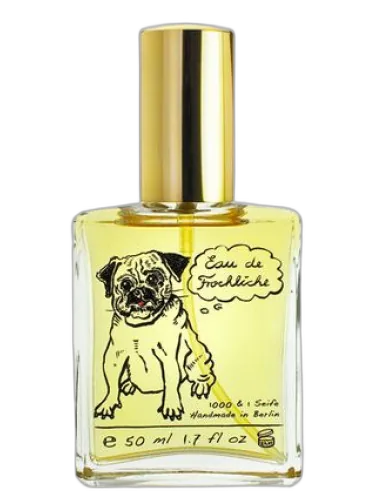
Erik Kormann
Eau De Froehliche Erik Kormann
Shared accords: amber, balsamic, fruity

Ümore
Pepperfield Ümore
Shared accords: amber, balsamic, powdery
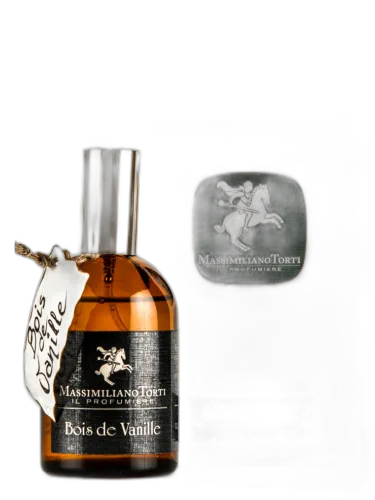
Il Profumiere
Bois De Vanille Il Profumiere
Shared accords: amber, balsamic, powdery