
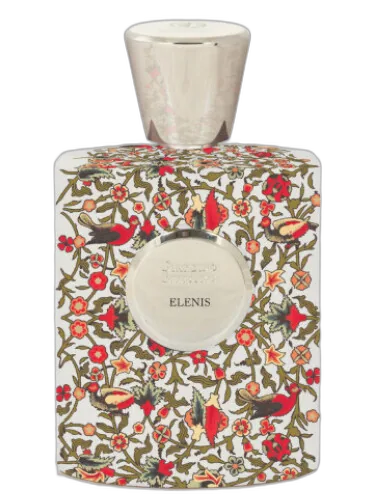

Elenis Giardino Benessere
At a glance
Is Elenis Giardino Benessere worth trying?
Elenis by Giardino Benessere is a Floral Fruity fragrance for women and men.
- Best match
- Casual wear in Spring
- Performance feel
- Good longevity with Moderate sillage
- Signature profile
- floral, aromatic, fruity with Fern, Osmanthus, Lemon
The first impression
Elenis by Giardino Benessere is a Floral Fruity fragrance for women and men. This is a new fragrance. Elenis was launched in 2025. The nose behind this fragrance is Paolo Terenzi. Top notes are Fern, Osmanthus, Lemon, Orange, Cardamom, Lavender, Violet and Freesia; middle notes are Apricot Blossom, Cherry Blossom, Peach Blossom, Jasmine, Ylang-Ylang, Plum and Lotus; base notes are Birch, Elm, Oakmoss, Musk, Ebony, Oak and Sandalwood.
What shapes the scent
The perfumer behind it

Paolo Terenzi
Paolo Terenzi is a perfumer known for his work with Antonio Croce, creating a range of fragrances including Ardente, Incantevole, Meraviglia, Perfetta, Sofisticata, Straordinaria, and Unica. He also composed 1+7 Extrait De Parfum for D'OTTO. Terenzi's style is characterized by bold, opulent compositions that often feature rich florals and warm resins.
Notes pyramid
Top Notes
First impression · 15-30 min
 Fern
Fern
 Osmanthus
 Lemon
Lemon
 Orange
 Cardamom
 Lavender
 Violet
 Freesia
Heart Notes
Core character · 2-4 hours
 Apricot Blossom
 Cherry Blossom
 Peach Blossom
 Jasmine
 Ylang-Ylang
 Plum
Plum
 Lotus
Lotus
Base Notes
Lasting impression · 4+ hours
 Birch
Birch
 Elm
Elm
 Oakmoss
 Musk
Musk
 Ebony
Ebony
 Oak
Oak
 Sandalwood
The mood it creates
The Lover Archetype: Portrait of Elenis Giardino Benessere
Essence
The person who cherishes Elenis Giardino Benessere is most closely aligned with the Nurturer archetype, a figure who embodies growth, care, and the quiet power of cultivation. This is not the sentimental caregiver of shallow comforts, but one who understands that true nourishment comes from patience, attention, and the deliberate shaping of life’s raw materials into something flourishing.
The fragrance itself-green, fresh, with subtle citrus and herbal notes-speaks of a mind that finds solace in the organic, in the slow unfurling of leaves and the quiet persistence of roots. This is not the scent of wild abandon, but of controlled vitality, of a garden tended with devotion.
Style & Aesthetic
Their taste is refined but never ostentatious. They prefer natural textures-linen, raw silk, unpolished wood-over synthetic gloss. Their home is likely filled with plants, books on botany or philosophy, and handmade ceramics. They wear clothes that breathe, that move with them, favoring earthy tones and understated elegance.
In art, they are drawn to the Impressionists’ play of light, the quiet intensity of a Morandi still life, or the organic abstraction of a Hockney landscape. Music for them is often acoustic, layered, unhurried-perhaps the compositions of Erik Satie or the folk melodies of Nick Drake.
Philosophy & Values
Their worldview is rooted in the belief that life, like a garden, requires both discipline and tenderness. They do not rush; they observe, prune, and encourage. They are drawn to philosophies that emphasize balance-Stoicism’s acceptance of natural cycles, Zen’s appreciation for the present moment, or even the Romantic ideal of nature as a teacher.
Yet, theirs is not a passive philosophy. They believe in the necessity of effort, in the idea that beauty is not merely found but cultivated. They may quote Nietzsche’s words: "One must still have chaos in oneself to give birth to a dancing star"-but they interpret this not as reckless destruction, but as the careful channeling of chaos into form.
Relationships
They do not collect friends; they cultivate them. Their relationships are deep rather than numerous, built on mutual growth rather than fleeting excitement. They are the confidant who listens without judgment, the partner who remembers small preferences, the parent who teaches patience by example.
Yet, their nurturing instinct has its shadows. They may struggle with boundaries, giving too much until resentment simmers beneath the surface. They might mistake control for care, pruning others’ choices under the guise of guidance. Their greatest fear is being unneeded-without someone to tend, who are they?
Shadow
The Nurturer’s flaw is the illusion of perfect control. Just as a garden can become sterile if overmanaged, so too can their life lose spontaneity. They may suppress their own wildness, fearing chaos, and in doing so, deny themselves the raw joy of unpredictability.
At their worst, they become the Martyr, sacrificing silently but expecting gratitude, or the Control Freak, unable to accept that some things-people, emotions, fate-cannot be pruned into submission. Their challenge is to learn that growth sometimes requires letting go, that even the most carefully tended garden must sometimes weather storms untended.
Conclusion
To love Giardino Benessere is to believe in the slow alchemy of care. This person is neither the ascetic nor the hedonist, but the cultivator-the one who understands that life’s sweetness lies in the deliberate act of tending.
They are at their best when they remember that even the gardener must sometimes sit in the shade, breathe deeply, and let the world grow on its own.
If you like this, try these
Fragrances with a comparable profile - shared accords, notes, and character.

Natura
Frescor De Castanha Natura
Shared top notes: lavender, lemon, orange

Nosegasm
Ivory Rose Nosegasm
Shared top notes: lavender, lemon
Nicolai Parfumeur Createur
Week-end In Normandy Nicolai Parfumeur Createur
Shared top notes: lemon

V Canto
B.b. V Canto
Shared top notes: lemon

Franck Boclet
Nirvana Franck Boclet
Shared top notes: lemon, orange