
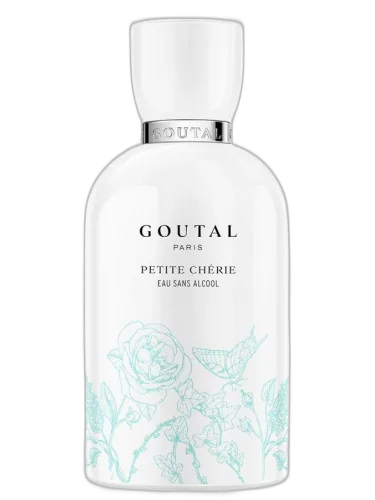

Petite Chérie Eau Sans Alcool Goutal Goutal
Fragrance Story
Petite Chérie Eau sans Alcool Goutal by Goutal is a Floral Fruity fragrance for women. Petite Chérie Eau sans Alcool Goutal was launched in 2019. Petite Chérie Eau sans Alcool Goutal was created by Isabelle Doyen and Annick Goutal. Top notes are Pear, Peach and Grass; middle notes are Lilac, Rose and Hedione; base notes are White Musk and Vanilla.
Composition Profile
About the Perfumer

Annick Goutal
Annick Goutal began her career as a pianist and model before founding her eponymous perfume house in 1981, where she worked closely with her daughter Camille Goutal. Known for a natural, luminous style, her compositions often highlight a single note, as seen in the citrusy Eau d'Hadrien and the fresh, floral Eau de Camille. Her creations, including the romantic Ce Soir Ou Jamais and the gentle Eau de Charlotte, are celebrated for their elegant simplicity and emotional resonance, establishing a legacy of intimate, artisanal perfumery.
Fragrance Notes
Top Notes
First impression · 15-30 min
 Pear
Pear
 Peach
Peach
 Grass
Grass
Heart Notes
Core character · 2-4 hours
 Lilac
Lilac
 Rose
Rose
 Hedione
Base Notes
Lasting impression · 4+ hours
 White Musk
 Vanilla
Character Profile
The Innocent Archetype: Portrait of Petite Chérie Eau Sans Alcool Goutal Goutal
Essence
This person is most closely aligned with the Innocent archetype-a soul untouched by cynicism, one who views the world with wide-eyed wonder and an unshakable belief in beauty. The Innocent does not deny life’s harshness but chooses to dwell in the light, cultivating sweetness like a gardener tending fragile blossoms. Petite Chérie, with its playful notes of peach, rose, and vanilla, is their olfactory manifesto: life should be tender, whimsical, and gently intoxicating.
Yet, the Innocent is not naive in the pejorative sense; they are deliberately soft in a world that often rewards hardness. Their optimism is a quiet rebellion against despair.
Relationships
In love and friendship, they are the confidante, the one who remembers birthdays, who brings homemade jam to a grieving neighbor, who listens with an unhurried presence. They attract deep bonds because they offer an unconditional warmth-rare in an age of transactional connections. Yet, they are selective, preferring a few meaningful relationships over many shallow ones.
Romantically, they seek a partner who shares their reverence for the poetic and the ephemeral. They are drawn to old-fashioned gestures-handwritten notes, slow dances in the kitchen, the way a lover’s sleeve might smell faintly of their perfume hours after an embrace.
Shadow
But the Innocent’s greatest strength is also their vulnerability. Their refusal to armor themselves against life’s abrasions can lead to disillusionment. When betrayed or confronted with harsh realities, they do not become bitter-but they may retreat, folding inward like a flower at dusk. Their optimism, if unchecked, can border on escapism, a reluctance to engage with the necessary darkness of existence.
At worst, they may be accused of being too sweet, too delicate-a person who lives in a self-curated dream, avoiding conflict to the point of passivity. Their shadow is the fear that their gentleness is a weakness, that the world will crush them if they do not harden.
Yet, it is precisely their softness that makes them formidable. In a culture that equates strength with aggression, their quiet resilience is subversive. They do not dominate; they enchant. They do not conquer; they cultivate. Their life is an ode to the small, sacred moments-proof that joy is not frivolous but a discipline, a choice to embrace the world’s sweetness despite its thorns.
Petite Chérie is their essence in a bottle: a fragrance for those who believe in love, in beauty, in the possibility of a kinder world. And perhaps, in wearing it, they remind the rest of us to do the same.
Conclusion
Their tastes are refined but never ostentatious-a silk scarf draped over a vintage chair, a well-loved book of poetry with dog-eared pages, a teacup collection amassed from flea markets across Europe. They favor delicate fabrics, soft textures, and colors that whisper rather than shout: blush pink, powder blue, the faintest lavender. Their home is a sanctuary, filled with fresh flowers, handwritten letters, and the faintest trace of their signature scent lingering in the air.
Philosophically, they believe in kindness as a radical act. They do not dismiss the world’s cruelties but insist that grace is the truest form of resistance. Their values are rooted in sincerity, tenderness, and an almost spiritual appreciation for fleeting beauty-morning light through lace curtains, the first bite of a ripe pear, the laughter of a dear friend.
Similar Fragrances
Fragrances with a comparable profile - shared accords, notes, and character.
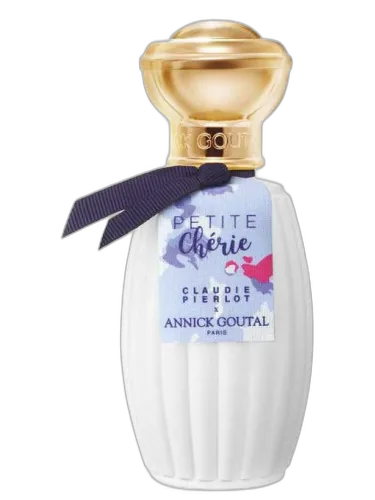
Goutal
Petite Chérie - Claudie Pierlot Edition Goutal
Shared accords: aquatic, floral, fresh
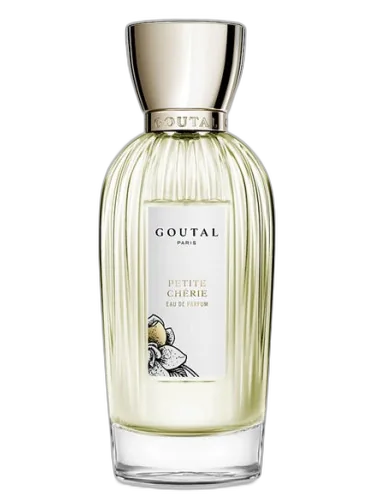
Goutal
Petite Cherie Goutal
Shared accords: aquatic, floral, fresh
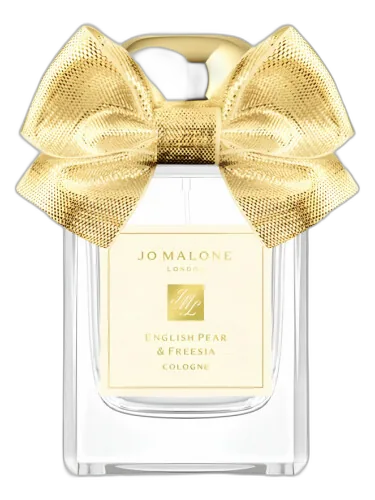
Jo Malone London
English Pear & Freesia Limited Edition Jo Malone London
Shared accords: aquatic, floral, fresh
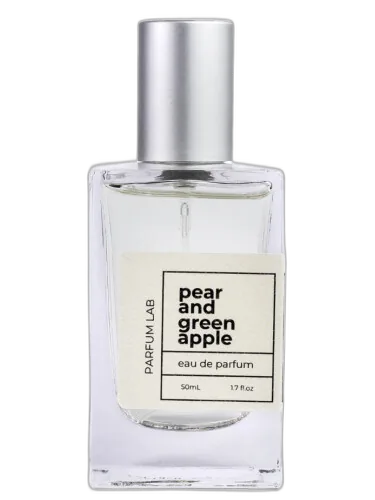
Parfum Lab
Pear And Green Apple Parfum Lab
Shared accords: aquatic, fresh, fruity

Dilís Parfum
Candy Passion Dilís Parfum
Shared accords: aquatic, fresh, fruity