
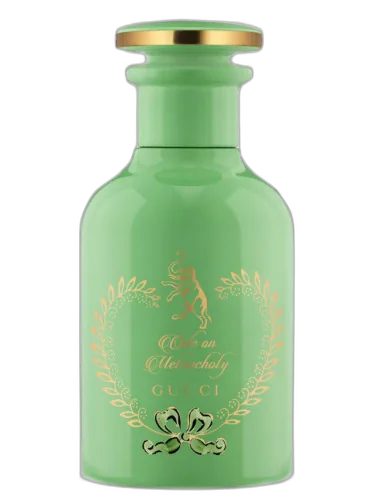

Ode On Melancholy Perfume Oil Gucci
At a glance
Is Ode On Melancholy Perfume Oil Gucci worth trying?
Ode on Melancholy Perfume Oil by Gucci is a Woody fragrance for women and men.
- Best match
- Evening wear in Fall
- Performance feel
- Good longevity with Moderate sillage
- Signature profile
- woody, earthy, powdery with Cypriol Oil or Nagarmotha, Cedar, Sandalwood
The first impression
Ode on Melancholy Perfume Oil by Gucci is a Woody fragrance for women and men. Ode on Melancholy Perfume Oil was launched in 2019. The nose behind this fragrance is Alberto Morillas.
What shapes the scent
The perfumer behind it

Alberto Morillas
Alberto Morillas is a master perfumer based in Geneva, Switzerland, and a longtime collaborator with Firmenich. His style is known for refined, luminous compositions that balance natural elegance with modern clarity. He created the bold leather and spice of Amouage Opus VII - Reckless Leather, the fresh citrus depth of Acqua di Parma Colonia Intensa, and the woody warmth of Aedes de Venustas Palissandre D'or. His work has shaped contemporary perfumery across both niche and luxury houses.
Notes pyramid
All Notes
Complete scent profile
 Cypriol Oil or Nagarmotha
 Cedar
Cedar
 Sandalwood
 Patchouli
The mood it creates
The Gucci Ode On Melancholy De Archetype: Portrait of Ode On Melancholy Perfume Oil Gucci
Essence
This person is most closely aligned with the Poet archetype, a figure who dwells in the liminal space between beauty and sorrow, transforming the weight of existence into something luminous. The Poet does not merely observe life-they distill it, seeking meaning in the interplay of light and shadow. Their choice of Ode On Melancholy as a signature scent is no accident; it is a fragrant manifesto, an olfactory sonnet to the bittersweet nature of being.
Style & Aesthetic
Their wardrobe is a carefully curated palette of muted elegance: soft cashmere sweaters in charcoal gray, tailored coats with subtle textures, perhaps a single piece of antique jewelry-something with a story. They favor timeless over trendy, but their style is not austere; there is always an unexpected detail-a silk scarf in a deep wine hue, a pair of weathered leather boots that suggest a life well-traveled.
Their living space is an extension of their inner world: dim lighting, well-worn books, dried flowers in a ceramic vase. They might collect objects of faded beauty-old postcards, vinyl records, a pocket watch that no longer keeps time. These are not mere decorations, but relics of a world they wish to preserve.
They are drawn to rituals, finding solace in the repetition of small, meaningful acts-brewing loose-leaf tea at dawn, lighting a single candle while reading, taking the same winding path through the park each evening. These rituals are not rigid, but sacred in their simplicity.
Professionally, they thrive in fields that allow for introspection and creativity-writing, art, psychology, or perhaps a quiet corner of academia. They are not driven by ambition in the conventional sense, but by the need to give form to their inner world.
Philosophy & Values
They view the world through a lens of romantic realism, acknowledging the inherent suffering of life while refusing to surrender to despair. Like Keats-whose poem inspired the perfume’s name-they believe melancholy is not an affliction to be escaped, but a muse to be embraced. Their philosophy is one of sacred contradiction: joy is heightened by sorrow, love is deepened by loss, and beauty is most radiant when it is fleeting.
They value depth over distraction, preferring a solitary walk through autumn leaves to the clamor of a crowded party. Yet they are not a recluse-they seek communion with kindred spirits, those who understand that silence can be more profound than speech. Their moral compass is guided by authenticity, and they have little patience for superficiality or pretense.
Relationships
They do not love lightly. Their relationships are intense, intimate, and often tinged with melancholy, as if they are always aware of impermanence. They are drawn to people who possess emotional complexity, those who can sit with discomfort rather than rushing to fill the silence.
Romantically, they are slow to trust but fiercely loyal once they do. Their love is a quiet storm-less about grand gestures, more about the way they remember the exact way you take your tea, or the way they trace the curve of your collarbone as if memorizing it. Yet their shadow emerges here: they may idealize love to the point of disillusionment, mourning relationships that have not yet ended, or clinging to ones that should have faded long ago.
Shadow
For all their depth, the Poet is not immune to self-destruction. Their greatest flaw is their propensity for brooding, a tendency to romanticize sorrow until it becomes a prison. At their worst, they may indulge in self-imposed isolation, pushing others away under the guise of depth. They might also struggle with indecision, paralyzed by the weight of their own perceptions, always seeing too many layers to act decisively.
Yet even their shadow has purpose. It is the necessary counterbalance to their brilliance, the dark soil from which their most profound insights grow. Without it, they would be mere dreamers-but because of it, they are alchemists, turning pain into poetry.
Conclusion
Ode On Melancholy is more than a scent to them-it is a liquid sonnet, a distillation of their soul. The blend of violet, leather, and musk mirrors their own duality: soft yet resilient, tender yet enduring. They wear it not to mask their nature, but to announce it, to leave a trace of their presence long after they have left the room.
They are the quiet observer at the edge of the party, the one who sees the way the light catches the champagne glass just before it shatters. They do not flinch at the breaking. Instead, they bend down, gather the fragments, and whisper: Yes, even this-especially this-is beautiful.
If you like this, try these
Fragrances with a comparable profile - shared accords, notes, and character.
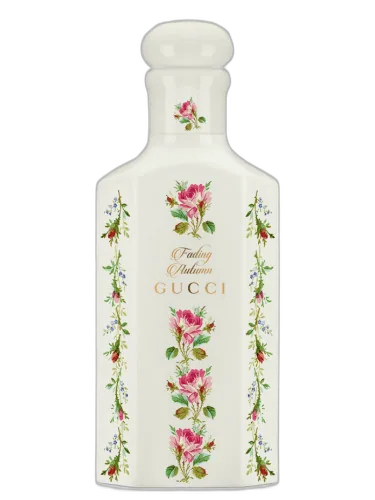
Gucci
Fading Autumn Scented Water Gucci
Shared top notes: cedar, cypriol oil or nagarmotha, patchouli
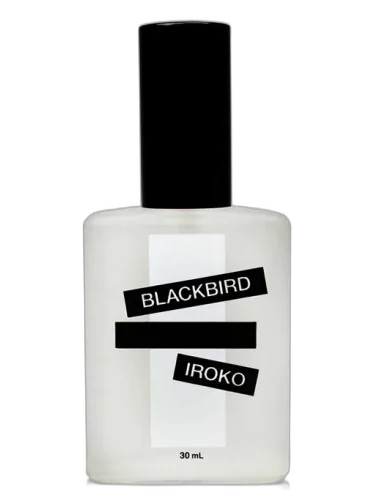
Blackbird
Iroko Blackbird
Shared top notes: cedar, sandalwood
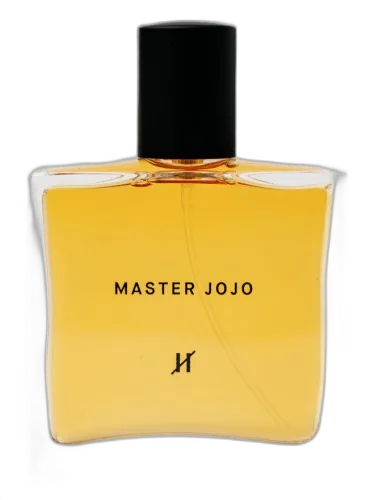
Handsome London
Master Jojo Handsome London
Shared top notes: patchouli, sandalwood
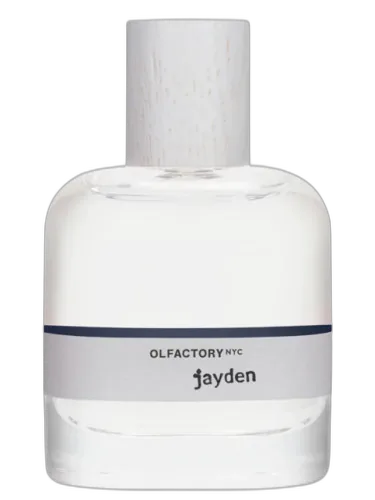
Olfactory NYC
Jayden Olfactory Nyc
Shared top notes: cedar, sandalwood

Yves Rocher
Voile D'ocre Yves Rocher
Shared top notes: cedar, sandalwood