
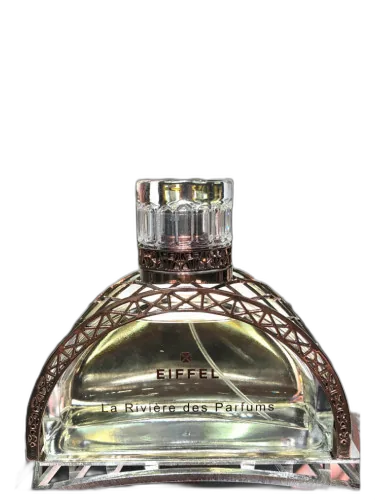
La Riviere Des Parfums Gustave Eiffel
At a glance
Is La Riviere Des Parfums Gustave Eiffel worth trying?
La Riviere Des Parfums by Gustave Eiffel is a fragrance for women and men.
- Best match
- Casual wear in Spring, Summer
- Performance feel
- Moderate longevity with Moderate sillage
- Signature profile
- fruity, sweet, floral with Honey, Green Tea, Peach
The first impression
La Riviere Des Parfums by Gustave Eiffel is a fragrance for women and men. La Riviere Des Parfums was launched in 2018. The nose behind this fragrance is Bruno Herve. Top notes are Honey and Green Tea; middle notes are Peach, Osmanthus, Carnation and Palisander Rosewood; base notes are Fruity Notes and Oriental notes.
What shapes the scent
The perfumer behind it

Bruno Herve
Bruno Herve has created fragrances for Franck Boclet, including Addiction, Be My Wife, Blue Moon, Cafe, Crime, Enjoy, Flowers, and Icon. His style often incorporates gourmand and oriental notes with a modern twist. Herve's scents are designed to be both evocative and wearable, appealing to a broad audience.
Notes pyramid
Top Notes
First impression · 15-30 min
 Honey
Honey
 Green Tea
Heart Notes
Core character · 2-4 hours
 Peach
Peach
 Osmanthus
 Carnation
 Palisander Rosewood
Base Notes
Lasting impression · 4+ hours
 Fruity Notes
 Oriental notes
The mood it creates
The Gustave Eiffel Admirer Archetype: Portrait of La Riviere Des Parfums Gustave Eiffel
Essence
This person is most closely aligned with the Creator archetype-a visionary who shapes reality through intellect, precision, and aesthetic mastery. Like the iron lattice of the Eiffel Tower, their personality is both structured and soaring, a marriage of disciplined thought and artistic daring. They do not merely consume beauty; they engineer it, constructing their life as one would a monument-each detail deliberate, each choice a testament to their philosophy.
Gustave Eiffel himself was an engineer who defied convention, blending function with grandeur. Similarly, this individual thrives at the intersection of logic and artistry, drawn to fragrances that evoke both innovation and timeless elegance. La Rivière des Parfums Gustave Eiffel, with its aquatic freshness and metallic edge, mirrors their essence: fluid yet unyielding, modern yet rooted in classical sophistication.
Relationships
In love and friendship, they are selective, valuing depth over quantity. They do not suffer fools gladly, but for those who earn their respect, they are fiercely loyal. Their romantic partners must appreciate both their analytical mind and their hidden romanticism-the way they can dissect a problem with cold logic one moment, then recite Baudelaire by candlelight the next.
Yet, their relationships are not without strain. They expect others to match their exacting standards, sometimes forgetting that not everyone operates on their wavelength. Their shadow emerges when their perfectionism turns rigid, when their love of structure becomes a cage rather than a scaffold. They may dismiss emotions as "illogical," not out of cruelty, but because they have yet to engineer a system to contain them.
Shadow
The Creator’s greatest strength-their ability to shape reality-can also be their downfall. When unchecked, their need for control stifles spontaneity; their insistence on precision breeds frustration with life’s inherent messiness. They may grow impatient with those who do not share their clarity of purpose, mistaking flexibility for weakness.
At their worst, they become the Tyrant Architect, imposing their vision without regard for the human element. They may dismiss tradition as obsolete, forgetting that even the Eiffel Tower was once derided before it became beloved. Their challenge is to balance their innovative drive with humility-to remember that not all beauty can be calculated, not all truths can be measured.
Conclusion
Their tastes are refined but never ostentatious. They prefer clean lines in fashion-tailored blazers, minimalist watches, shoes that suggest motion rather than mere adornment. Their home is a curated space: shelves lined with books on architecture, philosophy, and avant-garde design; walls adorned with geometric art or black-and-white photography. They drink espresso, not for the caffeine but for the ritual of it-the precision of the grind, the patience required for the perfect extraction.
Philosophically, they are drawn to thinkers who bridge the abstract and the tangible-Nietzsche’s will to power, Descartes’ methodical doubt, the Bauhaus manifesto. They believe in form following function, but only if the function is worthy of poetry. Efficiency alone does not satisfy them; there must be an underlying vision, a reason beyond mere utility.
If you like this, try these
Fragrances with a comparable profile - shared accords, notes, and character.
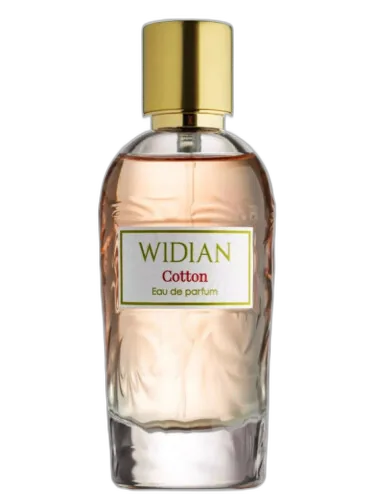
WIDIAN
Rose Arabia Cotton Widian
Shared top notes: green tea, honey
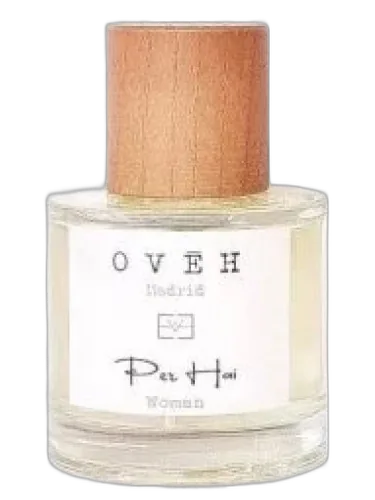
Ovéh Madrid
Per Hai Ovéh Madrid
Shared top notes: honey

Alghabra Parfums
Poem Of Damas Alghabra Parfums
Shared base notes: oriental notes

Amygdala
Honey Amygdala
Shared top notes: honey
Hilde Soliani
Zzzzz Hilde Soliani
Shared top notes: honey