
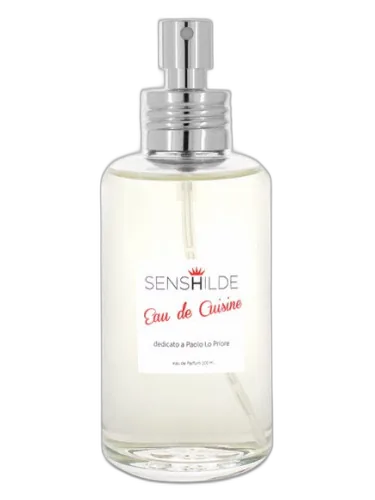

Eau De Cuisine Hilde Soliani
Fragrance Story
Eau de Cuisine by Hilde Soliani is a fragrance for women and men. Eau de Cuisine was launched in 2019. The nose behind this fragrance is Hilde Soliani.
Composition Profile
About the Perfumer

Hilde Soliani
Hilde Soliani is an Italian perfumer who founded her namesake brand, Hilde Soliani. Her fragrances, such as 24-09-11, Acquiilssssima, and Amore, often explore gourmand and floral themes with a playful, artistic touch. Soliani’s work is known for its creativity and emotional depth, reflecting her background in art and design.
Fragrance Notes
All Notes
Complete scent profile
 Fish
Fish
 Cheese
 Anise
Anise
 Chestnut
Eau De Cuisine Hilde Soliani by Hilde Soliani offers a distinctive olfactory experience that stands out from other fragrances in its category.
Crafted with the finest ingredients and a blend of traditional and modern perfumery techniques, this fragrance represents the pinnacle of the perfumer's art.
Eau De Cuisine Hilde Soliani embodies the distinctive style of Hilde Soliani while adding a unique chapter to their fragrance portfolio.
Character Profile
The Alchemist Archetype: Portrait of Eau De Cuisine Hilde Soliani
Essence
The Alchemist turns base matter into gold, finding magic in the mundane. Eau De Cuisine is the olfactory equivalent of a kitchen laboratory where fish, cheese, and chestnut transform into something strangely beautiful. This fragrance dares to blend the savory with the sweet, the animalic with the soft, creating a paradox that challenges conventional notions of beauty. The Alchemist sees potential where others see only ingredients, and this scent is their manifesto.
Style & Aesthetic
The Alchemist dresses in layers of texture and contradiction: a worn leather apron over a silk shirt, rough linen trousers paired with polished boots. Their home is a sanctuary of collected curiosities-dried herbs hang from rafters, copper pots gleam in candlelight, and books on botany and chemistry stack precariously. They favor earthy tones punctuated by unexpected flashes of color, like a single amethyst ring on a flour-dusted hand. Their aesthetic is one of deliberate imperfection, where every stain tells a story.
Philosophy & Values
The Alchemist believes in transformation as a sacred act. They value process over product, the journey over the destination. For them, creation is a form of alchemy-taking raw, unrefined elements and coaxing them into something transcendent. They reject the sterile and the sanitized, embracing the messy, the pungent, the alive. Their philosophy is rooted in the idea that beauty is not found in perfection but in the tension between opposites: sweet and savory, light and dark, chaos and order.
Relationships
In relationships, the Alchemist is both creator and collaborator. They seek partners who are willing to explore the strange and the uncomfortable, who understand that intimacy is a kind of alchemy too-a blending of two distinct essences into something new. They are fiercely loyal but require space for their experiments, both literal and metaphorical. Their friendships are forged in shared projects: cooking a complex meal, distilling a perfume, building a garden. They are drawn to fellow misfits and dreamers.
Lifestyle
The Alchemist’s life is a series of rituals. Mornings begin with grinding spices, afternoons are spent tending to fermentations, and evenings are for decanting and labeling. Their kitchen is their true sanctuary, a place where time bends and ingredients whisper their secrets. They travel to markets for obscure ingredients, correspond with farmers and foragers, and keep meticulous journals of their creations. Their daily rhythm is dictated not by clocks but by the slow, patient work of transformation.
Shadow
The Alchemist’s shadow is the danger of obsession. They can become so consumed by the process that they lose sight of the purpose, creating for the sake of creation alone. Their love of the strange can tip into the alienating, pushing away those who cannot appreciate the beauty in decay or the poetry in a fishy note. They risk becoming hermits in their own laboratories, surrounded by half-finished experiments and the ghosts of failed transformations. Their challenge is to remember that alchemy is ultimately about connection, not isolation.
Conclusion
Eau De Cuisine is a fragrance that celebrates the alchemist’s art: the courage to find beauty in the unlikely, the patience to let contradictions resolve into harmony. It is a scent for those who understand that the most profound transformations begin with the humblest ingredients-and that true magic is never clean or simple.
Similar Fragrances
Fragrances with a comparable profile - shared accords, notes, and character.
Hilde Soliani
Eau De Cuisine Hilde Soliani
Shared accords: animalic, anis, marine
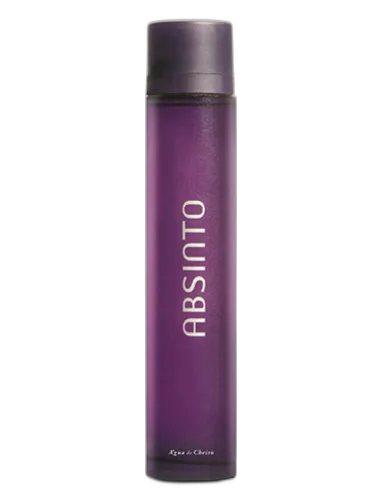
Água de Cheiro
Absinto Água De Cheiro
Shared accords: animalic, anis, musky

Santi Burgas
Egnaro Santi Burgas
Shared accords: animalic, anis, musky

Meshaz Natural Perfumes
Abzinthe Meshaz Natural Perfumes
Shared accords: anis, musky, soft spicy

Mauboussin
Caviar Addiction Mauboussin
Shared accords: animalic, marine, musky