
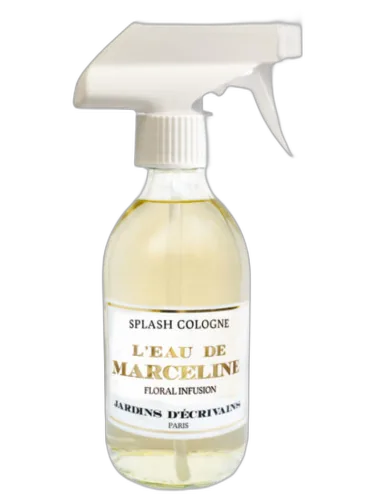

L’eau De Marceline (floral Infusion) Jardins D’ecrivains
Fragrance Story
L’Eau De Marceline (Floral Infusion) by Jardins d’Ecrivains is a Floral fragrance for women and men. L’Eau De Marceline (Floral Infusion) was launched in 2018. The nose behind this fragrance is Anais Biguine.
Composition Profile
About the Perfumer
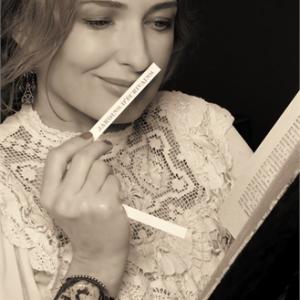
Anais Biguine
Anais Biguine is a French perfumer known for her work with independent niche houses such as Chapel Factory, Gri Gri Parfums, and Jardins d’Ecrivains. Her style often blends raw, smoky, or incense-like accords with unexpected gourmand or floral touches, as seen in creations like Chapel Factory’s Baptisma and Gri Gri Parfums’ Moko Maori. She is recognized for crafting evocative, narrative-driven scents that balance darkness with subtle sweetness.
Fragrance Notes
All Notes
Complete scent profile
 Ylang-Ylang
 Honeysuckle
 Cherry
 Rose
Rose
 Orange Blossom
 Watery Notes
 Iris
Iris
L’eau De Marceline (floral Infusion) Jardins D’ecrivains by Jardins d’Ecrivains offers a distinctive olfactory experience that stands out from other fragrances in its category.
Crafted with the finest ingredients and a blend of traditional and modern perfumery techniques, this fragrance represents the pinnacle of the perfumer's art.
L’eau De Marceline (floral Infusion) Jardins D’ecrivains embodies the distinctive style of Jardins d’Ecrivains while adding a unique chapter to their fragrance portfolio.
Character Profile
The Lover Archetype: Portrait of L’eau De Marceline (floral Infusion) Jardins D’ecrivains
Essence
L’eau de Marceline (Floral Infusion) by Jardins d’Écrivains is a scent that whispers rather than shouts-a delicate interplay of powdery florals, soft greens, and a hint of vintage melancholy. It evokes the image of a forgotten love letter pressed between the pages of a book, its ink fading but its sentiment eternal. The wearer of this fragrance is not one who seeks attention through boldness but through subtlety, through the quiet insistence of beauty that lingers in the mind long after it has passed.
At their core, this person is defined by the Romantic archetype, one of Jung’s most profound and timeless patterns. The Romantic is driven by a deep yearning for beauty, emotional intensity, and meaningful connection. They see the world through a lens of poetic idealism, where every moment is an opportunity for transcendence, every encounter a potential love story-whether platonic, artistic, or amorous.
But the Romantic is not merely a dreamer; they are also a seeker. They crave depth in all things-conversation, art, relationships-and are repelled by superficiality. Their greatest strength is their ability to find the extraordinary in the ordinary, to elevate the mundane into something sacred. Yet this same idealism can become their undoing, as reality rarely matches the perfection they envision.
Style & Aesthetic
Their tastes are refined but never ostentatious. They prefer the soft glow of candlelight to harsh fluorescents, the texture of aged paper to the coldness of a screen. Their home is a sanctuary of carefully curated objects-antique teacups, dried flowers, well-worn books with underlined passages. They are drawn to art that speaks of longing: the paintings of the Pre-Raphaelites, the poetry of Rilke, the films of Wong Kar-wai.
In fashion, they favor flowing silhouettes, muted tones, and fabrics that carry history-linen, silk, lace that has yellowed slightly with time. Their style is not about trends but about evoking a mood, a sense of timelessness. They might wear a single piece of inherited jewelry every day, not for vanity, but because it carries a story.
Philosophy & Values
For them, life is not about accumulation but about meaning. They reject the modern obsession with productivity, seeing it as a hollow substitute for true experience. Instead, they measure their days in moments of emotional resonance-a conversation that lingers in the mind, a walk through an autumn garden, the way sunlight filters through a curtain at dusk.
They believe in love as a transformative force, but not in the simplistic way of fairy tales. Their love is bittersweet, knowing that all things fade, yet choosing to embrace them anyway. They are drawn to the concept of mono no aware-the Japanese aesthetic of the pathos of things, the beauty in impermanence.
Relationships
In relationships, they are both deeply devoted and quietly demanding. They do not love lightly; when they give their heart, it is with the expectation of reciprocity in depth. They seek partners who understand the language of silence, who can appreciate a shared glance as much as a passionate declaration.
Yet here lies their shadow: their idealism can border on emotional absolutism. They may grow disillusioned when others fail to match their intensity, withdrawing into melancholy when reality proves imperfect. Their high standards, while noble, can isolate them, leaving them pining for connections that exist only in their imagination.
Shadow
The Romantic’s greatest flaw is their tendency to retreat into fantasy when the world disappoints. Rather than confronting conflict, they may slip into passive resignation, mourning what could have been instead of shaping what still might be. Their sensitivity, while their greatest gift, can also make them fragile-prone to bouts of wistfulness, even when surrounded by beauty.
At their worst, they may become the Tragic Poet, indulging in sorrow as if it were an art form, mistaking suffering for depth. They must learn that true romanticism is not escape but engagement-finding beauty not only in dreams but in the imperfect, living world.
Conclusion
The lover of L’eau de Marceline is neither naive nor jaded, but suspended in the delicate balance between hope and wisdom. They understand that love, like their favorite fragrance, is ephemeral-yet they choose to wear it anyway, knowing its fleeting nature is what makes it precious.
Their life is a quiet rebellion against the mundane, a refusal to let the world harden them. And though they may sometimes falter, retreating into the safety of their inner world, they always return-because for the Romantic, to stop seeking beauty is to stop breathing.
Similar Fragrances
Fragrances with a comparable profile - shared accords, notes, and character.

Eudora
Chic Chérie Eudora
Shared accords: aquatic, fruity, rose

Renier Perfumes
Anacaona Renier Perfumes
Shared accords: floral, fruity, rose

Tiffany
Tiffany Tiffany
Shared accords: floral, fruity, rose
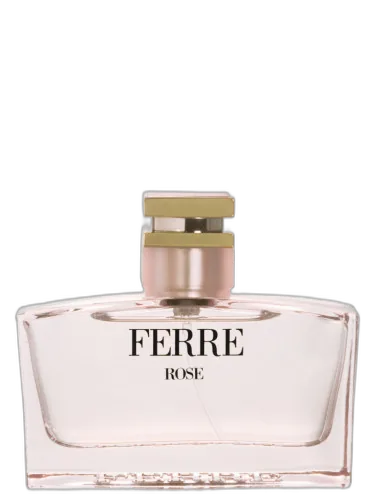
Gianfranco Ferre
Ferre Rose Gianfranco Ferre
Shared accords: aquatic, floral, fruity
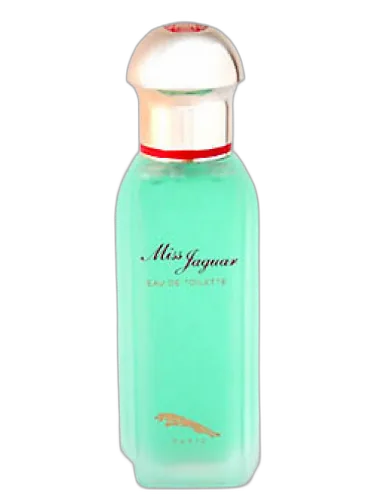
Jaguar
Miss Jaguar Jaguar
Shared accords: aquatic, floral, fruity