
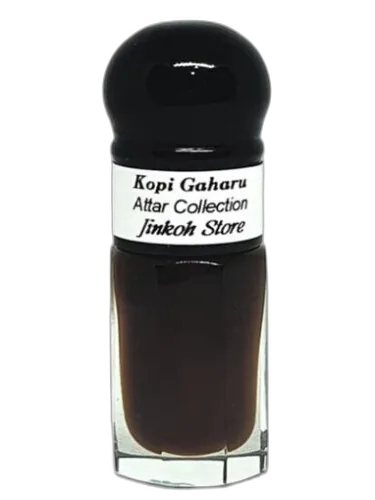

Kopi Gaharu Jinkoh Store
At a glance
Is Kopi Gaharu Jinkoh Store worth trying?
Kopi Gaharu by Jinkoh Store is a Oriental Woody fragrance for women and men.
- Best match
- Evening wear in Fall
- Performance feel
- Very Good longevity with Strong sillage
- Signature profile
- amber, balsamic, oud with Oud, Peru Balsam, Aglaia
The first impression
Kopi Gaharu by Jinkoh Store is a Oriental Woody fragrance for women and men. Kopi Gaharu was launched during the 2020's. The nose behind this fragrance is Marius Pana.
What shapes the scent
The perfumer behind it

Marius Pana
Marius Pana is a perfumer for Grande Perfumes and Jinkoh Store, creating scents like Ambresso, Cuore Grande, and Ananda Qi & Iris. His work frequently features oud, iris, and amber, with a focus on rich, resinous compositions. He specializes in complex, oriental-inspired fragrances.
Notes pyramid
All Notes
Complete scent profile
 Oud
Oud
 Peru Balsam
 Aglaia
 Bushman Candle
Haitian Vetiver
Blackcurrant
Bushman Candle
Haitian Vetiver
Blackcurrant
 Pink Pepper
 Labdanum
 Opoponax
Clove
Opoponax
Clove
The mood it creates
The Sage Archetype: Portrait of Kopi Gaharu Jinkoh Store
Essence
The one who favors Kopi Gaharu Jinkoh is a seeker-a mind drawn to the rare, the contemplative, the layered. Their archetype is the Sage, the thinker who values wisdom above all else, who finds truth in the interplay of darkness and light, much like the fragrance itself-a blend of earthy coffee, smoky oud, and resinous depth. They are not merely a collector of scents but a curator of meaning, always probing beneath the surface.
Yet the Sage is not without shadows. Their relentless pursuit of understanding can become detachment, their love of depth can turn into aloofness, and their reverence for the esoteric may distance them from the simple joys of the mundane.
Style & Aesthetic
Their tastes are refined but never ostentatious. They prefer the understated luxury of handcrafted leather journals, aged paper, and dark wood over flashy displays. Their wardrobe leans toward muted tones-charcoal, deep browns, forest greens-with textures that reward closer inspection: raw silk, brushed linen, well-worn cashmere.
They drink single-origin coffee, savoring the terroir of each bean, and they appreciate aged spirits for their complexity. Music is an intellectual experience as much as an emotional one-jazz that spirals into improvisation, classical compositions with intricate counterpoint, or ambient soundscapes that evoke vast, uncharted spaces.
They thrive in solitude, in spaces where thought can unfold without interruption. Their home is a sanctuary-bookshelves heavy with philosophy and poetry, a well-worn armchair by the window, a single incense coil burning slowly into ash. They may keep odd hours, finding the quiet of late nights or early mornings most conducive to reflection.
Work, for them, must have purpose beyond profit. They are drawn to academia, writing, or craftsmanship-fields where patience yields depth. Yet their disdain for superficiality can make them dismissive of practical concerns, and their idealism may clash with the compromises of the world.
Philosophy & Values
For them, knowledge is not merely power-it is responsibility. They believe in the slow accumulation of wisdom, in the necessity of doubt, in the beauty of unanswered questions. They distrust dogma, preferring the tension of paradox. Their moral compass is not rigid but fluid, shaped by experience rather than doctrine.
Yet this very fluidity can become indecision. They may linger too long in contemplation, mistaking hesitation for wisdom. Their skepticism, while sharpening their intellect, can also isolate them-few can match their depth, and so they often walk alone.
Relationships
They are not the life of the party, but they are the one whose presence lingers in memory. Their conversations are slow-burning, rich with allusion and implication. They attract those who hunger for meaning, but they may struggle with emotional immediacy-love, for them, is often an intellectual exercise before it is a surrender.
Their closest bonds are with fellow seekers, those who understand silence as a form of communion. Yet they must beware of turning people into abstractions, of loving ideas more than the flawed, breathing humans before them.
Shadow
The Sage’s greatest weakness is their own intellect. They may mistake analysis for living, thinking for being. Their detachment, while granting clarity, can also be a form of cowardice-an avoidance of raw, unmediated experience. They may grow cynical, seeing ignorance where others see innocence, arrogance where others see passion.
To transcend this, they must learn that wisdom is not only in the mind but in the body, in the heart, in the act of embracing life’s messiness. The fragrance they love-earthy, complex, unresolved-is a reminder: truth is not always pure, and beauty is often found in the unresolved.
Conclusion
They are neither saint nor cynic, but a wanderer in the borderlands of thought and sensation. Their love of Kopi Gaharu Jinkoh is no accident-it mirrors their soul: deep, smoky, bittersweet, with a warmth that lingers long after the first encounter.
The Sage’s journey is never complete, for wisdom is not a destination but a way of moving through the world. And so they continue, ever searching, ever questioning-knowing that the richest truths are those that remain just beyond grasp.
If you like this, try these
Fragrances with a comparable profile - shared accords, notes, and character.
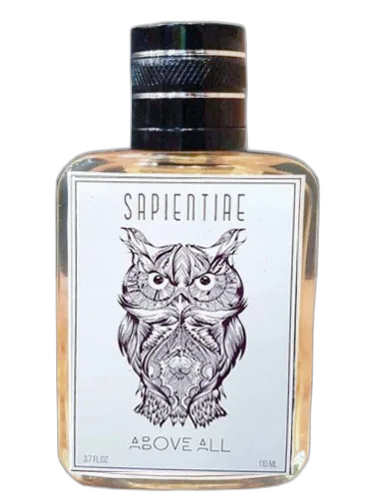
Sapientiae Niche
Above All Sapientiae Niche
Shared top notes: pink pepper

Maison de Parfum Berry
Ambre 35 Maison De Parfum Berry
Shared top notes: opoponax, peru balsam

Yves Rocher
Quelques Notes D’amour Yves Rocher
Shared top notes: pink pepper

Map Of The Heart
Abundance V.8 Map Of The Heart
Shared top notes: pink pepper

Fulton & Roark
Hwy 190 Fulton & Roark
Shared top notes: pink pepper