

Traversee Du Bosphore L'artisan Parfumeur
Fragrance Story
Traversee du Bosphore by L'Artisan Parfumeur is a Leather fragrance for women and men. Traversee du Bosphore was launched in 2010. The nose behind this fragrance is Bertrand Duchaufour. Top notes are Red Apple, Pomegranate and Spicy Notes; middle notes are Leather, Iris, Saffron, pink tulip and Tobacco; base notes are Nougat, Sugar, White Honey, Pistachio, Rose and Musk.
Composition Profile
About the Perfumer

Bertrand Duchaufour
Bertrand Duchaufour is a renowned French perfumer with a prolific career spanning many brands. He has created fragrances for Acqua di Parma, including Blu Mediterraneo - Cipresso Di Toscana and Colonia Assoluta, as well as for Aedes de Venustas, such as Café Tabac and Copal Azur. His style is known for its complexity and use of natural ingredients.
Fragrance Notes
Top Notes
First impression · 15-30 min
 Red Apple
 Pomegranate
 Spicy Notes
Heart Notes
Core character · 2-4 hours
 Leather
 Iris
Iris
 Saffron
 pink tulip
 Tobacco
Base Notes
Lasting impression · 4+ hours
 Nougat
 Sugar
White Honey
Sugar
White Honey
 Pistachio
 Rose
Rose
 Musk
Musk
Traversee Du Bosphore L'artisan Parfumeur by L'Artisan Parfumeur offers a distinctive olfactory experience that stands out from other fragrances in its category.
Crafted with the finest ingredients and a blend of traditional and modern perfumery techniques, this fragrance represents the pinnacle of the perfumer's art.
Traversee Du Bosphore L'artisan Parfumeur embodies the distinctive style of L'Artisan Parfumeur while adding a unique chapter to their fragrance portfolio.
Character Profile
The Wanderer Archetype: Portrait of Traversee Du Bosphore L'artisan Parfumeur
Essence
Archetype: The Seeker
At the heart of this person lies the Seeker, an archetype defined by an insatiable curiosity, a hunger for transformation, and a deep yearning to bridge worlds-both literal and symbolic. Traversée du Bosphore, with its interplay of sweet and smoky, East and West, fruit and leather, mirrors their essence: a soul who thrives in the liminal, who finds beauty in the tension between opposites.
Style & Aesthetic
Their style is an elegant paradox-structured yet fluid, refined yet unconventional. They favor garments that suggest movement: draped silks, tailored coats with unexpected textures, or jewelry that carries the weight of history without being ostentatious. Their home is a curated sanctuary, filled with objects gathered from travels-antique maps, hand-bound books, a single Turkish tea glass repurposed as a candle holder.
They are drawn to art that challenges perception-surrealist paintings, ambient music that shifts between dissonance and harmony, films where the ending is ambiguous. Their taste in fragrance is no accident: Traversée du Bosphore is a scent of duality, where sugared loukoum meets rugged leather, evoking the Bosphorus Strait itself-the meeting point of continents.
They are as likely to be found in a dimly lit bookstore in Istanbul as in a minimalist loft in Berlin. Their career is unconventional-perhaps a writer, a curator, a consultant who thrives on reinvention. Routine is their enemy; they need projects that demand reinvention, that force them to cross new thresholds.
But this very freedom has its costs. Their avoidance of routine can tip into instability. They may struggle with grounding themselves, mistaking motion for progress. There is a quiet melancholy beneath their wanderlust-a fear that if they stop moving, they might discover they were running from something all along.
Philosophy & Values
They reject dogma in all forms, preferring the open-ended inquiry. Their philosophy is one of becoming, not being-a Nietzschean embrace of flux. They believe truth is found in the journey, not the destination, and thus they are wary of those who claim to have all the answers.
Yet this very resistance to finality can make them restless. They are the friend who debates ethics over midnight whiskey, who questions societal norms not out of rebellion, but out of genuine curiosity. Their values are fluid, shaped by experience rather than tradition, though this can sometimes leave them unmoored.
Relationships
They attract people effortlessly-their mind is magnetic, their presence both warm and enigmatic. But they are not an easy lover or friend. They cherish deep connections, yet resist confinement. Their relationships thrive on intellectual and emotional exchange, but they may withdraw if they sense expectations hardening into demands.
Romantically, they are drawn to those who mirror their complexity-someone who can spar with them in conversation, then lose themselves in silent understanding. They despise possessiveness, yet their own fear of stagnation can make them elusive. Their shadow here is a reluctance to commit-not out of coldness, but from an unconscious belief that permanence might dull the vibrancy of life.
Shadow
The Seeker’s brilliance is also their burden. Their relentless pursuit of the new can become a form of escapism. They may romanticize the unknown to the point of dismissing the mundane, forgetting that depth often lies in stillness. At their worst, they grow impatient with those who do not share their hunger, dismissing them as "settled" or "unimaginative."
Yet when balanced, they are a rare soul-one who reminds others that life is not a fixed point, but a crossing. They teach by example that beauty exists in the threshold, in the space between who we were and who we might become.
Conclusion
To wear Traversée du Bosphore is to embody the spirit of passage-to stand where the waters meet, tasting both the sweetness of memory and the spice of the unknown. This person is neither here nor there, but always in transition. And perhaps that is where they are most alive.
Similar Fragrances
Fragrances with a comparable profile - shared accords, notes, and character.

Wide Society
Up In The Air Wide Society
Shared accords: animalic, fruity, leather

Diptyque
Eau Rihla Eau De Parfum Diptyque
Shared accords: animalic, fruity, iris

Ineke
Evening Edged In Gold Ineke
Shared accords: animalic, floral, fruity
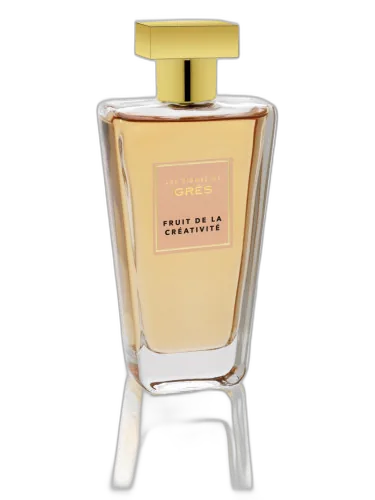
Grès
Fruit De La Créativité Grès
Shared accords: animalic, fruity, iris
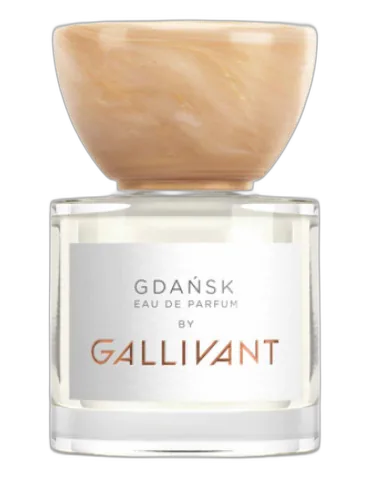
Gallivant
Gdańsk Gallivant
Shared accords: animalic, fruity, honey