


Lacrima Eau De Parfum Les Liquides Imaginaires
At a glance
Is Lacrima Eau De Parfum Les Liquides Imaginaires worth trying?
Lacrima Eau de Parfum by Les Liquides Imaginaires is a Oriental Spicy fragrance for women and men.
- Best match
- Evening wear in Fall
- Performance feel
- Good longevity with Moderate sillage
- Signature profile
- amber, woody, aromatic with elemi, Benzoin, Palisander Rosewood
The first impression
Lacrima Eau de Parfum by Les Liquides Imaginaires is a Oriental Spicy fragrance for women and men. Lacrima Eau de Parfum was launched in 2020. The nose behind this fragrance is Anne-Sophie Behaghel.
What shapes the scent
The perfumer behind it

Anne-Sophie Behaghel
Anne-Sophie Behaghel is a French perfumer known for her work with independent and niche fragrance houses. Her style often blends natural and synthetic elements to create bold, textural compositions with a modern edge. She has created distinctive scents for Adi Ale Van, including the floral-powdery Hai Hui Flower Power and the earthy Mioritic, as well as the mineral-driven Sel d'Argent for BDK Parfums. Her work continues to push boundaries in contemporary perfumery.
Notes pyramid
All Notes
Complete scent profile
 elemi
elemi
 Benzoin
 Palisander Rosewood
 Pink Pepper
 Castoreum
Moss
Castoreum
Moss
The mood it creates
The Wounded Healer Archetype: Portrait of Lacrima Eau De Parfum Les Liquides Imaginaires
Essence
The one who wears Lacrima Eau de Parfum is drawn to the melancholic beauty of tears-not as sorrow, but as alchemy. The fragrance, with its interplay of myrrh, incense, and fig, speaks to a soul that finds depth in fragility, strength in vulnerability. This is not a person who seeks the obvious or the loud; they are drawn to the liminal, the spaces between joy and sorrow, where meaning is distilled.
Their archetype is the Wounded Healer, the one who has known suffering and transforms it into wisdom. Like Chiron, the centaur who could heal others but not himself, they carry an innate understanding of pain-both their own and that of others. This makes them profoundly empathetic, yet it also burdens them with a quiet, unspoken solitude.
Relationships
They love deeply but cautiously. Their relationships are not built on surface charm but on shared silences, on the unspoken understanding that some wounds never fully heal. They are the confidant, the one who listens without judgment, but they rarely reveal the full depth of their own sorrows.
This restraint can be both their strength and their flaw. Those who seek them out for comfort often find them unwavering in their empathy, yet those who try to love them may feel held at arm’s length. Their shadow is a reluctance to be truly seen-they fear that if someone peers too closely, they will find only brokenness where others expect strength.
Shadow
Their greatest virtue-their ability to transform pain into wisdom-is also their greatest peril. They risk becoming so accustomed to their own suffering that they mistake it for identity. There is a quiet pride in their resilience, but also a danger of stagnation. They may romanticize melancholy, mistaking depth for despair, or withdraw too far into introspection, becoming a spectator of life rather than a participant.
At their worst, they can be passive in their own happiness, as if joy must be earned through prior sorrow. They may also grow weary of those who do not share their depth, dismissing lighter souls as superficial-a subtle arrogance hidden beneath their empathy.
Conclusion
Their tastes are refined but never ostentatious. They prefer the muted elegance of deep blues and grays, fabrics that whisper rather than shout. Their home is a sanctuary-books of poetry and philosophy line the shelves, candles flicker in dim corners, and there is always a trace of incense lingering in the air. Music for them is not mere entertainment but an act of communion; they are as likely to lose themselves in Arvo Pärt’s Spiegel im Spiegel as in the haunting melodies of Nick Cave.
Philosophically, they reject the notion that life must be either tragic or triumphant. Instead, they see existence as a tapestry of contradictions-beauty and decay, love and loss, all interwoven. They are drawn to thinkers like Rilke, who wrote of embracing uncertainty, and Jung, who taught that the shadow must be faced to find wholeness.
If you like this, try these
Fragrances with a comparable profile - shared accords, notes, and character.

Yves Rocher
Accord Chic Yves Rocher
Shared top notes: benzoin, elemi, pink pepper
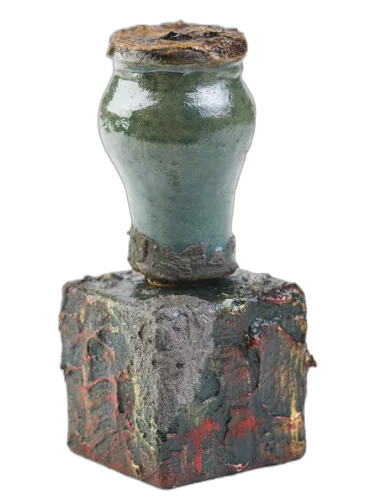
Adi Ale Van
Mioritic Green Edition - Extrait De Folklore Adi Ale Van
Shared top notes: elemi, pink pepper
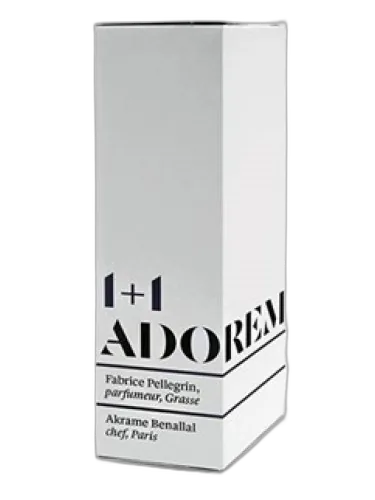
NEZ
Adorem Nez
Shared top notes: elemi, pink pepper

Fresh
Pray Fresh
Shared top notes: elemi, pink pepper

Nasengold
:p Nasengold
Shared top notes: elemi, pink pepper