


Verveine Menthe L'occitane En Provence
Fragrance Story
Verveine Menthe by L'Occitane en Provence is a Citrus Aromatic fragrance for women and men. Verveine Menthe was launched in 2018. The nose behind this fragrance is Celine Ripert.
Composition Profile
About the Perfumer

Celine Ripert
Celine Ripert is a French perfumer who has worked with Accendis, Annayake, and Blood Concept. She created the minimalist Accendis 0.1 and 0.2, as well as the feminine Annayake Her and masculine Annayake Him. Her work for Blood Concept includes bold scents like A Killer Vanilla and Ab Liquid Spice, showing a penchant for modern, edgy compositions.
Fragrance Notes
All Notes
Complete scent profile
 Lemon Verbena
 Mint
Mint
 Lemon Peel
 Myrtle
Verveine Menthe L'occitane En Provence by L'Occitane en Provence offers a distinctive olfactory experience that stands out from other fragrances in its category.
Crafted with the finest ingredients and a blend of traditional and modern perfumery techniques, this fragrance represents the pinnacle of the perfumer's art.
Verveine Menthe L'occitane En Provence embodies the distinctive style of L'Occitane en Provence while adding a unique chapter to their fragrance portfolio.
Character Profile
The Lover Archetype: Portrait of Verveine Menthe L'occitane En Provence
Essence
The one who favors Verveine Menthe by L'Occitane is, at their core, a Sage-a seeker of clarity, a mind that thrives on precision and freshness. This archetype is defined by wisdom, intellectual curiosity, and an almost surgical detachment from emotional turbulence. The fragrance itself-bright, crisp, with the sharpness of lemon verbena and the coolness of mint-mirrors their essence: uncluttered, invigorating, and free from excess.
The Sage does not merely think; they refine thought. They do not simply experience life; they analyze it. Their pursuit is not raw sensation but understanding, not passion but perspective. Yet, like all archetypes, the Sage has a shadow-one that risks coldness, over-intellectualization, and a subtle disdain for those who live by instinct rather than intellect.
Style & Aesthetic
They rise early, not out of obligation but because dawn offers the crispness they crave. Their mornings are rituals-black coffee, a book, perhaps a walk where the air is still untouched by the day’s noise. Work is not a burden but a canvas for their precision; they excel in fields where analysis is paramount-science, writing, design, or philosophy.
But the shadow whispers: what if their equilibrium is merely avoidance? What if their pursuit of clarity is a way to sidestep the messiness of living? The Sage risks becoming a spectator in their own life, so devoted to understanding that they forget to feel.
Relationships
They are not hermits, but their connections are carefully curated. Friendships are built on mutual respect for intellect and space; romantic partners must understand that solitude is not rejection but a necessity. Their love is not fiery but steady-like the persistence of mint leaves infusing water, subtle yet impossible to ignore.
Yet here lies the shadow: their detachment can be mistaken for indifference. They may withdraw at the first sign of emotional chaos, dismissing vulnerability as inelegant. Those who crave warmth may find them frustratingly self-contained, their wisdom a fortress rather than a bridge.
Conclusion
Their tastes are deliberate, never accidental. They prefer clean lines in design, spaces that breathe rather than suffocate, and objects that serve a purpose beyond ornamentation. Their wardrobe leans toward structured minimalism-linen, cotton, neutral tones-but with an occasional flourish of green, as if to remind themselves of the vitality beneath their composed exterior.
Philosophy is not an abstract interest but a lens through which they interpret existence. They might admire Stoicism for its discipline, Zen for its clarity, or Nietzsche himself for his ruthless inquiry into truth. They do not believe in easy answers, only better questions. Their values are rooted in autonomy, reason, and the quiet dignity of self-mastery.
Similar Fragrances
Fragrances with a comparable profile - shared accords, notes, and character.
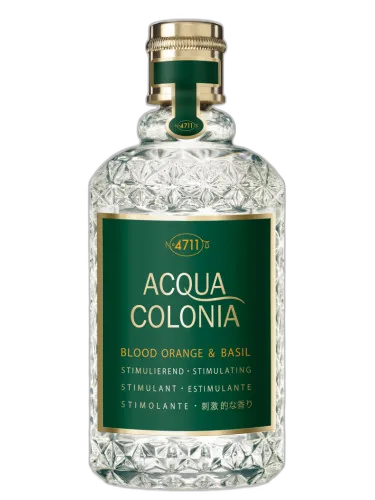
4711
4711 Acqua Colonia Blood Orange & Basil 4711
Shared accords: aromatic, citrus, fresh spicy

Eudora
Soul Blue Margarita Twist Frozen Edition Eudora
Shared accords: aromatic, citrus, fresh spicy
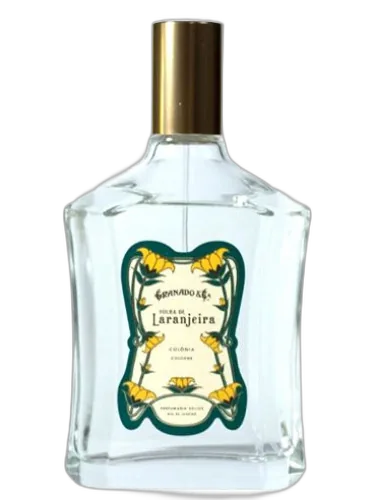
Granado
Folha De Laranjeira Granado
Shared accords: aromatic, citrus, fresh spicy

Isabella Rossellini
Manifesto Isabella Rossellini
Shared accords: aromatic, citrus, fresh spicy

Moresque
Fiore Di Portofino Moresque
Shared accords: aromatic, citrus, fresh spicy