
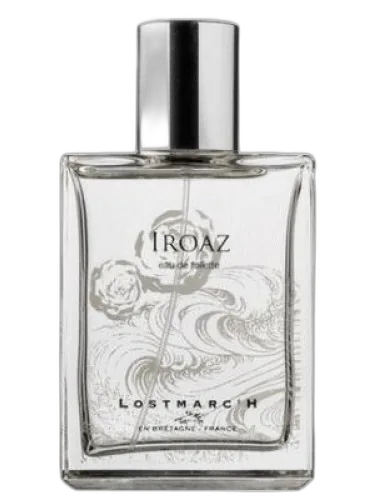

Iroaz Lostmarch
At a glance
Is Iroaz Lostmarch worth trying?
Iroaz by Lostmarch is a Floral Aquatic fragrance for women.
- Best match
- Casual wear in Spring
- Performance feel
- Good longevity with Moderate sillage
- Signature profile
- citrus, rose, marine with Lemon Verbena, Green Grass, Lemon Peel
The first impression
Iroaz by Lostmarch is a Floral Aquatic fragrance for women. Iroaz was launched in 2008. The nose behind this fragrance is Angéline Leporini. Top notes are Lemon Verbena, Green Grass, Lemon Peel and Pink Pepper; middle notes are Wild Rose, Sea Notes, Lotus and Ylang-Ylang; base notes are Iris, Sandalwood, Musk and Patchouli.
What shapes the scent
The perfumer behind it

Angéline Leporini
Angéline Leporini is a French perfumer known for her work with major houses like Amouage and Ajmal. Her style balances fresh, citrusy accords with deeper woody and oriental notes, as seen in 4711 Acqua Colonia Yuzu & Cedarwood and Epic Woman. She also creates complex, opulent compositions such as Qasida Dahabia and the green, modern twist of 4711 Remix Green Oasis.
Notes pyramid
Top Notes
First impression · 15-30 min
 Lemon Verbena
 Green Grass
Lemon Peel
Green Grass
Lemon Peel
 Pink Pepper
Heart Notes
Core character · 2-4 hours
Wild Rose
Sea Notes
 Lotus
Lotus
 Ylang-Ylang
Base Notes
Lasting impression · 4+ hours
 Iris
Iris
 Sandalwood
 Musk
Musk
 Patchouli
The mood it creates
The Wanderer Archetype: Portrait of Iroaz Lostmarch
Essence
The one who cherishes Iroaz Lostmarch is most closely aligned with the Seeker, an archetype defined by an insatiable hunger for meaning, a refusal to be confined, and a deep connection to the liminal-the spaces between worlds. This fragrance, with its interplay of damp earth, cold stone, and ghostly florals, is not for those who crave warmth or comfort. It is for those who find beauty in the unresolved, who are drawn to the scent of fog clinging to ancient ruins.
The Seeker is not content with the known. They are pulled toward the edges of experience, where certainty dissolves and intuition takes the lead. They do not wear perfume to be admired; they wear it as a talisman, a whispered question to the universe.
Style & Aesthetic
Their tastes are neither decadent nor austere but exist in the tension between the two. They favor textures that tell a story-worn leather, rough linen, silver tarnished by time. Their wardrobe is a muted palette of grays, deep greens, and blacks, as if they are always half-hidden in twilight.
They are drawn to art that evokes absence as much as presence-black-and-white photography of abandoned places, ambient music that hums with silence, poetry where the unsaid lingers louder than words. They do not collect objects for their beauty alone but for the way they seem to hold time within them-a cracked teacup, a yellowed map, a book whose spine has been softened by too many hands.
They are not nomads in the literal sense, though they may move often. More accurately, they are internal wanderers, finding home in the act of searching rather than arriving. Their living space is sparse but meaningful-a few well-chosen books, a single painting that haunts them, a window that frames the sky in a way that makes the ordinary feel sacred.
They work in fields that allow for autonomy-writing, photography, academia, or anything that lets them follow their curiosity without too many constraints. Routine suffocates them, yet they secretly crave structure, a paradox they rarely resolve.
Philosophy & Values
They believe in questions, not answers. Truth, to them, is not a fixed point but a shifting horizon. They are suspicious of dogma, whether spiritual or intellectual, and instead embrace paradox. They might meditate but scoff at rigid rituals; they might read philosophy but reject systems that claim to explain everything.
Their highest value is freedom-not the reckless kind, but the freedom to remain undefined. They resist labels, commitments that feel like cages, and any path that promises certainty at the cost of mystery. Yet this very resistance can become their prison.
Relationships
They are magnetic but elusive. People are drawn to their quiet intensity, the sense that they see more than they say. Yet they struggle with closeness-not because they fear love, but because they fear the loss of self that comes with merging. Their relationships are often marked by a push-and-pull: deep conversations at midnight, followed by weeks of silence.
They do not love lightly, but when they do, it is with a fierceness that surprises even them. Yet their partners may feel like travelers in their life rather than permanent residents. They are not cruel, merely transient by nature.
Shadow
The Seeker’s greatest strength is also their flaw: the refusal to stop moving. In their quest for the unseen, they may overlook the beauty of the present. Their fear of stagnation can make them restless, always chasing the next revelation, never allowing themselves to be satisfied.
At their worst, they become the Eternal Exile, mistaking solitude for depth and mistrust for wisdom. They may grow cynical, dismissing those who find contentment in simple things as naive. Their independence, once liberating, can harden into isolation.
Conclusion
Iroaz Lostmarch is their essence distilled-a scent that does not comfort but awakens. It does not belong to daylight or night but to the threshold between. Like them, it is beautiful precisely because it refuses to be pinned down.
They wear it not to be understood, but to remember: that the search itself is the destination. And perhaps, one day, they will learn that even wanderers must sometimes rest-not because the journey is over, but because the mist, too, has its own kind of home.
If you like this, try these
Fragrances with a comparable profile - shared accords, notes, and character.

Frederic Haldimann
Impressions De Soleil Frederic Haldimann
Shared heart notes: sea notes, ylang-ylang
Jul et Mad Paris
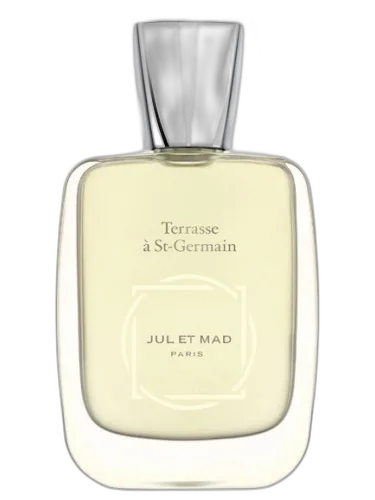
Terrasse À St-germain Jul Et Mad Paris
Shared base notes: musk, patchouli, sandalwood
Nosegasm
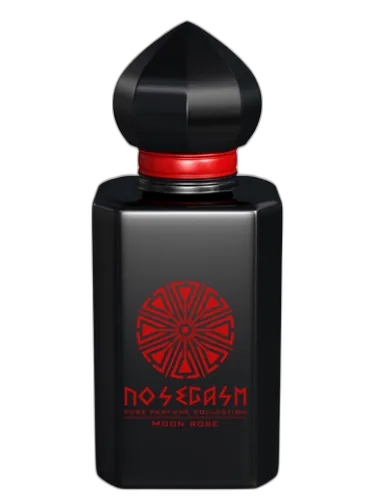
Moon Rose Nosegasm
Shared top notes: pink pepper

Lancôme
La Vie Est Belle En Rose Lancôme
Shared top notes: pink pepper
Rance 1795
Tubereuse Amour Rance 1795
Shared base notes: iris, musk, patchouli