


Mukhallat Badawi Maison Anthony Marmin
At a glance
Is Mukhallat Badawi Maison Anthony Marmin worth trying?
Mukhallat Badawi by Maison Anthony Marmin is a fragrance for men.
- Best match
- Evening wear in Winter
- Performance feel
- Excellent longevity with Strong sillage
- Signature profile
- warm spicy, woody, tobacco with Tobacco, Myrrh, Cambodian Oud
The first impression
Mukhallat Badawi by Maison Anthony Marmin is a fragrance for men. The nose behind this fragrance is Anthony Abdul Karim Marmin.
What shapes the scent
The perfumer behind it

Anthony Abdul Karim Marmin
Anthony Abdul Karim Marmin is a perfumer closely associated with the house of Abdul Karim Al Faransi, where he has created a wide range of fragrances. His style spans bold, resinous compositions like Amber 4000 and Amber Afghani, as well as more complex, evocative scents such as Al Quds and Amazonia. Known for blending traditional Middle Eastern ingredients with modern accords, his work often features rich amber, oud, and spice notes.
Notes pyramid
All Notes
Complete scent profile
 Tobacco
 Myrrh
Myrrh
 Cambodian Oud
 Saffron
 Indonesian Patchouli Leaf
 Dried Fruits
Palm Tree
Dried Fruits
Palm Tree
The mood it creates
The Lover Archetype: Portrait of Mukhallat Badawi Maison Anthony Marmin
Essence
The person who chooses Mukhallat Badawi by Maison Anthony Marmin is not merely drawn to a fragrance-they are seduced by the ineffable. This scent, rich with oud, spices, and an almost sacred depth, speaks to the soul of the Mystic, an archetype that seeks communion with the unseen. The Mystic is not content with surface pleasures; they crave the transcendent, the ritualistic, the moment where the material world dissolves into something more profound.
This archetype is not passive-it is a seeker, a wanderer through inner and outer worlds. The Mystic does not merely believe in the sacred; they experience it, whether through scent, art, love, or solitude. Yet, like all archetypes, the Mystic has a shadow-a tendency toward escapism, self-deception, or an unwillingness to engage with the mundane.
Style & Aesthetic
Their tastes are not casual but deliberate. They do not wear fragrance as an accessory; they anoint themselves with it as part of a private ceremony. Their wardrobe is likely a blend of the timeless and the tactile-linen, silk, perhaps leather, fabrics that carry weight and history. They may favor deep, muted colors-charcoal, burgundy, midnight blue-or the opposite: flowing whites and golds, as if dressing for an unseen altar.
Their philosophy is not dogmatic but experiential. They might reject rigid institutions, yet they are drawn to the poetry of Rumi, the meditations of Marcus Aurelius, or the existential musings of Nietzsche himself. They believe in meaning, but not one that can be easily explained-only felt.
Relationships
In love, they are intense but not possessive. They seek a connection that feels fated, a meeting of souls rather than mere companionship. Yet this very idealism can make them elusive-they may withdraw if a relationship feels too ordinary, too bound by routine. Their shadow emerges when they mistake solitude for enlightenment, when they romanticize detachment to the point of loneliness.
Friendships with them are deep but intermittent. They are the kind of person who disappears for weeks, only to return with stories of a silent retreat or a midnight walk through an unfamiliar city. Those who understand them do not demand constant presence; those who do not may find them frustratingly enigmatic.
Shadow
The Mystic’s greatest weakness is the temptation to flee. When life becomes too harsh, too banal, they may retreat into their inner world, mistaking isolation for wisdom. They might indulge in fantasies of a different life-one where they are unburdened by responsibilities, where every moment is charged with meaning. But meaning, they must learn, is not only found in the sublime-it is also hidden in the ordinary.
At their worst, they can become self-absorbed, convinced of their own spiritual superiority. They may dismiss those who do not share their depth as "unawakened," failing to see that wisdom can wear many faces.
Conclusion
When this archetype is integrated, they become a bridge between worlds-someone who can touch the divine without losing their footing in reality. They do not just seek ecstasy; they learn to create it, whether through cooking a meal with reverence, writing a letter with care, or simply sitting in silence with a loved one.
Their fragrance, Mukhallat Badawi, is not an escape-it is an invocation. A reminder that the sacred is not somewhere else, but here, now, in the smoke and the spice and the warmth of skin. They are not just a dreamer; they are a living testament to the beauty of a life fully felt.
If you like this, try these
Fragrances with a comparable profile - shared accords, notes, and character.

Jinkoh Store
Oud Ibento Jinkoh Store
Shared top notes: cambodian oud, tobacco

Sultan Pasha Attars
Tabacaurum Sultan Pasha Attars
Shared top notes: saffron, tobacco
Tiziana Terenzi
Vittoriale 2022 Tiziana Terenzi
Shared top notes: tobacco
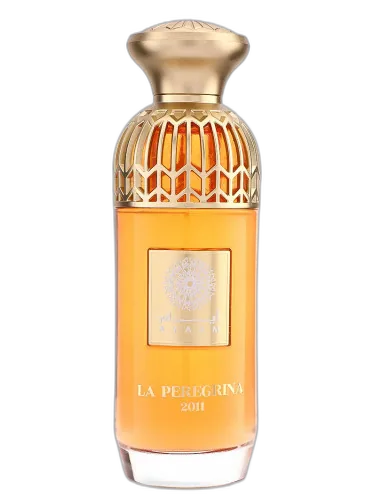
Ayaam Perfumes
La Peregina 2011 Ayaam Perfumes
Shared top notes: saffron
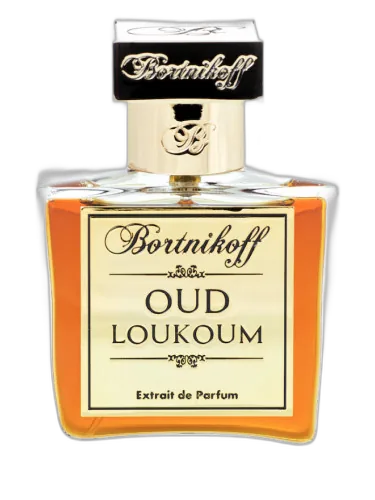
Bortnikoff
Oud Loukoum Bortnikoff
Shared top notes: dried fruits, tobacco