


Maisìa Maison Gabriella Chieffo
Fragrance Story
Maisìa by Maison Gabriella Chieffo is a Floral Fruity fragrance for women and men. Maisìa was launched in 2016. Maisìa was created by Gabriella Chieffo and Luca Maffei.
Composition Profile
About the Perfumer

Gabriella Chieffo
Gabriella Chieffo is the founder and nose behind Maison Gabriella Chieffo, a niche perfume house based in Italy. Her creations include 1,2,3, Stella!, Lattedoro, Maisìa, Menamò, and Sciusciù, each reflecting her personal artistic vision. Her fragrances are known for their distinctive character and Italian-inspired elegance.
Fragrance Notes
All Notes
Complete scent profile
 Fig Leaf
 Narcissus
 Ash
Ash
 Black Amber
 Bergamot
 Broom
Broom
 Guaiac Wood
 Fig
Fig
 Lemon
Lemon
 Musk
Musk
 Sandalwood
Maisìa Maison Gabriella Chieffo by Maison Gabriella Chieffo offers a distinctive olfactory experience that stands out from other fragrances in its category.
Crafted with the finest ingredients and a blend of traditional and modern perfumery techniques, this fragrance represents the pinnacle of the perfumer's art.
Maisìa Maison Gabriella Chieffo embodies the distinctive style of Maison Gabriella Chieffo while adding a unique chapter to their fragrance portfolio.
Character Profile
The Lover Archetype: Portrait of Maisìa Maison Gabriella Chieffo
Essence
The person who cherishes Maisìa by Maison Gabriella Chieffo is most closely aligned with the Lover archetype, though not in its most superficial incarnation. This is not mere romanticism or fleeting sensuality-this is a soul who worships beauty in all its forms, who seeks to merge with the sublime through the senses. The Lover is intoxicated by life, not as a passive observer but as an active participant in its pleasures and pains.
Maisìa, with its blend of jasmine, saffron, and vanilla, is a fragrance of contrasts-warm yet elusive, opulent yet intimate. It does not announce itself with brute force but lingers, seducing those who come near. The wearer of this scent is no different: they do not demand attention but effortlessly command it.
Style & Aesthetic
This person’s world is curated with precision, not out of vanity but from a deep conviction that beauty is a form of truth. Their home is a sanctuary of textures-velvet, aged wood, the cool touch of marble-each object chosen not for status but for the way it stirs the soul. They surround themselves with art that unsettles as much as it enchants, for they understand that true beauty is never safe.
Their taste in music, literature, and film leans toward the baroque, the decadent, the emotionally unrestrained. They might adore the poetry of Baudelaire, the films of Almodóvar, or the music of Debussy-works that blur the line between pleasure and melancholy. They are drawn to the places where ecstasy and sorrow meet, for they know that one cannot exist without the other.
Philosophy & Values
For them, life is not a problem to be solved but an experience to be savored. They reject asceticism, seeing it as a denial of life’s richness, yet they are not mere hedonists. Their pursuit of pleasure is philosophical-a way of touching the divine. They believe that to deny the senses is to deny existence itself.
Yet, this philosophy is not without its dangers. Their reverence for beauty can slip into obsession, their love of intensity into excess. They may find themselves chasing ever-greater sensations, never fully satisfied, always hungry for the next sublime encounter.
Relationships
In love, they are both generous and demanding. They do not seek mere companionship but a communion of souls, a bond that transcends the mundane. Their relationships are passionate, often tumultuous, for they cannot abide half-measures. They give themselves completely and expect the same in return-a standard few can meet.
They are magnetic, drawing others in with their presence, but they are also prone to disillusionment. When reality fails to match their ideal, they may withdraw, leaving behind confusion and wounded hearts. Their shadow is the fear of ordinariness-the terror of being trapped in a love that does not burn brightly enough.
Shadow
The Lover’s greatest weakness is their own hunger. When unbalanced, they may become slaves to their appetites-for romance, for luxury, for emotional drama. They risk mistaking intensity for meaning, losing themselves in the pursuit of ever-greater thrills.
There is also a latent narcissism in their worship of beauty. They may grow impatient with those who do not share their aesthetic fervor, dismissing them as dull or unenlightened. Their disdain for the mundane can isolate them, leaving them adrift in a self-made world of exquisite loneliness.
Conclusion
The highest expression of the Lover is not indulgence but transformation-the ability to alchemize desire into wisdom. When they learn that true beauty lies not just in possession but in surrender, not just in pleasure but in depth, they become more than aesthetes-they become visionaries.
They must remember that even the most intoxicating fragrance fades, and that the deepest love is not in the ecstasy of the moment but in the quiet endurance of time. If they can embrace this, they will no longer be mere seekers of beauty but its living embodiment.
Similar Fragrances
Fragrances with a comparable profile - shared accords, notes, and character.
Maison Gabriella Chieffo
Maisìa Maison Gabriella Chieffo
Shared accords: amber, aromatic, citrus

Antinomie
Courtoisie Féroce Antinomie
Shared accords: amber, aromatic, citrus
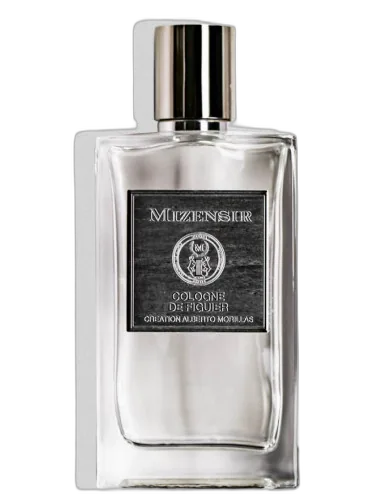
Mizensir
Cologne De Figuier Mizensir
Shared accords: amber, aromatic, citrus

Esprit
Esprit Collection Esprit
Shared accords: amber, aromatic, citrus
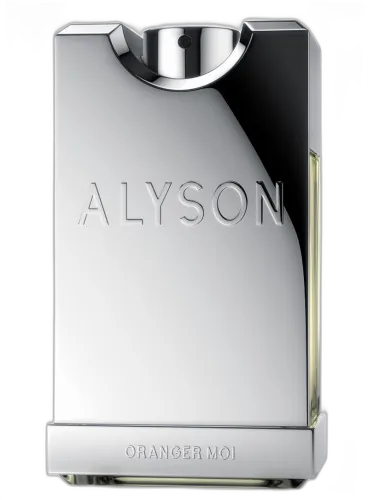
ALYSONOLDOINI
Oranger Moi Alysonoldoini
Shared accords: aromatic, citrus, green