
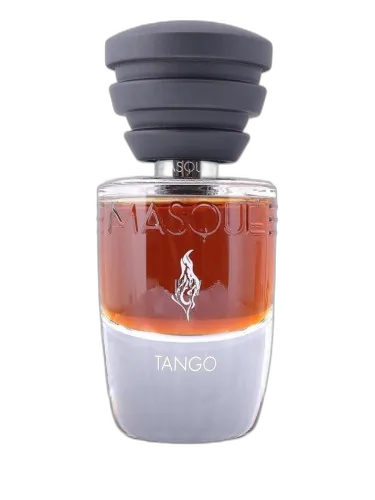

Tango Masque Milano
At a glance
Is Tango Masque Milano worth trying?
Tango by Masque Milano is a Oriental Floral fragrance for women and men.
- Best match
- Evening wear in Fall
- Performance feel
- Excellent longevity with Strong sillage
- Signature profile
- amber, warm spicy, woody with Amber, Cumin, Benzoin
The first impression
Tango by Masque Milano is a Oriental Floral fragrance for women and men. Tango was launched in 2013. The nose behind this fragrance is Cécile Zarokian.
What shapes the scent
The perfumer behind it

Cécile Zarokian
Cécile Zarokian is a perfumer who has created numerous fragrances for Amouage. Her works include Epic 56 Woman Amouage, Leather Sadah Amouage, Material Amouage, and Opus Xiii - Silver Oud Amouage. She also crafted Opus Xiv - Royal Tobacco Amouage, Oud Ulya Amouage, Outlands Amouage, and Rose Aqor Amouage. Her portfolio showcases a range of luxurious and complex compositions.
Notes pyramid
All Notes
Complete scent profile
 Amber
Amber
 Cumin
Cumin
 Benzoin
 Cardamom
 Cinnamon
 Tonka Bean
 Sandalwood
 Guaiac Wood
 Turkish Rose
 Melilotus
Jasmine Sambac
Melilotus
Jasmine Sambac
 Cedar
Cedar
The mood it creates
The Archetype Archetype: Portrait of Tango Masque Milano
Essence
This person is drawn to Tango-a fragrance that is at once bold, sensual, and elusive, much like themselves. It is a scent of contrasts: smoky leather, dark spices, and a whisper of floral intrigue. It does not announce itself crudely but lingers in the air like an unanswered question. The wearer of Tango is not one to be easily deciphered; they are an Enigma, a modern mystic who thrives in the interplay of shadow and light.
Style & Aesthetic
Their wardrobe is an extension of their psyche-structured yet fluid, polished yet unpredictable. They favor deep hues (charcoal, burgundy, ink-black) and textures that suggest history (worn leather, heavy wool, silk with a faint sheen). Their style is not loud but insistent, like a half-remembered dream.
They appreciate decadent minimalism-a single antique ring, a well-worn book with underlined passages, a vintage watch that ticks just slightly too slow. They are drawn to art that resists easy interpretation: the films of Tarkovsky, the paintings of Francis Bacon, the music of Bohren & der Club of Gore.
They thrive in controlled seclusion-a dimly lit apartment filled with books, a midnight walk through empty streets, a solitary drink in a quiet bar. They are not antisocial but selectively social, preferring a few intense conversations to many shallow ones.
They may work in a field that demands interpretation-psychology, art curation, writing-or they may reject conventional careers entirely, crafting a life that allows for contemplation and spontaneity. Routine is their enemy; ritual, their ally.
Philosophy & Values
They believe life is not a problem to be solved but a mystery to be lived. Their philosophy is rooted in depth over certainty, preferring the richness of ambiguity to the sterility of absolutes. They are drawn to thinkers like Nietzsche, Jung, and Bataille-writers who embrace contradiction rather than shy from it.
Their values are unconventional. They do not seek approval but authenticity, even if it unsettles others. They are not afraid of darkness, for they know that light alone is blinding without contrast. They value intensity-whether in love, art, or thought-over comfort. Yet, this can make them seem distant, even cold, to those who prefer simpler narratives.
Relationships
They do not give themselves easily. Their relationships are labyrinthine, built on slow revelation rather than instant confession. They attract others through magnetism, not charm-people sense there is more beneath the surface, and this compels them.
Yet, their shadow is emotional inaccessibility. They can be so preoccupied with their own depths that they forget others need simpler connections. They may withdraw without explanation, leaving lovers and friends bewildered. Their greatest fear is banality, but this can make them flee from the ordinary tenderness that sustains most bonds.
Shadow
Their strength-self-containment-can become their flaw. When unbalanced, they retreat too far into their own mind, mistaking isolation for wisdom. They may grow cynical, dismissing what they cannot immediately fathom as superficial. Their love of mystery can curdle into paranoia, seeing deception where there is only simplicity.
But when they embrace their shadow, they learn that even the deepest waters must sometimes meet the shore. They realize that true wisdom is not in perpetual hiding but in knowing when to step into the light.
Conclusion
Tango is their scent because it is a riddle wrapped in smoke. It does not beg to be understood-it exists, potent and unapologetic. Like the fragrance, they are a living paradox: both sensual and cerebral, intimate and remote.
They are not for everyone. But for those who linger long enough, they offer not answers, but deeper questions. And in a world that demands certainty, that is a rare and intoxicating gift.
If you like this, try these
Fragrances with a comparable profile - shared accords, notes, and character.
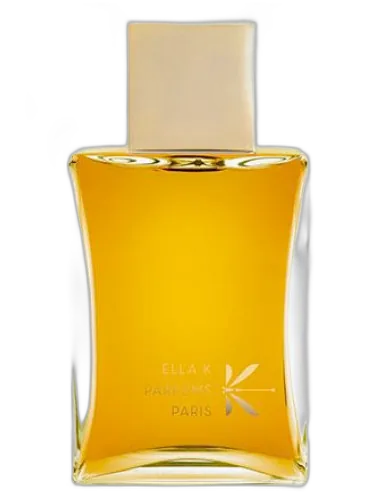
Ella K Parfums
Epupa Mon Amour Ella K Parfums
Shared top notes: amber, cumin, guaiac wood

Toni Cabal
314m - First Class Toni Cabal
Shared top notes: benzoin, cinnamon, cumin
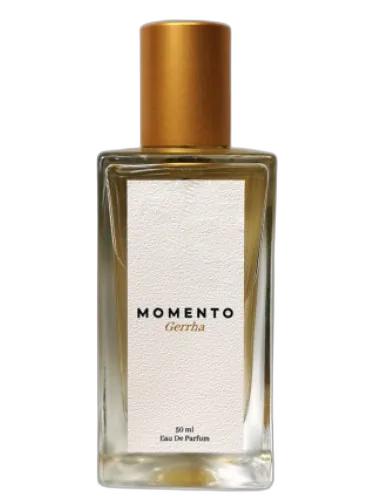
Momento Perfumery
Gerrha Momento Perfumery
Shared top notes: amber, cardamom, sandalwood
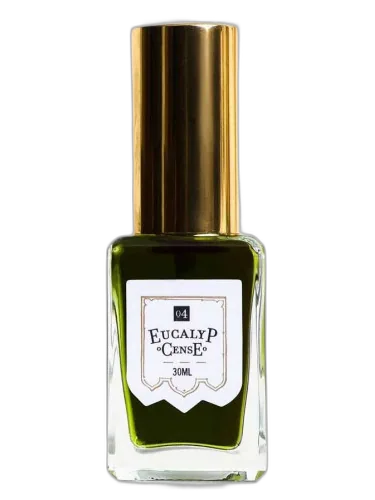
Fitzgerald and Guislain
Eucalypcense Fitzgerald And Guislain
Shared top notes: benzoin, cardamom, cinnamon
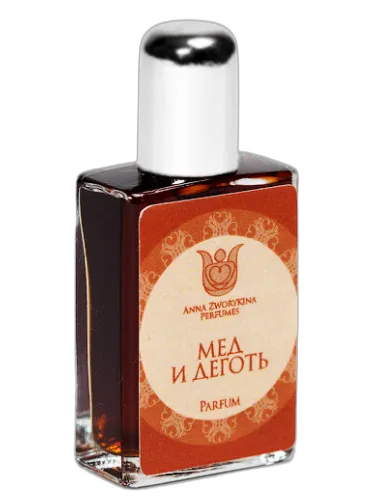
Anna Zworykina Perfumes
Honey And Tar Anna Zworykina Perfumes
Shared top notes: benzoin, cardamom, cedar