

Retba Memo Paris
At a glance
Is Retba Memo Paris worth trying?
Retba by Memo Paris is a Oriental Spicy fragrance for women and men.
- Best match
- Evening wear in Winter
- Performance feel
- Very Good longevity with Strong sillage
- Signature profile
- warm spicy, amber, sweet with Raspberry, Rose, Pink Pepper
The first impression
Retba by Memo Paris is a Oriental Spicy fragrance for women and men. Retba was launched in 2020. The nose behind this fragrance is Alienor Massenet. Top notes are Raspberry, Rose and Pink Pepper; middle notes are Agarwood (Oud), Saffron and Ginger; base notes are Amber, Vanilla, Cardamom, Cinnamon, Myrhh, Nutmeg and Guaiac Wood.
What shapes the scent
The perfumer behind it

Alienor Massenet
Alienor Massenet is a French perfumer known for her work with major fragrance houses, including Givaudan. Her style balances modern elegance with subtle complexity, often highlighting floral and woody contrasts. Notable creations include the luminous Rose Lumiere for Armand Basi and the enigmatic Black Swan for Brocard.
Notes pyramid
Top Notes
First impression · 15-30 min
 Raspberry
 Rose
Rose
 Pink Pepper
Heart Notes
Core character · 2-4 hours
 Agarwood (Oud)
 Saffron
 Ginger
Base Notes
Lasting impression · 4+ hours
 Amber
Amber
 Vanilla
 Cardamom
 Cinnamon
 Myrhh
Myrhh
 Nutmeg
 Guaiac Wood
The mood it creates
The Sage Archetype: Portrait of Retba Memo Paris
Essence
The person who cherishes Retba by Memo Paris is, at their core, an Explorer-a seeker of horizons, both external and internal. This fragrance, with its sunlit amber, salty warmth, and whispers of driftwood, evokes the spirit of one who is perpetually drawn to the unknown. They are not content with stagnation; their soul thrives on movement, discovery, and the subtle alchemy of experience.
Yet, like all archetypes, the Explorer has its shadow. The same restlessness that propels them toward enlightenment can also leave them unmoored, drifting without true anchorage. Their life is a dance between the ecstasy of freedom and the quiet ache of rootlessness.
Style & Aesthetic
Their style is unstudied elegance-effortless, yet deliberate. They favor fabrics that breathe, textures that tell stories: linen worn soft by salt air, leather bags scarred by journeys, jewelry that feels like talismans rather than ornaments. Their palette leans toward earth and sky-ochres, deep blues, the faded gold of desert light.
They wear Retba because it is not just a scent, but a sensory memoir. It carries the warmth of Saharan dunes, the brine of distant shores, the resinous depth of ancient trade routes. It is the olfactory equivalent of a well-stamped passport.
Their life is a mosaic of curated moments. They might work remotely, or in a field that rewards movement-photography, anthropology, maritime trade. Even if anchored in one place, their mind is always elsewhere, planning the next departure.
They are collectors-not of objects, but of sensations. A vial of sand from Dakar, a postcard from a Lisbon café, a melody heard in Marrakech. Their home (if they have one) is a gallery of fragments, each whispering of a place they once loved and left.
Philosophy & Values
Their philosophy is one of sensual empiricism-they trust only what they have tasted, touched, or wandered through. Abstract dogma bores them; truth must be lived, not merely contemplated. They are drawn to philosophies that celebrate the transient-Zen koans, Stoic detachment, the existential embrace of impermanence.
Freedom is their highest ideal, but not in the reckless sense. Their freedom is deliberate, a conscious refusal to be bound by convention. They value authenticity above all, despising pretense and hollow social rituals. Yet this can make them impatient with those who find comfort in tradition-a subtle arrogance lurks beneath their open-mindedness.
Relationships
They are magnetic but elusive-people are drawn to their stories, their aura of having lived more fully than most. Yet intimacy is a paradox for them. They crave deep connection but fear the weight of permanence. Their relationships are often intense but transient, like a fire that burns bright but not long.
They are most at home with fellow wanderers-those who understand that love does not always mean possession. Their friendships are built on shared experience rather than obligation. Yet their shadow emerges here: their avoidance of commitment can leave others feeling like waystations on an endless journey.
Shadow
Beneath their radiant independence lies a fear-the terror of standing still. They mistake motion for growth, confusing new horizons with evolution. At their worst, they become ghosts in their own lives, always fleeing before anything can truly claim them.
Their greatest challenge is not in finding new lands, but in seeing with new eyes. The true Explorer does not just traverse the world-they let the world traverse them, allowing each journey to reshape their soul. Only then does their wandering become wisdom.
Conclusion
To love Retba is to love the road itself-the dust, the sweat, the shimmering mirage of the next oasis. They are neither tourist nor exile, but something in between: a seeker who understands that the journey and the destination are the same.
Their life is a question written in sand, erased by the tide, only to be written again. And perhaps that is enough.
If you like this, try these
Fragrances with a comparable profile - shared accords, notes, and character.

Atelier des Ors
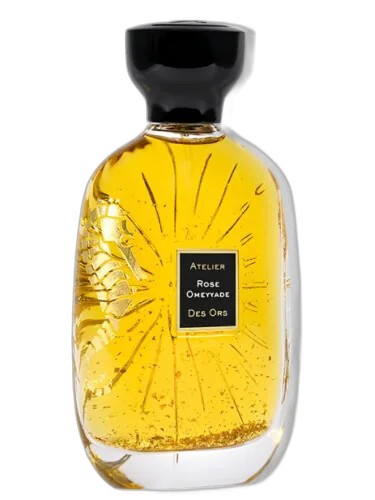
Rose Omeyyade Atelier Des Ors
Shared top notes: pink pepper, raspberry, rose

Antonio Visconti
Silver Wood Antonio Visconti
Shared top notes: pink pepper, raspberry, rose
Atelier des Ors
Rose Omeyyade Vintage Atelier Des Ors
Shared top notes: pink pepper, raspberry, rose
Orens
Undea Des Iles Orens
Shared top notes: raspberry
Beary
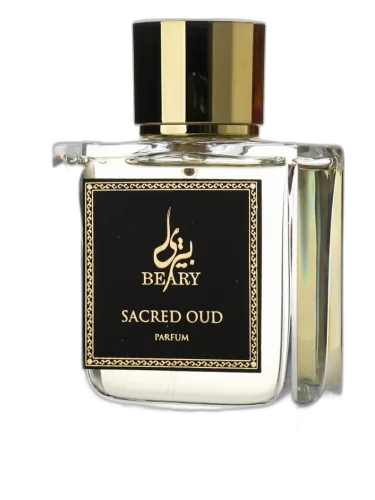
Sacred Oud Beary
Shared top notes: raspberry, rose