
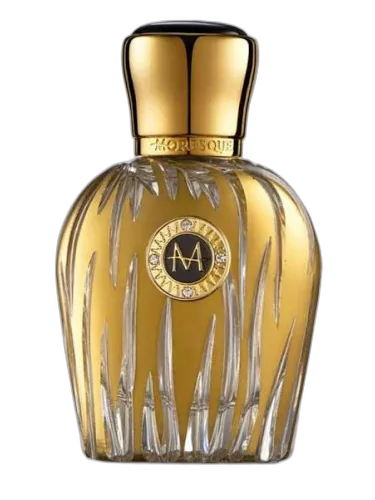
Fiamma Moresque
At a glance
Is Fiamma Moresque worth trying?
Fiamma by Moresque is a Woody Aromatic fragrance for women and men.
- Best match
- Evening wear in Fall
- Performance feel
- Very Good longevity with Strong sillage
- Signature profile
- amber, powdery, vanilla with Iris, Juniper Berries, Cypress
The first impression
Fiamma by Moresque is a Woody Aromatic fragrance for women and men. Fiamma was launched in 2016. The nose behind this fragrance is Andrea (Thero) Casotti. Top notes are Iris, Juniper Berries and Cypress; middle notes are Myrrh and Patchouli; base notes are Amber, Honey, Vanilla, Resins, Leather and Musk.
What shapes the scent
The perfumer behind it

Andrea (Thero) Casotti
Andrea Casotti, also known as Thero, is a perfumer whose work spans multiple niche brands. He has created fragrances for Anima Mundi including Ankh Sun Amon, Dusara, Isvara, Pompeii, and Tikal, as well as for Jovoy Paris and Moresque. His compositions often explore historical and cultural themes through complex, evocative scent profiles.
Notes pyramid
Top Notes
First impression · 15-30 min
 Iris
Iris
 Juniper Berries
 Cypress
Heart Notes
Core character · 2-4 hours
 Myrrh
Myrrh
 Patchouli
Base Notes
Lasting impression · 4+ hours
 Amber
Amber
 Honey
Honey
 Vanilla
 Resins
 Leather
 Musk
Musk
The mood it creates
The Lover Archetype: Portrait of Fiamma Moresque
Essence
The one who wears Fiamma Moresque is ruled by The Lover archetype-not in the trivial sense of romantic indulgence, but in the primal, consuming embrace of passion, intensity, and aesthetic devotion. This is a fragrance of smoldering woods, dark resins, and fiery spices, evoking a soul who does not merely exist but burns. The Lover archetype is drawn to beauty in all its forms-sensual, intellectual, and spiritual-yet is also haunted by the shadow of obsession, excess, and the fleeting nature of desire.
Relationships
In love, they are both the spark and the burn. They crave deep, soulful connections, yet their intensity can overwhelm those who prefer tepid waters. Their relationships are marked by periods of ecstatic closeness and sudden, inexplicable withdrawal-a defense against their own vulnerability. They are fiercely loyal but demand the same in return; betrayal, real or perceived, cuts them deeply.
Friendships are few but profound. They do not suffer fools, nor do they tolerate superficial bonds. Their inner circle consists of those who understand their contradictions-the way they oscillate between reckless abandon and brooding introspection.
Shadow
For all their brilliance, they are not without darkness. The shadow of The Lover is obsession-the inability to let go, the tendency to fixate on what is lost rather than what remains. They may indulge too deeply in nostalgia, or worse, in self-destructive habits that mirror the very intensity they revere. Their pursuit of beauty can become a prison, where nothing is ever enough, and every pleasure is tinged with the melancholy of impermanence.
At their worst, they risk becoming a parody of themselves-a figure so consumed by their own passions that they lose sight of balance. They may grow impatient with those who cannot match their fervor, dismissing them as dull or unworthy.
Conclusion
To encounter this person is to witness someone who moves through the world with magnetic presence. Their tastes are bold, their style deliberate-rich fabrics, deep hues, textures that demand to be touched. They are drawn to the dramatic, not for spectacle’s sake, but because they refuse to live in half-measures. Their home is a sanctuary of sensory indulgence: dim lighting, art that provokes, books with cracked spines from frequent revisiting. They favor the poetry of Rilke over platitudes, the complexity of a Barolo over easy pleasures.
Philosophically, they reject the mundane in favor of the transcendent. They believe in the transformative power of experience, whether through love, art, or suffering. Their values are rooted in authenticity-they despise pretense, though they themselves may occasionally succumb to affectation in their pursuit of the sublime.
If you like this, try these
Fragrances with a comparable profile - shared accords, notes, and character.
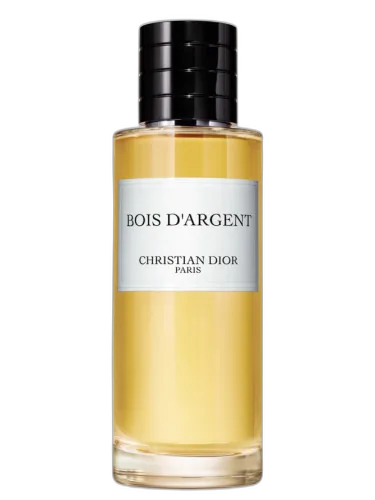
Dior
Bois D'argent Dior
Shared top notes: cypress, iris, juniper berries
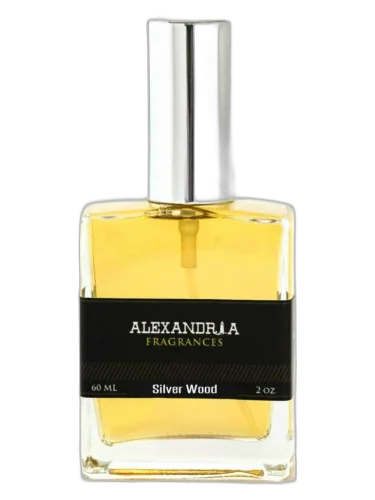
Alexandria Fragrances
Silver Wood Alexandria Fragrances
Shared top notes: cypress, iris, juniper berries

ScentBar
100 Scentbar
Shared top notes: cypress, iris
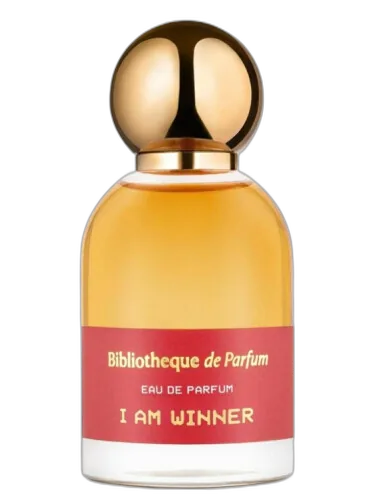
Bibliothèque de Parfum
I Am A Winner Bibliothèque De Parfum
Shared top notes: cypress, iris

Parfums Vintage
Sublime Musc Parfums Vintage
Shared top notes: cypress, juniper berries