
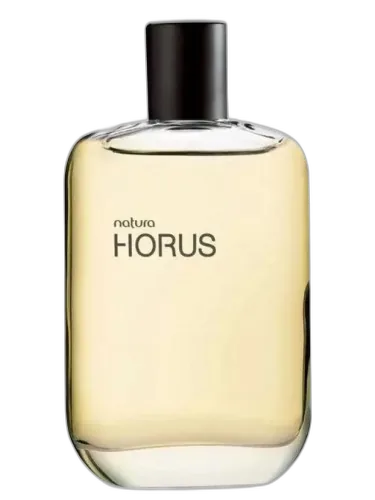

Horus Natura
At a glance
Is Horus Natura worth trying?
Horus by Natura is a Woody Chypre fragrance for men.
- Best match
- Office wear in Fall, Winter
- Performance feel
- Moderate longevity with Moderate sillage
- Signature profile
- woody, aromatic, green with Pine needles, Bergamot, Galbanum
The first impression
Horus by Natura is a Woody Chypre fragrance for men. Horus was launched in 1984. The nose behind this fragrance is Antonio Amador. Top notes are Pine needles, Bergamot and Galbanum; middle notes are Vetiver, Lavender and Jasmine; base notes are Leather, Vetiver and Musk.
What shapes the scent
The perfumer behind it

Antonio Amador
Antonio Amador has created fragrances for several major Brazilian brands, including Natura, O Boticário, and Ésika. His portfolio includes Natura's Horus and Revelar, O Boticário's Connexion and North Wind, and Ésika's Expression and Salvaje. His work often balances modern freshness with accessible, wearable compositions.
Notes pyramid
Top Notes
First impression · 15-30 min
 Pine needles
 Bergamot
 Galbanum
Heart Notes
Core character · 2-4 hours
 Vetiver
 Lavender
 Jasmine
Base Notes
Lasting impression · 4+ hours
 Leather
Vetiver
Leather
Vetiver
 Musk
Musk
The mood it creates
The Lover Archetype: Portrait of Horus Natura
Essence
The one who chooses Horus Natura as their scent is, above all, a Seeker-a soul in perpetual motion, drawn to the raw and untamed essence of nature. This archetype embodies the restless pursuit of meaning, not in grand abstractions, but in the textures of the earth, the whisper of leaves, the deep, resinous warmth of ancient forests. They are not content with surface pleasures; they crave immersion, a communion with the primal and the sacred.
Yet the Seeker is not merely a wanderer-they are a connoisseur of hidden truths, one who believes that beauty and wisdom are buried beneath layers of artifice. Their journey is as much internal as external, a probing of their own depths as they unravel the mysteries of the world.
Relationships
In love and friendship, they are intense but selective. They do not give their trust lightly, but once given, it is fierce and unwavering. Their partners must understand their need for solitude, their moments of retreat into the wild or into their own mind. They are not possessive, but they demand a connection that goes beyond words-a silent understanding, a shared reverence for the unseen.
Yet their shadow lurks in their tendency toward withdrawal. When disillusioned, they may vanish without explanation, retreating into the wilderness of their own thoughts. Their idealism can make them impatient with human frailty, and they may grow cold toward those who fail to meet their standards.
Shadow
The Seeker’s greatest strength-their relentless pursuit of truth-can also be their undoing. Their distrust of superficiality may harden into cynicism, making them dismissive of joy found in simple, ordinary things. They may become so consumed by their quest that they forget how to rest, how to be still.
At their worst, they are haunted by the fear of never finding what they seek. The deeper they go, the more elusive meaning becomes, and this paradox can leave them stranded between worlds-too wild for civilization, too restless for peace.
Conclusion
The lover of Horus Natura is neither entirely of this world nor entirely beyond it. They walk the borderlands, drawn to the scent of damp soil and sacred resins because it reminds them of something they cannot name. Their life is a pilgrimage without a fixed destination, and though they may never arrive, the journey itself is their truth.
They are flawed, yes-prone to solitude, to moments of crushing doubt-but they are also alive in a way few are, their senses attuned to the pulse of the earth, their spirit forever reaching. And perhaps that is enough.
If you like this, try these
Fragrances with a comparable profile - shared accords, notes, and character.
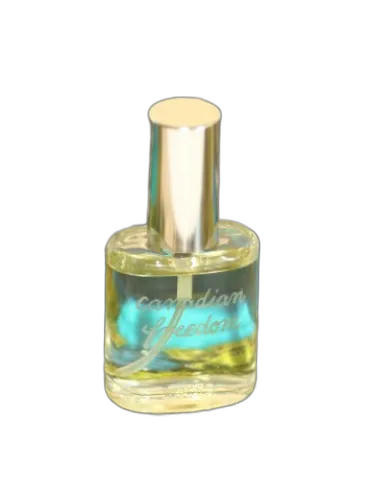
Francesco Vitelli Perfumes
Canadian Freedom Francesco Vitelli Perfumes
Shared top notes: galbanum
Maison Rebatchi
Vanille Riviera Maison Rebatchi
Shared top notes: bergamot, galbanum
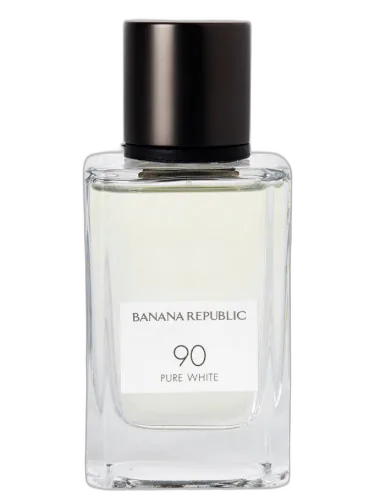
Banana Republic
90 Pure White Banana Republic
Shared top notes: bergamot
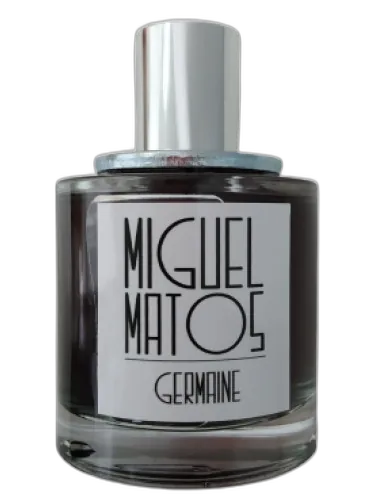
Miguel Matos
Germaine Green Miguel Matos
Shared top notes: bergamot
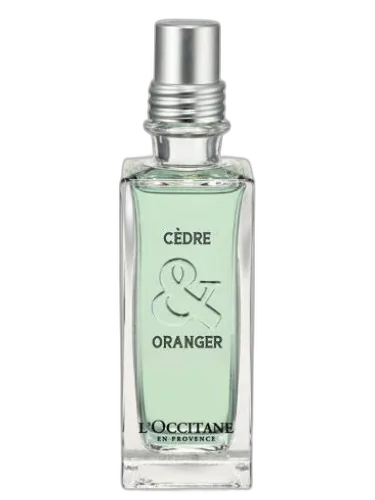
L'Occitane en Provence
Cèdre & Oranger L'occitane En Provence
Shared top notes: bergamot, pine needles