


Vetiver Rose Nosegasm
At a glance
Is Vetiver Rose Nosegasm worth trying?
Vetiver Rose by Nosegasm is a Floral Woody Musk fragrance for women and men.
- Best match
- Evening, Special Occasion wear in Fall, Winter
- Performance feel
- Good longevity with Moderate sillage
- Signature profile
- woody, earthy, musky with Hedione, Bergamot, White Rose
The first impression
Vetiver Rose by Nosegasm is a Floral Woody Musk fragrance for women and men. Vetiver Rose was launched in 2020. The nose behind this fragrance is Michael Boadi. Top notes are Hedione and Bergamot; middle notes are White Rose and Haitian Vetiver; base notes are Patchouli, Bourbon Vetiver and Musk.
What shapes the scent
The perfumer behind it

Michael Boadi
Michael Boadi is the founder and perfumer behind the Bohdidharma brand, which focuses on natural and spiritual fragrance blends. His catalog includes diverse scents such as Arabian Bokhoor, Black Lapsang, and Golden Rose, often inspired by global traditions and botanical ingredients. Boadi’s work emphasizes mindfulness and the connection between scent and well-being.
Notes pyramid
Top Notes
First impression · 15-30 min
 Hedione
 Bergamot
Heart Notes
Core character · 2-4 hours
White Rose
Haitian Vetiver
Base Notes
Lasting impression · 4+ hours
 Patchouli
Bourbon Vetiver
Patchouli
Bourbon Vetiver
 Musk
Musk
The mood it creates
The Alchemist Archetype: Portrait of Vetiver Rose Nosegasm
Essence
To wear Vetiver Rose Nosegasm is to embody a paradox-earth and bloom, shadow and light, the grounded and the ephemeral. This fragrance, with its deep, smoky vetiver softened by the delicate sensuality of rose, speaks to a soul who thrives in transformation. The dominant archetype here is the Alchemist, one who seeks to transmute the raw materials of life into something richer, more meaningful.
The Alchemist is not content with surface appearances; they dig, they refine, they experiment. Their life is a crucible where experiences-both bitter and sweet-are distilled into wisdom. Yet, like all archetypes, the Alchemist has a shadow: the relentless pursuit of perfection can become obsession, and the desire to transform can lead to an unwillingness to accept things as they are.
Relationships
In love and friendship, they are drawn to those who possess an inner fire, a spark of curiosity or intensity. Superficial charm does not move them; they crave conversations that unearth truths, that leave both parties slightly altered. Their relationships are laboratories of the soul-sometimes yielding gold, sometimes volatile reactions.
Yet their shadow emerges here: their relentless quest for transformation can make them impatient with those who resist change. They may mistake stability for stagnation, or grow frustrated when others do not share their hunger for reinvention. Their partners may feel like projects rather than companions, and their friendships may suffer if they cannot accept people as they are.
Shadow
The Alchemist’s greatest flaw is their refusal to let things be. Life, in its raw form, is never enough-it must always be refined, reinterpreted. This can lead to restlessness, a perpetual dissatisfaction with the present. They may romanticize struggle, believing that only through friction can one achieve brilliance, and thus sabotage their own peace.
At their worst, they become the failed alchemist-one who spends their life chasing an elusive ideal, never realizing that the gold they seek was within them all along. Their relentless pursuit of transformation can become a form of self-avoidance, a way to escape the simple, unrefined truth of their own humanity.
Conclusion
Their tastes are deliberate, almost ceremonial. They do not merely drink coffee-they savor the ritual of grinding beans, the slow pour, the way steam curls in the morning light. Their home is a sanctuary of textures: aged leather, unfinished wood, linen that softens with time. They are drawn to art that reveals layers-impressionist paintings where brushstrokes dissolve into meaning, or poetry where silence speaks as loudly as words.
Philosophically, they believe in the hidden potential of all things. A cracked vase is not discarded but repaired with gold, following the Japanese art of kintsugi. They see beauty in imperfection, but only because they believe imperfection can be elevated. This worldview makes them both patient and demanding-patient with process, yet demanding of depth.
If you like this, try these
Fragrances with a comparable profile - shared accords, notes, and character.

Gritti
Macrame Gritti
Shared top notes: bergamot

Viktor&Rolf
Flowerbomb Pink Sparkle Viktor&rolf
Shared top notes: bergamot
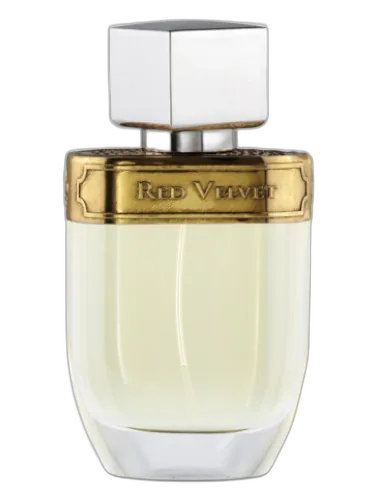
Aulentissima
Red Velvet Aulentissima
Shared top notes: bergamot, hedione
Comme des Garcons
Zero Comme Des Garcons
Shared top notes: bergamot
Neil Morris
Flowers : Rose Neil Morris
Shared top notes: bergamot