
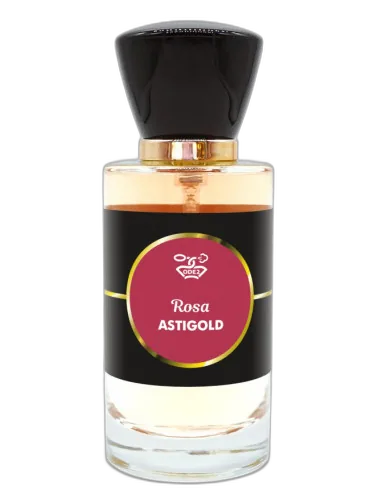
Rosa Astigold Odetu
At a glance
Is Rosa Astigold Odetu worth trying?
Rosa Astigold by Odetu is a Floral Fruity fragrance for women and men.
- Best match
- Evening wear in Fall
- Performance feel
- Very Good longevity with Moderate sillage
- Signature profile
- fruity, rose, sweet with Pear, Apple, Peach
The first impression
Rosa Astigold by Odetu is a Floral Fruity fragrance for women and men. This is a new fragrance. Rosa Astigold was launched in 2023. The nose behind this fragrance is Andrey Chibisov. Top notes are Pear, Apple and Peach; middle notes are Rose, Champagne and Marigold; base notes are Vanilla, Patchouli and Oakmoss.
What shapes the scent
The perfumer behind it

Andrey Chibisov
Andrey Chibisov is a Russian perfumer known for his work with the niche brand Odetu, where he has created a diverse range of fragrances. His style often balances bold, contrasting notes, as seen in Odetu’s Black Coffee and Berry Berissimo, alongside more ethereal compositions like Aurora Borealis. He also contributed to Ladanika and Petrushka, demonstrating a versatility that spans from rich, woody scents to fresh, powdery accords.
Notes pyramid
Top Notes
First impression · 15-30 min
 Pear
Pear
 Apple
Apple
 Peach
Peach
Heart Notes
Core character · 2-4 hours
 Rose
Rose
 Champagne
 Marigold
Base Notes
Lasting impression · 4+ hours
 Vanilla
 Patchouli
 Oakmoss
The mood it creates
The Lover Archetype: Portrait of Rosa Astigold Odetu
Essence
Rosa Astigold Odetu is a scent of contrasts-opulent yet restrained, warm yet enigmatic. It carries the golden richness of amber, the velvety depth of rose, and a whisper of spice that lingers like an unspoken thought. This is not a fragrance for those who seek simplicity or neutrality; it is for the individual who embraces life’s sensuality, who finds beauty in the interplay of shadow and light.
At their core, this person embodies the Lover archetype-not in the trivial sense of romantic pursuit, but in the Jungian understanding of one who seeks connection, beauty, and meaning through the senses and the heart. The Lover is drawn to intensity, to the poetry of existence, and to the cultivation of pleasure as an art form. Yet, like all archetypes, the Lover has a shadow-one that risks indulgence, dependency, or an inability to face life’s harsher truths.
Style & Aesthetic
Their tastes are refined but never ostentatious. They prefer quality over quantity, choosing objects that tell a story-a well-worn leather-bound book, a handcrafted piece of jewelry, a vintage wine with decades of history in its tannins. Their home is a sanctuary of textures: velvet drapes, aged wood, the faint scent of incense mingling with fresh flowers. They are drawn to art that evokes emotion-Baroque music, Pre-Raphaelite paintings, the melancholic prose of Rilke.
Philosophically, they believe that beauty is not frivolous but essential, a counterbalance to life’s inevitable suffering. They may quote Keats-"Beauty is truth, truth beauty"-but they also understand that beauty can be deceptive, a veil over reality. This duality defines them: they are both hedonist and philosopher, indulging in sensory pleasures while questioning their deeper meaning.
They do not chase trends; they cultivate an existence that feels true to them. Their mornings might begin with black coffee and a carefully selected record, their evenings with a glass of something complex and a book that demands reflection. They travel not to check off destinations but to immerse themselves in atmosphere-a dimly lit Parisian café, a misty forest at dawn, a bustling spice market where scent and sound collide.
Work, for them, must have meaning. They are drawn to creative fields-writing, design, perfumery-or roles that allow them to shape experiences for others. Routine suffocates them; they thrive in environments where intuition and artistry are valued over rigid structure.
Relationships
In love, they are intense but not possessive-at least, not overtly. They crave deep emotional and physical connection, yet they fear stagnation. Their ideal partner is someone who can match their intellect and passion, who understands that love is not just comfort but also challenge.
Yet, the shadow of the Lover emerges here: a tendency to idealize, to project fantasies onto others, only to be disillusioned when reality intrudes. They may struggle with emotional dependency, mistaking intensity for intimacy. When wounded, they retreat into aestheticism, using beauty as armor against vulnerability.
Shadow
The Lover’s greatest weakness is the refusal to face the mundane, the painful, the unlovely. When life becomes too harsh, they may retreat into aestheticism, using beauty as a shield rather than a bridge to deeper understanding. They might indulge in excess-luxury, romance, even melancholy-as a way to avoid confronting their own emptiness.
Yet, this shadow is also their potential. If they learn to integrate the ugly with the beautiful, to see that depth comes from embracing all of life, not just its golden moments, they become not merely a connoisseur of pleasures but a true sage of the heart.
Conclusion
To wear Rosa Astigold Odetu is to declare that life is meant to be felt deeply, savored slowly, questioned endlessly. This person is neither naive nor cynical; they are a seeker, one who understands that the most profound truths are often found in the interplay of light and shadow, rose and spice, love and loss.
They are, in the end, a poet of the senses-flawed, yes, but fiercely alive.
If you like this, try these
Fragrances with a comparable profile - shared accords, notes, and character.

O Boticário
Espelho Secreto O Boticário
Shared top notes: apple, peach, pear

Gamalion Paris
Éclat De Rubis Gamalion Paris
Shared top notes: apple, peach, pear

Dilís Parfum
Candy Passion Dilís Parfum
Shared top notes: apple, pear
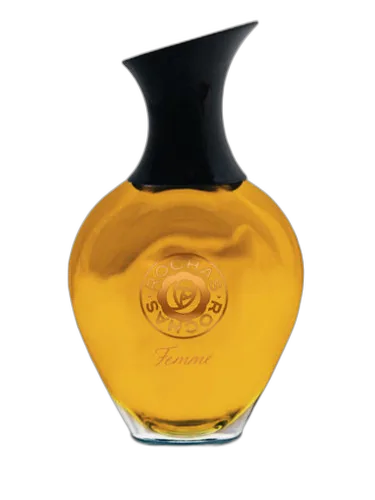
Rochas
Femme Rochas 2013 Rochas
Shared top notes: peach
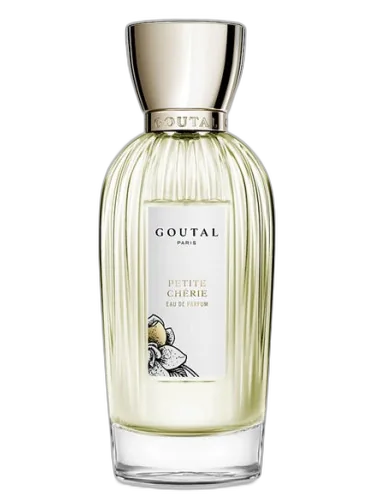
Goutal
Petite Cherie Goutal
Shared top notes: peach, pear