


Néroli Olibanum.
Fragrance Story
Néroli by Olibanum. is a Floral fragrance for women and men. Néroli was launched in 2024. The nose behind this fragrance is Céline Perdriel. Top notes are Bergamot and Citrus Leaf; middle notes are Neroli, Orange Blossom and Jasmine Sambac; base notes are Frankincense and Musk.
Composition Profile
About the Perfumer

Celine Perdriel
Celine Perdriel is a French perfumer known for her work with Atelier Materi, where she has created scents like Ambre Papier and Cuir Nilam. Her portfolio also includes the fresh Cèdre Figalia and the floral Rose Ardoise. She has additionally crafted fragrances for Faberlic and Good Water Perfume, demonstrating a range from woody to aquatic notes.
Fragrance Notes
Top Notes
First impression · 15-30 min
 Bergamot
 Citrus Leaf
Heart Notes
Core character · 2-4 hours
 Neroli
 Orange Blossom
Jasmine Sambac
Orange Blossom
Jasmine Sambac
Base Notes
Lasting impression · 4+ hours
Frankincense
 Musk
Musk
Character Profile
The Lover Archetype: Portrait of Néroli Olibanum.
Essence
The person who gravitates toward Néroli Olibanum-a fragrance blending the luminous warmth of neroli with the meditative depth of frankincense-is most closely aligned with the Sage archetype. This is the seeker of wisdom, the observer who values clarity, introspection, and the quiet power of knowledge. Like the scent itself, they are both radiant and solemn, balancing brightness with shadow.
The Sage is drawn to what is hidden beneath the surface, to the subtle interplay of light and dark. They do not merely exist; they contemplate existence. Their mind is a sanctuary where ideas ferment, where the ephemeral is distilled into meaning. Yet, like all archetypes, the Sage has a shadow-one that risks detachment, over-intellectualization, and a reluctance to engage with the raw, unrefined aspects of life.
Style & Aesthetic
Their taste is an exercise in controlled elegance. They prefer textures that whisper rather than shout-linen, aged leather, unpolished wood. Their home is a curated space, not sterile but deliberate, where every object carries intention. Books line the shelves, not as trophies but as companions, their spines worn from use.
In art, they favor the enigmatic: a Caravaggio for its chiaroscuro, a Rothko for its depth masquerading as simplicity. Music is an intimate affair-Gregorian chants, Arvo Pärt’s Spiegel im Spiegel, or the restrained melancholy of Nick Drake. They do not consume; they commune.
They thrive in solitude but are not antisocial. Mornings are sacred-black coffee, a journal, the slow unfurling of thought. They may practice meditation, not as a trend but as a necessity, a way to quiet the constant hum of their mind.
Work is either academic, artistic, or something that allows for autonomy. They could be a writer, a philosopher, a perfumer, a researcher-anything that rewards patience and insight. They are not driven by wealth but by the freedom to think. Yet this independence can curdle into aloofness, a refusal to engage with the mundane demands of life.
Philosophy & Values
Truth is their compass, but not in the rigid sense of dogma. They understand that truth is often layered, paradoxical, and that wisdom lies in holding contradictions without dissolving them. They are drawn to Stoicism for its discipline, to Zen for its embrace of the unspoken, to Nietzsche for his insistence that one must become what one is.
They value depth over breadth, silence over noise. Their morality is not prescriptive but introspective-they judge actions by their integrity, not their popularity. Yet this very commitment to wisdom can isolate them. They may forget that not all truths need to be spoken, that sometimes compassion outweighs clarity.
Relationships
They are not the life of the party, but the one who lingers near the bookshelf, exchanging a few measured words with those who approach. Their friendships are few but profound, built on mutual respect for depth. They do not suffer fools, but neither do they dismiss them outright-they observe, they learn, they file away the encounter for later reflection.
Romance is a slow burn. They are drawn to those who can match their intellect but challenge their detachment. Passion, for them, is cerebral before it is physical-a meeting of minds that ignites the body. Yet their shadow emerges here: they can overanalyze love, dissecting it until it loses its pulse.
Shadow
The Sage’s greatest weakness is their own intellect. They can become lost in thought, mistaking analysis for living. Their pursuit of wisdom may harden into dogma, their open-mindedness collapsing into arrogance. They may dismiss emotion as irrational, forgetting that some truths are felt, not reasoned.
When unbalanced, they withdraw entirely, becoming the hermit who no longer returns to the world. Their relationships suffer, not from malice but from neglect-they forget that wisdom untested by life is merely theory.
Conclusion
Yet when the Sage is whole, they are a beacon-not blinding, but illuminating. They do not claim to have all answers, but they ask the right questions. Their presence is calming, their insights piercing. They remind us that to know oneself is the highest art, and that fragrance, like thought, is both ephemeral and eternal.
Néroli Olibanum is their signature because it mirrors their essence: light that acknowledges shadow, clarity that embraces mystery. They are not of this world entirely, yet they walk through it with quiet purpose, leaving traces of insight in their wake.
Similar Fragrances
Fragrances with a comparable profile - shared accords, notes, and character.

O Boticário
Fresh Season O Boticário
Shared accords: aromatic, citrus, fresh spicy

Ethra Parfums
Lympha Aurea Ethra Parfums
Shared accords: amber, aromatic, citrus

Evody Parfums
Fleur D'oranger Evody Parfums
Shared accords: aromatic, citrus, fresh spicy

Masaki Matsushima
Fleur De Sanshō Masaki Matsushima
Shared accords: amber, aromatic, citrus
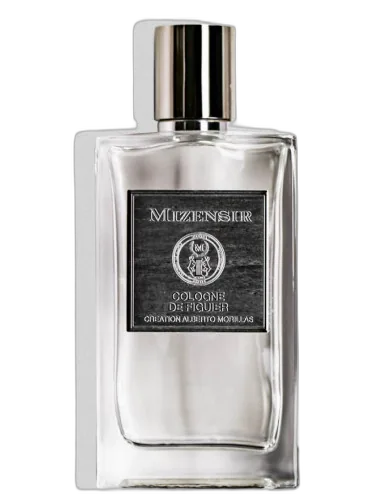
Mizensir
Cologne De Figuier Mizensir
Shared accords: amber, aromatic, citrus