
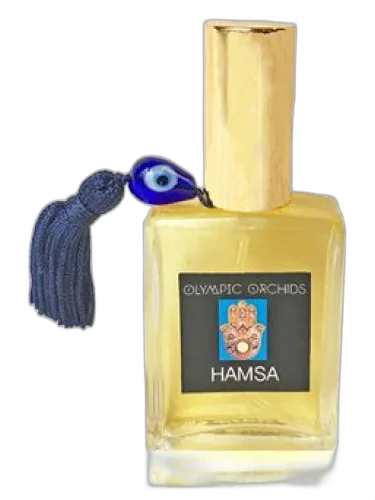

Hamsa Olympic Orchids Artisan Perfumes
At a glance
Is Hamsa Olympic Orchids Artisan Perfumes worth trying?
Hamsa by Olympic Orchids Artisan Perfumes is a Oriental fragrance for women and men.
- Best match
- Evening wear in Fall
- Performance feel
- Excellent longevity with Strong sillage
- Signature profile
- woody, amber, citrus with Palo Santo, Citron, Mastic or Lentisque
The first impression
Hamsa by Olympic Orchids Artisan Perfumes is a Oriental fragrance for women and men. Hamsa was launched in 2017. The nose behind this fragrance is Ellen Covey.
What shapes the scent
The perfumer behind it

Ellen Covey
Ellen Covey is the founder and perfumer behind Olympic Orchids Artisan Perfumes. She has created a diverse range of fragrances including African Orchid, Arizona, and Blackbird. Her work often draws on natural and botanical inspirations, resulting in unique and evocative scents.
Notes pyramid
All Notes
Complete scent profile
 Palo Santo
 Citron
 Mastic or Lentisque
 Olibanum
 Apricot
 Sandalwood
 Myrrh
Myrrh
 Styrax
 Cognac
 Agarwood (Oud)
 Liquidambar
The mood it creates
The Lover Archetype: Portrait of Hamsa Olympic Orchids Artisan Perfumes
Essence
This person is most closely aligned with the Sage-the seeker of wisdom, the interpreter of hidden truths. The Sage does not merely accumulate knowledge; they distill it into something profound, using insight as a lens to see beyond the surface. Hamsa, with its intricate blend of spices, woods, and resins, is not a fragrance for the casual wearer. It demands attention, unfolding in layers like an ancient text. The Sage, too, reveals themselves gradually, preferring depth over immediacy.
Style & Aesthetic
Their aesthetic is deliberate, neither minimalist nor ostentatious. They favor textures that tell a story-handwoven fabrics, aged leather, the patina of well-worn silver. Their home is a sanctuary of curated objects: a Persian rug with faded hues, a shelf of philosophy and poetry, a single incense holder carved from dark wood.
They drink black tea or bitter coffee, savoring the astringency. Their palate leans toward the complex-spiced wines, aged cheeses, dishes that unfold in waves of flavor. Music is an intimate affair: classical ragas, ambient soundscapes, or the raw blues of a lone guitarist. They do not consume art passively; they dissect it, letting it resonate in their bones.
They rise early, drawn to the hush of morning when the world is still soft at the edges. Their rituals are sacred: brewing tea with precision, journaling in a leather-bound notebook, walking without destination. They may practice yoga or tai chi, not as exercise but as moving meditation.
Work is meaningful to them, not merely a means to an end. They might be a writer, a scholar, a therapist, or an artist-any vocation that allows them to explore the unseen. Routine does not stifle them; it provides the structure within which they wander freely.
Philosophy & Values
They are drawn to the esoteric, the things that require patience to understand. Their philosophy is not dogmatic but fluid-a tapestry woven from Eastern mysticism, Western existentialism, and personal revelation. They value truth, but not in the rigid sense of facts; rather, they seek the kind of truth that lingers in the spaces between words, in the scent of old books, in the quiet before dawn.
They distrust blind faith, preferring instead the slow burn of contemplation. Yet, they are not coldly rational. There is a warmth to their intellect, a recognition that wisdom must be felt as much as it is known. They might meditate, but not for the sake of trend; they do so because stillness is where the mind speaks loudest.
Relationships
They are not a social butterfly, but neither are they a recluse. Their friendships are few but deep, built on mutual respect for depth and authenticity. Small talk exhausts them; they thrive in conversations that spiral into the abstract, where ideas are chewed over like rich tobacco.
Romantically, they are drawn to those who challenge them-not through conflict, but through intellectual and emotional depth. Their love is not possessive; it is a shared journey, a mutual sharpening of minds. Yet, they can be elusive, retreating into their inner world when overwhelmed. Their partner must understand that solitude is not rejection but a necessary return to the self.
Shadow
For all their wisdom, they risk becoming prisoners of their own minds. Their love of depth can turn into isolation, mistaking solitude for superiority. They may grow impatient with those who do not share their intensity, dismissing simpler joys as frivolous.
There is also the danger of over-analysis, turning every experience into an intellectual exercise rather than living it. They might miss the raw, unfiltered beauty of a moment because they are too busy dissecting it.
And then there is arrogance-the quiet, unspoken kind. The Sage must guard against the belief that their way of seeing is the only valid one. Wisdom, when unchecked, can calcify into dogma.
Conclusion
Hamsa is not a scent for the faint of heart. It is rich, contemplative, demanding. Like the Sage, it does not reveal itself all at once. It lingers, shifts, asks you to lean in closer.
This person wears Hamsa because it mirrors their soul-complex, layered, unafraid of darkness. It is the olfactory embodiment of their journey: a search for meaning in the spaces between notes, in the silence between thoughts.
They are not perfect. They are human-brilliant, flawed, endlessly searching. But in their quest for understanding, they touch something eternal. And that is enough.
If you like this, try these
Fragrances with a comparable profile - shared accords, notes, and character.
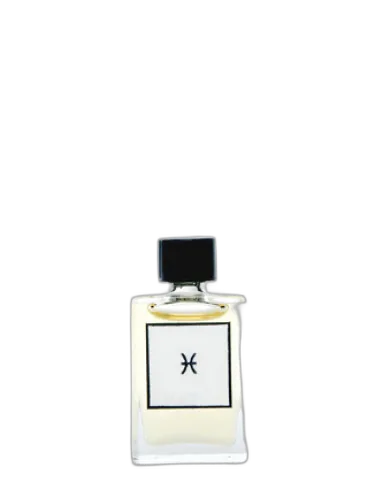
Hendley Perfumes
Tama Hendley Perfumes
Shared top notes: agarwood (oud), myrrh, olibanum
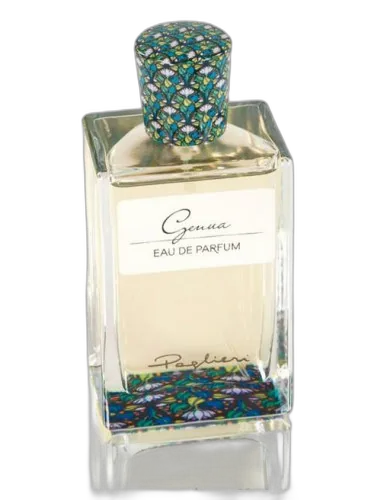
Paglieri
Genua Paglieri
Shared accords: amber, aromatic, balsamic
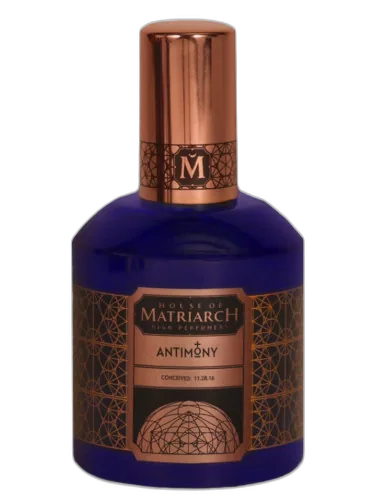
House of Matriarch
Antimony House Of Matriarch
Shared top notes: agarwood (oud), olibanum, palo santo

Arcana Wildcraft
Holy Terror Arcana Wildcraft
Shared top notes: myrrh, olibanum, sandalwood
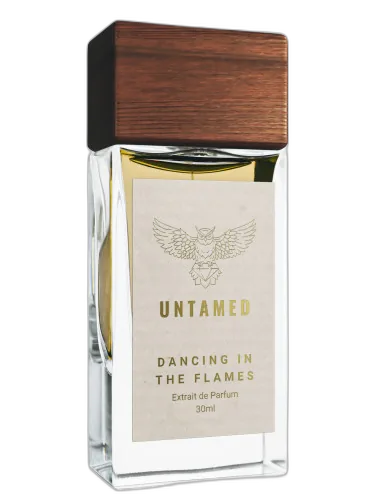
UNTAMED
Dancing In The Flames Untamed
Shared top notes: apricot, mastic or lentisque