


Untitled Pekji
At a glance
Is Untitled Pekji worth trying?
untitled by Pekji is a Oriental Woody fragrance for women and men.
- Best match
- Evening wear in Fall
- Performance feel
- Good longevity with Moderate sillage
- Signature profile
- warm spicy, fresh spicy, herbal with Immortelle, Black Pepper, Turkish Rose
The first impression
untitled by Pekji is a Oriental Woody fragrance for women and men. untitled was launched in 2020. The nose behind this fragrance is Ömer Ipekçi.
What shapes the scent
The perfumer behind it

Ömer Ipekçi
Ömer Ipekçi is a perfumer known for his work with the brands -DIS and Pekji, creating avant-garde and conceptual fragrances. The -DIS series explores abstract themes like decay, concrete, and paradox, while Pekji offerings such as Battaniye and Blacklight push boundaries with unconventional materials. Cuir6 and Flesh further demonstrate his interest in raw, tactile scents.
Notes pyramid
All Notes
Complete scent profile
 Immortelle
Black Pepper
Turkish Rose
Immortelle
Black Pepper
Turkish Rose
 Rubber
Industrial glue
Rubber
Industrial glue
 Agarwood (Oud)
 Smoke
Smoke
 Sandalwood
 Carnation
 Musk
Musk
 Cinnamon
 Vanilla
Soil Tincture
Vanilla
Soil Tincture
 Gardenia
The mood it creates
The Lover Archetype: Portrait of Untitled Pekji
Essence
To wear Untitled Pekji is to embrace ambiguity-a fragrance that refuses definition, much like the person who chooses it. This scent, with its elusive blend of green freshness, subtle spice, and quiet warmth, mirrors the soul of one who resists categorization. They are neither wholly romantic nor purely intellectual, neither entirely grounded nor lost in abstraction. They are, above all, a Seeker-an archetype defined by curiosity, depth, and an unending quest for meaning.
The Seeker is drawn to the unknown, to the spaces between words and the silences between notes. They are not content with the obvious, the loud, or the easily understood. Untitled Pekji appeals to them precisely because it does not announce itself; it must be discovered, contemplated, and interpreted. This person values authenticity above all else-not the performative kind, but the kind that emerges from introspection and quiet defiance of convention.
Their tastes are refined but never ostentatious. They prefer minimalist design, where every object has intention, and empty space is as meaningful as what fills it. Their wardrobe is understated-linen, wool, muted tones-but always with a single detail that betrays deeper thought: an asymmetrical cut, an unexpected texture, a vintage piece with history. They do not follow trends, yet they are not contrarians; they simply move to their own rhythm.
Philosophically, they are drawn to thinkers who embrace paradox-Nietzsche, Camus, Pessoa. They see life as a series of questions rather than answers, and they are comfortable dwelling in uncertainty. Their values are rooted in freedom-not the reckless kind, but the freedom to think, to feel, to evolve without external constraints. They despise dogma, whether in politics, art, or personal relationships.
Shadow
Yet, the Seeker’s depth has its cost. Their relentless pursuit of meaning can become a form of evasion-an unwillingness to commit, to settle, to be fully present. They may struggle with permanence, always wondering if there is something-or someone-more resonant just beyond reach. Relationships may suffer from their hesitation; they love deeply but fear confinement, sometimes withdrawing just as intimacy deepens.
Their detachment, while a strength in reflection, can become a flaw in action. They may overanalyze decisions, paralyzed by the fear of choosing wrongly. At times, their disdain for the superficial turns into disdain for the mundane, leaving them impatient with ordinary life. They may romanticize solitude to the point of isolation, mistaking independence for invulnerability.
Conclusion
Their greatest strength is their ability to perceive nuance where others see only binaries. They are the friend who listens without judgment, the partner who understands without explanation. In conversation, they are not quick to offer opinions but will ask the question that unravels assumptions. They are drawn to people who are similarly layered-those who carry contradictions within them, who are unafraid of complexity.
Their lifestyle reflects their inner world. They may live in a city but seek pockets of solitude-a quiet café, a hidden park, a bookstore where time slows. They travel not for spectacle but for immersion, preferring to wander without an itinerary. Their home is a sanctuary, filled with books, art, and objects that tell a story rather than decorate a space.
Creativity is essential to them, though they may not call themselves artists. They write, sketch, compose, or simply curate their existence with care. Their work, whether professional or personal, is driven by meaning rather than reward. They would rather fail at something true than succeed at something hollow.
If you like this, try these
Fragrances with a comparable profile - shared accords, notes, and character.
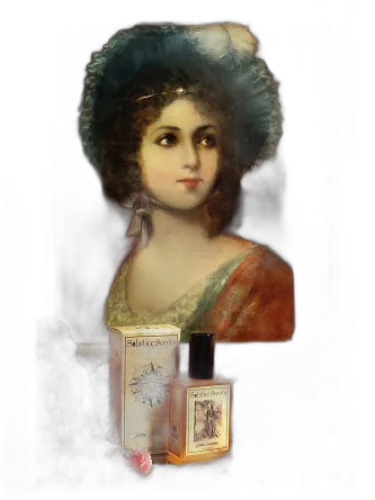
Solstice Scents
Estate Carnation Solstice Scents
Shared top notes: carnation, smoke, vanilla
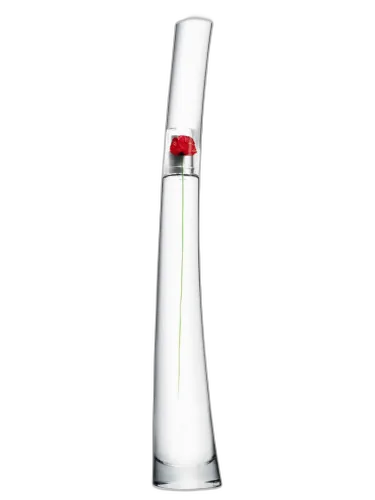
Kenzo
Flower By Kenzo Essentielle Kenzo
Shared top notes: black pepper, musk, vanilla
Parfum d'Empire
Un Bel Amour D’été Parfum D'empire
Shared top notes: gardenia, sandalwood, vanilla
Santa Lucia
Love Santa Lucia
Shared top notes: sandalwood, smoke

Folkwinds
American Amber Folkwinds
Shared top notes: agarwood (oud), carnation, vanilla