
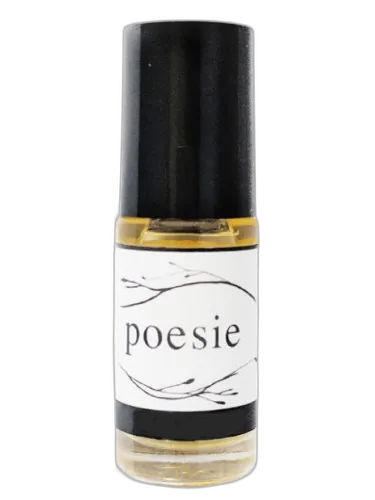

Fainting Spell Poesie
At a glance
Is Fainting Spell Poesie worth trying?
Fainting Spell by Poesie is a fragrance for women.
- Best match
- Evening wear in Fall
- Performance feel
- Good longevity with Moderate sillage
- Signature profile
- sweet, nutty, aromatic with Cookie, Hazelnut, Earl Grey Tea
The first impression
Fainting Spell by Poesie is a fragrance for women. The nose behind this fragrance is Joelle Nealy.
What shapes the scent
The perfumer behind it

Joelle Nealy
Joelle Nealy is a perfumer known for her extensive work with Poesie, creating fragrances such as A Thousand Warriors, All Jollity, and Aurora. Her portfolio includes a variety of themes from cozy to ethereal, as seen in Balmoral Fireplace and Arctic Monkeys. Nealy's compositions often blend storytelling with nuanced scent profiles.
Notes pyramid
All Notes
Complete scent profile
 Cookie
 Hazelnut
 Earl Grey Tea
 Milk
Milk
The mood it creates
The Lover Archetype: Portrait of Fainting Spell Poesie
Essence
The one who cherishes Fainting Spell by Poesie is, at their core, a Mystic-a seeker of the unseen, a wanderer in the liminal spaces between reality and reverie. This fragrance, with its haunting blend of lilacs, heliotrope, and vanilla musk, evokes the ephemeral, the half-remembered, the nearly lost. It is the scent of a soul who dwells in twilight, where dreams brush against waking life.
The Mystic does not merely perceive the world; they transfigure it. They are drawn to the delicate, the fleeting, the poetic-things that others might overlook or dismiss as mere sentimentality. Yet, for them, these fragments hold the weight of truth.
Style & Aesthetic
Their surroundings mirror their inner world: soft, layered, tinged with nostalgia. Their home is a sanctuary of old books, dried flowers, and faintly flickering candlelight. They prefer muted colors-dusty lavender, faded rose, the gray of an overcast sky-as if life itself should be slightly blurred at the edges.
They are drawn to art that lingers in ambiguity: pre-Raphaelite paintings, ghost stories, chamber music that trembles between melancholy and ecstasy. Their wardrobe is a collection of flowing fabrics, vintage lace, and garments that seem to belong to another era-not as costume, but as an instinctive alignment with timelessness.
Philosophy & Values
For them, beauty is not in permanence but in transience. A wilting bouquet is more meaningful than a fresh one; a half-faded letter more precious than a new one. They believe in the unseen threads that connect moments, people, and emotions-synchronicities, déjà vu, the sense of having lived a moment before.
They value depth over practicality, intuition over logic. They are not materialistic, but they are deeply attached to objects that carry emotional resonance: a locket with no photograph inside, a pressed flower from a forgotten walk, a perfume that smells like a memory they can’t quite place.
Relationships
They do not love lightly, nor do they love in straightforward ways. Their affections are layered, sometimes elusive, even to themselves. They are drawn to those who understand silence, who can sit with them in wordless communion.
Yet, they struggle with the mundane demands of relationships. They may retreat into their inner world, leaving others feeling shut out. Their love is deep but sometimes distant, like a voice heard through a closed door. They crave connection but fear the weight of expectation-of having to be present in ways that feel too solid, too defined.
Shadow
The Mystic’s greatest strength is also their greatest peril. Their ability to dissolve into dreams can become an escape from reality-a refusal to engage with the harder, sharper edges of life. They may grow passive, waiting for meaning to come to them rather than forging it.
At their worst, they become lost in their own melancholy, mistaking longing for living. They may resent the world for being too crude, too loud, too real-yet fail to see that their own withdrawal is what makes it so.
Conclusion
To love Fainting Spell is to love what cannot be held. The Mystic lives in the tension between enchantment and grounding, between the dream and the waking world. Their challenge is not to forsake one for the other, but to learn how to let each deepen the other-to find the sacred not only in the whisper, but in the breath that carries it.
If you like this, try these
Fragrances with a comparable profile - shared accords, notes, and character.

HelloHelen
Delicious Hellohelen
Shared top notes: hazelnut, milk

Commodity
Milk Commodity
Shared top notes: milk

Alchemic Muse
Nostalgia Alchemic Muse
Shared top notes: earl grey tea, milk

Victoria's Secret
Toasted Honey Victoria's Secret
Shared top notes: hazelnut

Xyrena
Hellanut Xyrena
Shared top notes: hazelnut, milk