


Branch & Vine Providence Perfume Co.
At a glance
Is Branch & Vine Providence Perfume Co. worth trying?
Branch & Vine by Providence Perfume Co.
- Best match
- Casual wear in Spring
- Performance feel
- Moderate longevity with Moderate sillage
- Signature profile
- white floral, floral, green with Sunflower, Green Orange, Mimosa
The first impression
Branch & Vine by Providence Perfume Co. is a Floral Green fragrance for women and men. Branch & Vine was launched in 2013. The nose behind this fragrance is Charna Ethier. Top notes are Sunflower and Green Orange; middle notes are Mimosa, Lily-of-the-Valley, Jasmine Sambac and Neroli; base notes are Violet Leaf, Vetiver and Fir.
What shapes the scent
The perfumer behind it

Charna Ethier
Charna Ethier is a perfumer and founder of Providence Perfume Co., where she has created numerous fragrances. Her portfolio includes Basil & Bartlett, Bay Rum Cologne, Branch & Vine, Cocoa Tuberose, Divine Noir, Divine, Drunk On The Moon, and Eva Luna. She is known for using natural ingredients to craft complex, artisanal scents.
Notes pyramid
Top Notes
First impression · 15-30 min
 Sunflower
 Green Orange
Heart Notes
Core character · 2-4 hours
 Mimosa
 Lily-of-the-Valley
Jasmine Sambac
Lily-of-the-Valley
Jasmine Sambac
 Neroli
Base Notes
Lasting impression · 4+ hours
 Violet Leaf
 Vetiver
 Fir
Fir
The mood it creates
The Sage Archetype: Portrait of Branch & Vine Providence Perfume Co.
Essence
This person is most closely aligned with the Sage-a seeker of wisdom, truth, and authenticity. The Sage thrives on introspection, values knowledge over dogma, and seeks harmony between the natural and intellectual worlds. Branch & Vine Providence Perfume Co., with its earthy, herbal, and subtly mystical composition, reflects this archetype perfectly. The scent is not loud or ostentatious; it is layered, contemplative, and rooted in the organic. Like the Sage, this fragrance does not demand attention but lingers in the mind, inviting deeper reflection.
Style & Aesthetic
Their appearance is understated but deliberate. They favor natural textures-linen, wool, unpolished wood-and muted, earthy tones. Their wardrobe is minimal but meaningful, each piece chosen for its durability and quiet elegance. They might wear a well-worn leather satchel, a simple silver ring, or a scarf dyed with botanical pigments.
Their living space reflects the same ethos: warm, organic, uncluttered. Bookshelves hold well-loved volumes of philosophy, poetry, and botany. Dried herbs hang in the kitchen; a single piece of hand-thrown pottery sits on the table. They do not decorate for trends but for resonance-each object carries a story or a purpose.
Their daily rituals are imbued with intention. They may start the morning with meditation or journaling, not as a performative act but as a way to ground themselves. They prefer tea over coffee, savoring the ritual of steeping leaves, the way the scent unfolds gradually.
They are likely drawn to practices that connect them to the earth-gardening, hiking, herbalism. They may keep a notebook of pressed leaves or sketches of local flora. Their hobbies are not distractions but extensions of their philosophy.
Philosophy & Values
Their worldview is shaped by a quiet but unshakable belief in self-discovery as the highest pursuit. They distrust rigid ideologies, preferring instead to gather wisdom from diverse sources-philosophy, nature, art, and even the mundane. Stoicism appeals to them, but not as a rigid doctrine-more as a lens through which to observe life’s fluctuations without being swept away. They value autonomy above conformity, yet they are not rebellious for rebellion’s sake. Their rebellion is internal, a refusal to accept easy answers.
They are drawn to slow living, not as a trend but as a necessity. The rush of modernity feels abrasive to them; they prefer the cadence of seasons, the patience of growth. This is why Branch & Vine resonates-it smells like damp soil after rain, like the quiet strength of roots beneath the surface.
Relationships
They are selective in friendship, valuing depth over breadth. Small talk exhausts them, but a conversation about the symbolism in a myth or the ethics of foraging wild plants will ignite their passion. They are not antisocial, but they require solitude to recharge. Their closest relationships are built on mutual intellectual curiosity and a shared appreciation for silence.
Romantically, they seek a partner who understands their need for independence. They are not possessive, nor do they tolerate possessiveness in others. Love, to them, is a shared journey of growth, not ownership. Their shadow here is a tendency toward emotional detachment-they may retreat into their mind when feelings become too intense, rationalizing emotions rather than experiencing them.
Shadow
Every Sage risks becoming a Hermit-withdrawing too far into their own mind, mistaking solitude for wisdom. Their greatest flaw is intellectual pride. They may dismiss emotions as irrational or look down on those who live more impulsively. At their worst, they become dogmatic in their anti-dogmatism, refusing to engage with perspectives that challenge their self-image as the enlightened observer.
They must remember that wisdom is not just in books or solitary walks but in the messy, imperfect exchanges of human connection. The scent of Branch & Vine is not just of soil and leaves-it is also of life, decay, and renewal. To truly embody the Sage, they must embrace both the stillness and the storm.
Conclusion
This person is not seeking answers so much as better questions. Their love for Branch & Vine is no accident-it mirrors their essence: complex, grounded, and quietly profound. They are not without contradictions, but these contradictions are what make them human. In their best moments, they are a guide-not by preaching, but by living in a way that invites others to look deeper. In their worst, they are a recluse, mistaking isolation for insight.
But if they can balance their introspection with engagement, their skepticism with openness, they will find what the Sage truly seeks: not just knowledge, but understanding.
If you like this, try these
Fragrances with a comparable profile - shared accords, notes, and character.

Petite Histoire
Riviera Santal Petite Histoire
Shared heart notes: jasmine sambac, mimosa
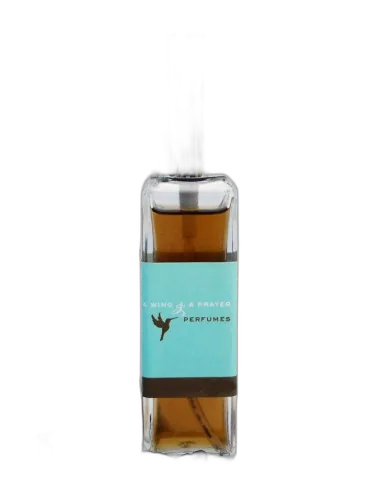
A Wing & A Prayer Perfumes
Holly Woud & Vine A Wing & A Prayer Perfumes
Shared heart notes: jasmine sambac, neroli

Olibere Parfums
Le Jardin De Mistinguet Olibere Parfums
Shared heart notes: lily-of-the-valley, mimosa

aromag 岩兰
Miko Eau De Cologne 米可古龙水 Aromag 岩兰
Shared heart notes: jasmine sambac, neroli
Kate Spade
Walk On Air Kate Spade
Shared heart notes: lily-of-the-valley