


Vanuatu Eau De Parfum Sora Dora
At a glance
Is Vanuatu Eau De Parfum Sora Dora worth trying?
Vanuatu Eau de Parfum by Sora Dora is a fragrance for women and men.
- Best match
- Casual wear in Summer
- Performance feel
- Good longevity with Moderate sillage
- Signature profile
- woody, ozonic, green with Violet Leaves, Papyrus, Sandalwood
The first impression
Vanuatu Eau de Parfum by Sora Dora is a fragrance for women and men. This is a new fragrance. Vanuatu Eau de Parfum was launched in 2024. Vanuatu Eau de Parfum was created by Amelie Bourgeois, Anne-Sophie Behaghel and Camille Chemardin.
What shapes the scent
The perfumer behind it

Amelie Bourgeois
Amelie Bourgeois is a French perfumer known for her work with the niche houses Aether and Alexandre.J. Her style blends experimental, synthetic accords with natural elements, often exploring contrasts like citrus and musk or rose and alkanes. She created the Aether Oxyde and Carboneum compositions, as well as Alexandre.J’s Mandarine Sultane and Passion Bliss.
Notes pyramid
All Notes
Complete scent profile
Violet Leaves
 Papyrus
 Sandalwood
 Cedar
Cedar
 Fig
Black Pepper
Fig
Black Pepper
 Violet
 Patchouli
 Bergamot
 Cardamom
 Rhubarb
 Cumin
Cumin
 Milk
Milk
The mood it creates
The Wanderer Archetype: Portrait of Vanuatu Eau De Parfum Sora Dora
Essence
This person is most closely aligned with the Explorer archetype-a soul driven by curiosity, independence, and an insatiable hunger for the unknown. The fragrance Vanuatu Eau De Parfum Sora Dora-with its oceanic freshness, tropical florals, and subtle woody depth-mirrors their essence: a blend of wild freedom and quiet introspection. Like the scent, they are both effervescent and grounded, a paradox of movement and stillness.
The Explorer thrives on discovery, not just of places but of ideas, emotions, and selves. They reject stagnation, fearing it more than failure. Their life is a series of departures and returns, each journey shaping them anew. Yet beneath their restlessness lies a deep yearning-not just for the next horizon, but for a place, a moment, a version of themselves that finally feels like home.
Style & Aesthetic
Their aesthetic is effortless yet deliberate-a mix of organic textures, sun-bleached fabrics, and well-worn leather. They favor simplicity with an edge: a linen shirt paired with a hand-carved wooden bracelet, a faded journal filled with sketches of coastlines. Their home, if they stay in one place long enough, is a curated collection of artifacts-seashells, foreign coins, a shelf of dog-eared philosophy books.
They move through the world with a quiet magnetism, neither seeking attention nor shunning it. Their presence is like the scent they wear-unassuming at first, then lingering, impossible to ignore. They prefer cafes with open windows, where the hum of distant conversations blends with the rustle of leaves. Music is an anchor-perhaps the raw strum of a folk guitar or the hypnotic pulse of world rhythms.
Their philosophy is fluid, shaped by experience rather than dogma. They distrust rigid ideologies, favoring instead a personal, evolving truth. They might quote Rilke one day and a Polynesian proverb the next, not as decoration but as lived wisdom.
Philosophy & Values
Freedom is their highest value-not as reckless abandon, but as the right to choose their path. They resist obligations that feel like chains, yet they are fiercely loyal to those who understand their need to roam. Their relationships are deep but few, built on mutual respect for independence.
Romantically, they are drawn to kindred spirits-those who can love without possession. Their love is intense but transient unless they find someone who is both a sanctuary and a fellow traveler. They struggle with commitment not out of fear of intimacy, but fear of confinement.
Their greatest virtue is courage-the willingness to step into the unknown, again and again. But their shadow is evasion-an inability to sit with discomfort, to endure the mundane. When life becomes too predictable, they leave-jobs, lovers, cities-sometimes before giving them a real chance.
Shadow
The flip side of the Explorer is the Eternal Fugitive, the one who runs not toward something but away-from boredom, from depth, from the vulnerability of staying. Their adaptability can become rootlessness; their love of novelty can mask an unwillingness to confront deeper wounds.
They may mistake movement for growth, assuming that each new place will finally bring fulfillment. But the true journey is inward, and this is the frontier they sometimes fear most. When stillness comes, they may feel like a stranger to themselves, adrift without the next adventure to define them.
Conclusion
Yet, if they embrace both their light and shadow, they become more than a wanderer-they become a Wayfinder, one who navigates not just the external world but the uncharted depths within. Their fragrance, Vanuatu, is not just a memory of distant shores but a reminder: the greatest voyage is the one that leads them back to themselves, again and again, deeper each time.
They will always be drawn to the horizon-but perhaps, one day, they will learn that home is not a place, but a state of being. And in that realization, they may finally stop running, not because they have arrived, but because they have learned to carry home within.
If you like this, try these
Fragrances with a comparable profile - shared accords, notes, and character.
Sora Dora
Vanuatu Sora Dora
Shared top notes: black pepper, cardamom, cumin
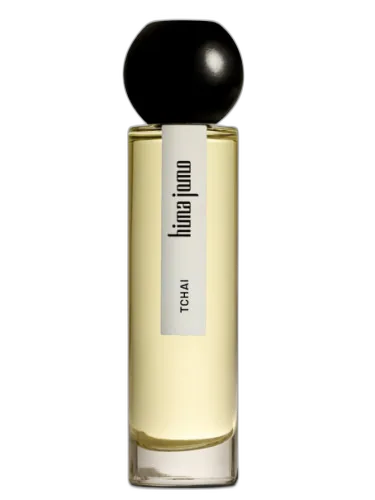
hima jomo
Tchai Hima Jomo
Shared top notes: bergamot, cardamom
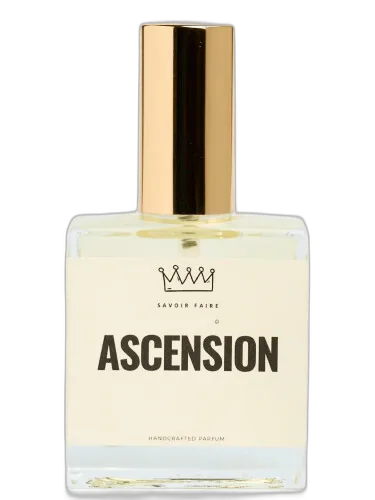
Savoir Faire
Ascension Savoir Faire
Shared top notes: bergamot, black pepper, cedar

Olfactory NYC
Cam Olfactory Nyc
Shared top notes: fig, sandalwood, violet leaves

Scalpers
Scalpers The Boxing Club Scalpers
Shared top notes: bergamot, cardamom