
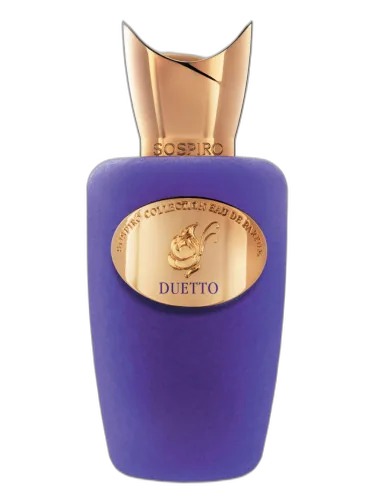

Duetto Sospiro Perfumes
At a glance
Is Duetto Sospiro Perfumes worth trying?
Duetto by Sospiro Perfumes is a Chypre Floral fragrance for women.
- Best match
- Evening, Special Occasion wear in Fall, Winter
- Performance feel
- Very Good longevity with Strong sillage
- Signature profile
- rose, woody, warm spicy with Pink Pepper, Coriander, Ylang-Ylang
The first impression
Duetto by Sospiro Perfumes is a Chypre Floral fragrance for women. Duetto was launched in 2011. The nose behind this fragrance is Chris Maurice. Top notes are Pink Pepper, Coriander and Ylang-Ylang; middle notes are Rose, Clove and Jasmine; base notes are Agarwood (Oud), Musk, Patchouli, Amber, Sandalwood, Vanille, oak moss and Vetiver.
What shapes the scent
The perfumer behind it

Chris Maurice
Chris Maurice is a perfumer with a wide-ranging portfolio that includes work for Aqualis, Artal Perfumes, Assaf, Astrophil & Stella, Azman, and Bey Parfum. His creations include Egoli, Forbidden Rose, Darley, Love Is Lost, Moonage Daydream, Riad Jasmine, Song For A Wanderer, and Abyssoria. His style varies from floral and romantic to dark and mysterious.
Notes pyramid
Top Notes
First impression · 15-30 min
 Pink Pepper
 Coriander
 Ylang-Ylang
Heart Notes
Core character · 2-4 hours
 Rose
Rose
 Clove
Clove
 Jasmine
Base Notes
Lasting impression · 4+ hours
 Agarwood (Oud)
 Musk
Musk
 Patchouli
 Amber
Amber
 Sandalwood
Vanille
oak moss
Sandalwood
Vanille
oak moss
 Vetiver
The mood it creates
The Lover Archetype: Portrait of Duetto Sospiro Perfumes
Essence
The person who adores Duetto Sospiro Perfumes is one who lives through the senses, for whom beauty is not merely an aesthetic preference but a necessity of existence. Their fragrance-rich, intoxicating, layered-mirrors their own complexity. They are drawn to the interplay of contrasts: warmth and mystery, softness and intensity, the sacred and the sensual. This is the domain of The Lover, the Jungian archetype that governs passion, devotion, and the pursuit of ecstasy in all forms.
To them, life is an experience to be savored, not merely endured. They seek depth in every encounter, whether through art, conversation, or touch. Their philosophy is one of immersion-they do not skim the surface of existence but dive into its depths, sometimes at the risk of drowning.
Style & Aesthetic
Their taste is refined but never ostentatious. They favor textures that invite touch-velvet, silk, aged leather-and colors that whisper rather than shout: deep burgundies, midnight blues, the soft gold of candlelight. Their wardrobe is curated with the precision of a poet selecting words, each piece chosen not for trend but for resonance.
They are drawn to art that stirs the soul-Baroque music, Renaissance paintings, the prose of Anaïs Nin. Their home is a sanctuary of sensory pleasure: dim lighting, the scent of aged books and amber resin, the faint hum of a vinyl record spinning. Every object has meaning, every space is intentional.
Philosophy & Values
For them, love is not a mere emotion but a force of nature-one that can elevate or destroy. They believe in the transformative power of connection, whether romantic, platonic, or artistic. Their relationships are intense, often all-consuming, for they do not love in halves.
They value authenticity above all else, despising the shallow and the performative. Yet this very idealism can become their undoing, for the world is rarely as profound as they wish it to be. Disillusionment is their recurring shadow, a specter that haunts their most passionate endeavors.
Relationships
To be loved by them is to be seen in full-flaws and brilliance alike. They are the kind of lover who memorizes the cadence of their partner’s breath, who traces the stories written in their skin. Their affection is both tender and fierce, a paradox that intoxicates those who dare to get close.
Yet intimacy is a double-edged sword. Their hunger for depth can become possessive, their idealism a cage. They may mistake intensity for truth, conflating drama with meaning. When betrayed or disappointed, their passion curdles into melodrama or withdrawal-a retreat into the self, where they nurse wounds with equal parts pride and sorrow.
Shadow
The Lover’s greatest weakness is their refusal of the mundane. Life, in its ordinary rhythms, can feel like a betrayal to them. They may grow restless in stability, mistaking peace for stagnation. Their search for the sublime can blind them to the quiet beauty of the everyday-the warmth of a shared silence, the comfort of routine.
At their worst, they become hedonists, chasing sensation to fill an unfillable void. Or, conversely, they may romanticize suffering, believing that love must be tragic to be real. This is their paradox: the very depth they crave can become the abyss they cannot escape.
Conclusion
Yet when balanced, they are alchemists of emotion, turning the raw material of existence into something luminous. They remind others that life is not merely to be lived but to be felt-deeply, unapologetically. Their presence is a gift, their passion a fire that can warm or burn.
In the end, they are the ones who leave traces-perfume on a lover’s collar, a well-worn book passed to a friend, the lingering echo of a conversation that changed someone. They may never fully reconcile their hunger for the extraordinary with the simplicity of being, but perhaps that tension is what makes them unforgettable.
If you like this, try these
Fragrances with a comparable profile - shared accords, notes, and character.
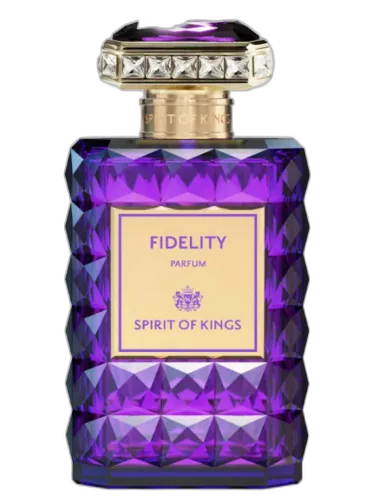
Spirit Of Kings
Fidelity Spirit Of Kings
Shared top notes: coriander
SJA Perfumes
Old School Sja Perfumes
Shared top notes: coriander

Agent Provocateur
Miss Ap Agent Provocateur
Shared top notes: pink pepper, ylang-ylang
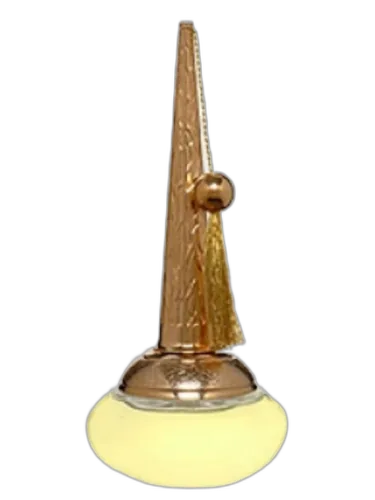
Agallocha
Arabia Felix Collection Muthhela Woman Agallocha
Shared top notes: coriander, ylang-ylang
Pedro Del Hierro
Pedro Del Hierro Pedro Del Hierro
Shared top notes: coriander