
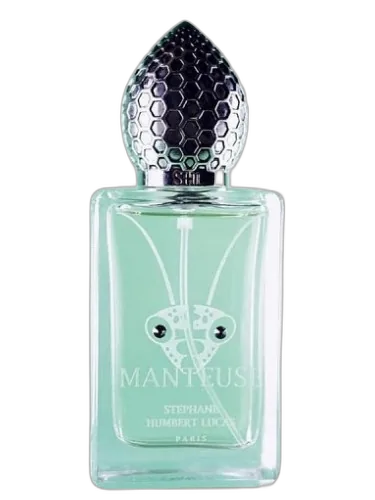

Manteuse Stéphane Humbert Lucas 777
Fragrance Story
Manteuse by Stéphane Humbert Lucas 777 is a Woody Floral Musk fragrance for women and men. Manteuse was launched in 2018. Top notes are White Flowers, Leather, Dodecanal and Bergamot; middle notes are Honey, Orris Root, Labdanum and Sandalwood; base notes are Opoponax, Natural Musk, Vanilla and Patchouli.
Composition Profile
About the Perfumer

Unknown Perfumer
Fragrance Notes
Top Notes
First impression · 15-30 min
 White Flowers
 Leather
 Dodecanal
 Bergamot
Heart Notes
Core character · 2-4 hours
 Honey
Honey
 Orris Root
 Labdanum
 Sandalwood
Base Notes
Lasting impression · 4+ hours
 Opoponax
 Natural Musk
 Vanilla
 Patchouli
Manteuse Stéphane Humbert Lucas 777 by Stéphane Humbert Lucas 777 offers a distinctive olfactory experience that stands out from other fragrances in its category.
Crafted with the finest ingredients and a blend of traditional and modern perfumery techniques, this fragrance represents the pinnacle of the perfumer's art.
Manteuse Stéphane Humbert Lucas 777 embodies the distinctive style of Stéphane Humbert Lucas 777 while adding a unique chapter to their fragrance portfolio.
Character Profile
The Alchemist Archetype: Portrait of Manteuse Stéphane Humbert Lucas 777
Essence
To wear Manteuse by Stéphane Humbert Lucas 777 is to embrace the intoxicating paradox of control and abandon. This is not a fragrance for the timid or the conventional. It is a scent of transformation-smoky, leathery, animalic, yet wrapped in the golden warmth of amber and spices. The person who chooses this fragrance is not merely seeking an aroma; they are engaging in an act of self-mythology. They are, at their core, an Alchemist-one who transmutes the raw materials of existence into something richer, darker, more profound.
Style & Aesthetic
Their home is a sanctuary of curated intensity. A dimly lit study lined with books on esoterica, a collection of odd artifacts-perhaps a dried scorpion in a glass box, a tarnished silver dagger, an antique perfume bottle. They do not decorate for others; every object is a sigil of their inner journey.
Relationships, for them, are alchemical experiments. They are magnetic, drawing others in with their quiet intensity, but they are not easily known. They seek partners who can match their depth, who are unafraid of shadows. Their love is not gentle-it is consuming, transformative, sometimes volatile. They do not do superficial bonds; they demand fire, and they are willing to be burned.
Professionally, they thrive in roles that allow them to shape reality-artists, perfumers, therapists, writers, or even financiers who treat markets like living organisms. They are not motivated by wealth or status, but by the thrill of influence, the ability to turn base matter into gold.
Shadow
Yet every strength has its inverse. The Alchemist’s obsession with transformation can become a refusal to accept anything as it is. They may grow restless, always seeking the next metamorphosis, never satisfied with the present. Their relationships may suffer from their need to "refine" others, to pull them apart and reassemble them in some idealized form.
There is also the danger of decadence-of becoming lost in their own labyrinth of sensation. The same mind that finds beauty in the grotesque may also flirt with self-destruction, mistaking excess for enlightenment. They must guard against the temptation to romanticize decay, to confuse corruption with wisdom.
Conclusion
The Alchemist is a figure of deep intellect and sensuality, drawn to the hidden currents beneath the surface of things. They are not content with mere appearances; they seek the essence, the prima materia of experience. Their tastes are refined but never sterile-they prefer the patina of aged leather over the gloss of new plastic, the complexity of a well-aged whiskey over the predictability of vodka.
In style, they favor textures that speak of time and touch: worn-in suede, raw silk, vintage jewelry with a story. Their wardrobe is not dictated by trends but by an intuitive sense of what resonates with their inner world. They may wear black not out of melancholy, but because it is the color of potential, the void from which all creation emerges.
Philosophically, they are drawn to the liminal-the spaces between light and shadow, sacred and profane. They might find wisdom in the writings of Bataille, the mysticism of Jung, or the decadence of Baudelaire. They do not fear contradiction; they court it, knowing that truth often lies in tension rather than resolution.
Similar Fragrances
Fragrances with a comparable profile - shared accords, notes, and character.
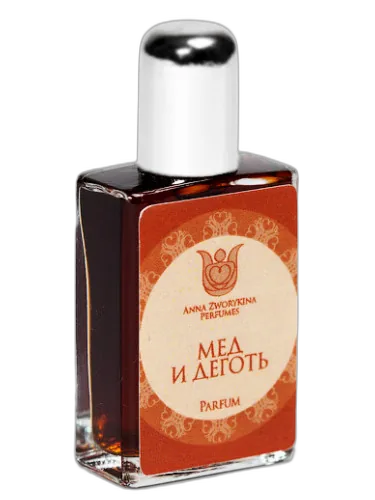
Anna Zworykina Perfumes
Honey And Tar Anna Zworykina Perfumes
Shared accords: amber, balsamic, honey
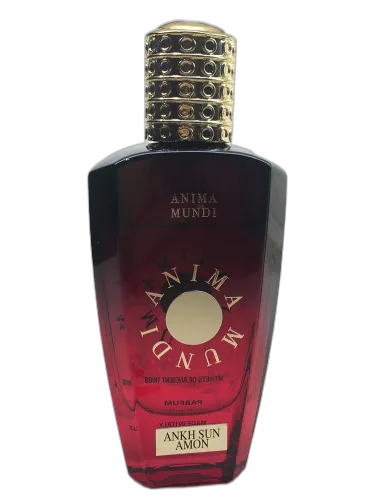
Anima Mundi
Ankh Sun Amon Anima Mundi
Shared accords: amber, animalic, honey
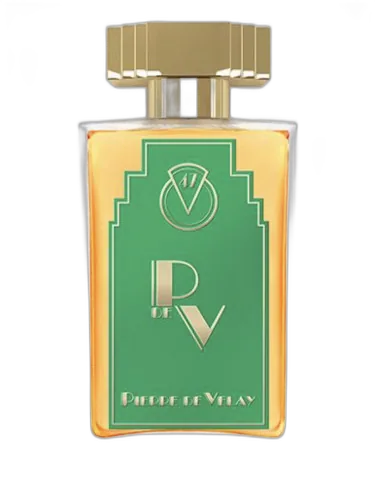
Roja Dove
Pierre De Velay No. 47 Roja Dove
Shared accords: amber, animalic, leather

Bienaimé
Cuir De Russie Bienaimé
Shared accords: amber, animalic, leather
Coty
Muse Coty
Shared accords: amber, animalic, honey