
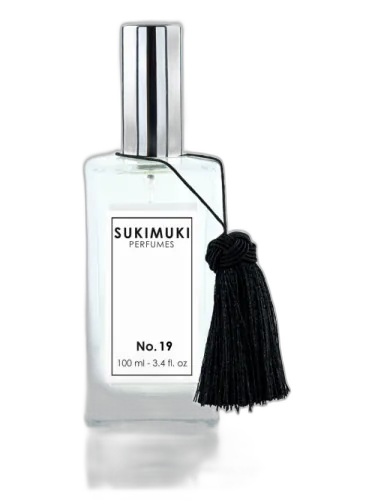

No. 19 Sukimuki
At a glance
Is No. 19 Sukimuki worth trying?
No.
- Best match
- Casual wear in Summer
- Performance feel
- Good longevity with Moderate sillage
- Signature profile
- marine, aromatic, aquatic with Sea Notes, Algae, Cedar
The first impression
No. 19 by Sukimuki is a fragrance for women and men. No. 19 was launched in 2021.
What shapes the scent
The perfumer behind it

Unknown Perfumer
Notes pyramid
All Notes
Complete scent profile
 Sea Notes
 Algae
Algae
 Cedar
Cedar
The mood it creates
The Sage Archetype: Portrait of No. 19 Sukimuki
Essence
To wear No. 19 Sukimuki is to embody a paradox-a fragrance that is both sharp and tender, intellectual yet sensual. The person who chooses this scent is not one for frivolity or fleeting trends; they are drawn to the quiet power of restraint, the elegance of discernment. Their presence is not loud, but it lingers, like the green, woody whispers of the perfume itself.
This individual is, at their core, a Sage-the Jungian archetype of wisdom, introspection, and the relentless pursuit of truth. They are the observer, the thinker, the one who seeks to understand before being understood. Their mind is a finely tuned instrument, always analyzing, always questioning. They do not simply experience life; they dissect it, turning moments into meaning.
Style & Aesthetic
Their aesthetic is one of deliberate minimalism-clean lines, muted tones, fabrics that speak through texture rather than ostentation. They prefer the understated luxury of a well-tailored blazer over flashy logos, a handcrafted ceramic mug over mass-produced glassware. Their home is a sanctuary of order, where every object has been chosen with intention. Books line their shelves, not as decoration but as companions-philosophy, modernist poetry, obscure essays on aesthetics.
In music, they favor compositions that demand attention-the intricate harmonies of Debussy, the cerebral precision of Radiohead, the melancholy restraint of Nick Drake. They do not dance wildly but move with measured grace, as if each gesture were a considered statement.
They rise early, savoring the silence of dawn with black coffee and a notebook. Their work is not just a job but a vocation-perhaps as a writer, a researcher, a curator of ideas. They despise busyness for its own sake, preferring depth over distraction.
Travel, for them, is not about ticking off destinations but about immersion. They would rather spend a month in a single city, learning its rhythms, than rush through a dozen countries.
Philosophy & Values
For them, truth is not absolute but a process-an ongoing excavation of self and world. They distrust dogma, preferring the fluidity of thought over rigid ideologies. Their moral compass is guided by reason, yet they are not cold; they simply believe that emotions, too, must be examined before trusted.
They value autonomy above all else. Dependency, whether emotional or material, is a kind of prison. They are self-sufficient to a fault, sometimes isolating themselves in the name of independence. Their relationships are few but deep, built on mutual respect rather than need.
Relationships
They are not the life of the party, nor do they wish to be. Their friendships are cultivated slowly, like rare plants that thrive only under precise conditions. They listen more than they speak, but when they do speak, their words carry weight.
Romantically, they are drawn to those who match their intellectual intensity. Passion, for them, is not about grand gestures but about the quiet exchange of ideas, the unspoken understanding between two minds. Yet their independence can become a barrier-they retreat into solitude at the first sign of emotional suffocation. Their partner must be patient, willing to navigate the labyrinth of their introspection.
Shadow
The Sage’s greatest strength is also their greatest weakness. Their relentless analysis can become a form of evasion-a way to distance themselves from raw, unfiltered experience. They may mistake understanding for living, substituting thought for action.
At times, their detachment borders on aloofness. They may dismiss others as irrational or superficial, failing to see that wisdom without warmth is merely a sterile exercise. Their self-sufficiency can harden into emotional isolation, leaving them stranded in their own mind.
Conclusion
The lover of No. 19 Sukimuki is a study in contrasts-rigorous yet sensual, independent yet yearning for connection. When balanced, they are a beacon of wisdom, guiding without dictating, understanding without judgment. But when unbalanced, they risk becoming a prisoner of their own intellect, mistaking the map for the territory.
Their journey, then, is not just toward knowledge but toward embodiment-to think deeply, yes, but also to feel fully, to step out of the observer’s chair and into the messy, beautiful fray of life.
If you like this, try these
Fragrances with a comparable profile - shared accords, notes, and character.

House of Matriarch
Albatross House Of Matriarch
Shared top notes: sea notes

Apiarium
Acqua & Sale Apiarium
Shared top notes: algae, cedar

Kenzo
Kenzo Homme Santal Marin Kenzo
Shared top notes: sea notes
Essenzialmente Laura
Mare Essenzialmente Laura
Shared top notes: sea notes
Dalibor Parfums
Maldivas Dalibor Parfums
Shared top notes: sea notes