
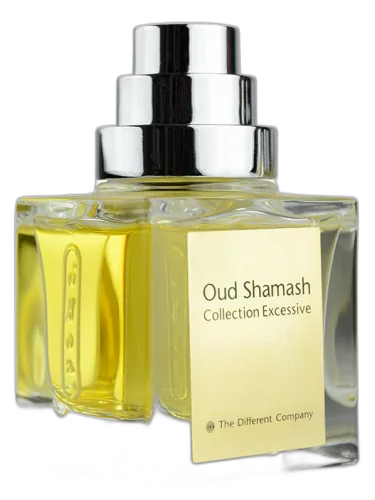

Oud Shamash The Different Company
At a glance
Is Oud Shamash The Different Company worth trying?
Oud Shamash by The Different Company is a Oriental Woody fragrance for women and men.
- Best match
- Evening wear in Fall
- Performance feel
- Very Good longevity with Strong sillage
- Signature profile
- woody, amber, warm spicy with Rum, Saffron, Pink Pepper
The first impression
Oud Shamash by The Different Company is a Oriental Woody fragrance for women and men. Oud Shamash was launched in 2011. The nose behind this fragrance is Bertrand Duchaufour. Top notes are Rum, Saffron, Pink Pepper, Cinnamon and Davana; middle notes are Cypriol Oil or Nagarmotha and Rose; base notes are Agarwood (Oud), Tolu Balsam, Amber, Patchouli, French labdanum, Woodsy Notes, Sandalwood, Leather, Vanille, Musk and Ambergris.
What shapes the scent
The perfumer behind it

Bertrand Duchaufour
Bertrand Duchaufour is a renowned French perfumer with a prolific career spanning many brands. He has created fragrances for Acqua di Parma, including Blu Mediterraneo - Cipresso Di Toscana and Colonia Assoluta, as well as for Aedes de Venustas, such as Café Tabac and Copal Azur. His style is known for its complexity and use of natural ingredients.
Notes pyramid
Top Notes
First impression · 15-30 min
 Rum
Rum
 Saffron
 Pink Pepper
 Cinnamon
 Davana
Heart Notes
Core character · 2-4 hours
 Cypriol Oil or Nagarmotha
 Rose
Rose
Base Notes
Lasting impression · 4+ hours
 Agarwood (Oud)
 Tolu Balsam
 Amber
Amber
 Patchouli
 French labdanum
Woodsy Notes
French labdanum
Woodsy Notes
 Sandalwood
 Leather
Vanille
Leather
Vanille
 Musk
Musk
 Ambergris
The mood it creates
The Sage Archetype: Portrait of Oud Shamash The Different Company
Essence
To wear Oud Shamash by The Different Company is to embrace a fragrance that is both ancient and modern-smoky, resinous, and introspective. The person who chooses this scent is not one for fleeting pleasures or superficial charm. They are drawn to depth, complexity, and the quiet power of wisdom. Their presence is not loud, but it lingers, like the scent itself-warm, mysterious, and subtly commanding.
This individual is most closely aligned with the Sage archetype, the seeker of truth, the one who values knowledge, discernment, and the quiet mastery of life’s mysteries. They are not merely intelligent; they are wise, understanding that true knowledge is not just accumulation but distillation-the ability to see through illusion to the essence of things.
Style & Aesthetic
Their tastes are deliberate, never accidental. They prefer the understated over the ostentatious, the timeless over the trendy. Their wardrobe is a study in restraint-tailored but not stiff, elegant but never showy. They might favor deep earth tones, rich textures, and garments that age beautifully, much like the oud in their fragrance.
In art, they are drawn to works that demand contemplation-minimalist architecture, abstract paintings that suggest rather than declare, literature that unfolds in layers. They appreciate the Japanese concept of wabi-sabi, finding beauty in imperfection and transience. Their home is a sanctuary of order and meaning, where every object has been chosen with intention.
Their life is structured but not rigid. They rise early, valuing the quiet hours of dawn for reflection. They may practice meditation, journaling, or another discipline that sharpens the mind. Work is not merely a means to an end but an extension of their values-whether they are a scholar, a writer, a perfumer, or a philosopher, their vocation is a form of self-expression.
They travel not for escapism but for expansion, seeking places rich with history and meaning-ancient libraries, desert ruins, monasteries. They are drawn to solitude but understand its dangers; too much isolation can calcify their perspective, turning wisdom into dogma.
Philosophy & Values
Their philosophy is one of sovereignty-over mind, over emotion, over circumstance. They do not chase happiness in the conventional sense; instead, they seek clarity. They believe that understanding is the highest form of freedom, and ignorance is the root of suffering.
They value independence of thought, often resisting dogma in favor of their own reasoned conclusions. This can make them seem aloof or contrarian, but their skepticism is not born of cynicism-it is a defense against falsehood. They are drawn to Eastern philosophies, Stoicism, or Jungian psychology, seeing in these systems a framework for navigating life’s complexities.
Yet, their greatest strength is also their greatest vulnerability. Their relentless pursuit of truth can become a form of intellectual pride, a belief that they alone see the world clearly. They may dismiss emotions as irrational or undervalue intuition, seeing it as inferior to logic.
Relationships
They are not gregarious, but neither are they reclusive. Their relationships are few but profound, built on mutual respect and intellectual kinship. They attract those who seek wisdom, often becoming mentors-sometimes reluctantly. Their advice is never given lightly; when they speak, it is with precision.
Romantically, they are drawn to partners who are their equals-people who challenge them, who do not require constant reassurance. They disdain neediness, seeing emotional dependency as a weakness. Yet, this can make them appear cold or detached. Their shadow emerges when they intellectualize intimacy, avoiding vulnerability under the guise of rationality.
Shadow
The Sage’s greatest flaw is the belief that knowledge alone is enough. They may become disconnected from the visceral, messy aspects of life, dismissing passion as irrational or love as a chemical illusion. Their pursuit of truth can harden into intellectual elitism, making them impatient with those who do not share their depth.
At their worst, they retreat into a fortress of their own mind, mistaking solitude for strength. They must learn that wisdom without compassion is hollow-that to truly understand life, one must not only observe it but live it fully, with all its contradictions.
Conclusion
The lover of Oud Shamash is neither saint nor cynic. They are a seeker, one who walks the razor’s edge between enlightenment and detachment. Their life is a testament to the power of the examined existence-but they must remember that wisdom, like fragrance, is not meant to be hoarded. It is meant to be shared, to enrich, to transform.
They are not perfect, nor do they seek to be. Their journey is one of balance-between thought and feeling, solitude and connection, knowing and unknowing. And in that tension, they find their truest self.
If you like this, try these
Fragrances with a comparable profile - shared accords, notes, and character.
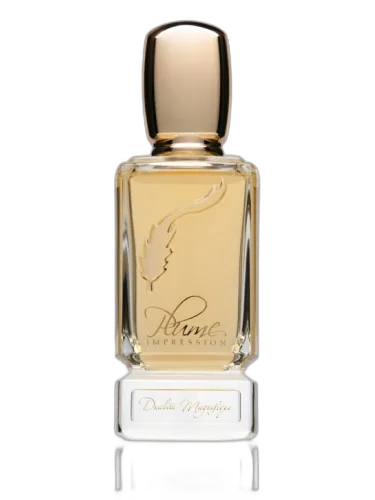
Plume Impression
Dualite Magnifique Plume Impression
Shared top notes: davana, saffron
Türkan
Türkan No/9 Mystique Türkan
Shared top notes: cinnamon, saffron
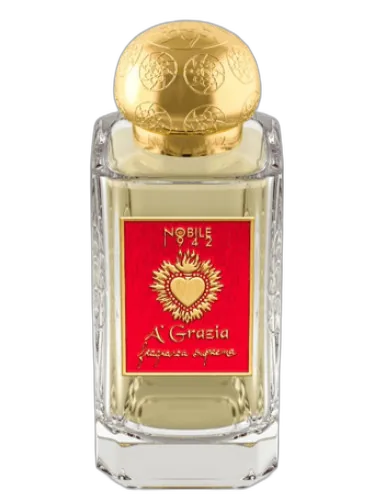
Nobile 1942
A' Grazia Nobile 1942
Shared top notes: davana

Jean Paul Gaultier
Scandal Gold Jean Paul Gaultier
Shared top notes: saffron
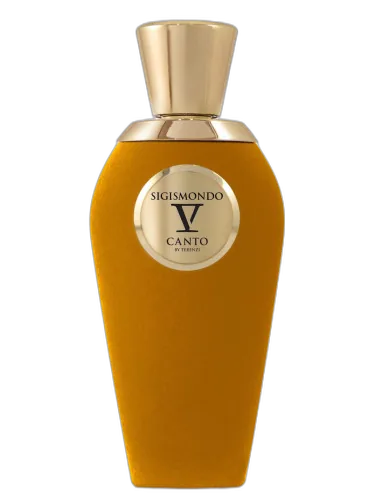
V Canto
Sigismondo V Canto
Shared top notes: cinnamon, saffron