


No. 23 The Fragrance Design Studio
Fragrance Story
No. 23 by The Fragrance Design Studio is a Aromatic Fougere fragrance for women and men. No. 23 was launched in 2012. The nose behind this fragrance is Cecile Hua.
Composition Profile
About the Perfumer

Cecile Hua
Cecile Hua has composed fragrances for 4711, Amouroud, Arielle Shoshana, and Atelier Cologne. Her work ranges from fresh citrus blends like 4711 Acqua Colonia Pink Pepper & Grapefruit to deeper floral and woody creations such as Dark Orchid. She is known for her ability to balance clarity with complexity across different styles.
Fragrance Notes
All Notes
Complete scent profile
No. 23 The Fragrance Design Studio by The Fragrance Design Studio offers a distinctive olfactory experience that stands out from other fragrances in its category.
Crafted with the finest ingredients and a blend of traditional and modern perfumery techniques, this fragrance represents the pinnacle of the perfumer's art.
No. 23 The Fragrance Design Studio embodies the distinctive style of The Fragrance Design Studio while adding a unique chapter to their fragrance portfolio.
Character Profile
The Alchemist Archetype: Portrait of No. 23 The Fragrance Design Studio
Essence
The person who gravitates toward No. 23 The Fragrance Design Studio is an Alchemist-a seeker of transformation, a weaver of meaning, and a connoisseur of the rare and refined. Like the alchemical process itself, they are drawn to the interplay of opposing forces: the sacred and the sensual, the intellectual and the instinctive. Their fragrance is not merely a scent but an elixir, a distillation of their inner world into an olfactory signature.
They are not content with the obvious or the mass-produced. Their choice of fragrance reveals a mind that craves depth, complexity, and a touch of the enigmatic. They are drawn to the idea that beauty is not static but something to be uncovered, refined, and occasionally shattered before it can be remade.
Style & Aesthetic
Their wardrobe is a curated collection of textures, contrasts, and subtle provocations. They favor fabrics that tell a story-vintage silk, raw linen, leather softened by time. Their style is neither ostentatious nor minimalist but deliberately composed, as if each garment were chosen for its symbolic weight as much as its appearance.
They may wear a single piece of jewelry-an heirloom ring, an oxidized silver pendant-not as decoration but as a talisman. Their home is similarly layered: a mix of antique and modern, with objects arranged not for display but for resonance. A well-worn book left open on a desk, a half-burned candle, a sketchbook filled with half-formed ideas-these are the artifacts of their inner laboratory.
Relationships
In love and friendship, they are both magnetic and elusive. They attract those who are intrigued by depth, but they also frustrate those who seek simplicity. Their relationships are alchemical vessels-spaces where raw emotions are transmuted into something richer, but also where misunderstandings can curdle into resentment.
They are not quick to trust, but once they do, their loyalty is fierce. However, their shadow emerges when their pursuit of transformation becomes a refusal to accept imperfection-in themselves or others. They may grow impatient with those who resist change, or they may withdraw when a connection becomes too predictable. Their greatest challenge is learning that not everything must be refined; some bonds are strongest in their unpolished state.
Shadow
Their brilliance has its cost. The same mind that sees potential in the mundane can also become trapped in its own labyrinth, endlessly analyzing without acting. They may fall into the trap of believing that life must always be profound, dismissing joy that arrives without ceremony.
At their worst, they can become secretive, hoarding their insights like an alchemist guarding the formula for gold. Their fear of the ordinary may lead them to sabotage stability in pursuit of perpetual reinvention. They must learn that wisdom lies not only in transformation but also in stillness-that sometimes, the most profound alchemy is acceptance.
Conclusion
Their philosophy is one of intentional evolution-they believe in the possibility of reinvention, both of the self and of the world around them. They are not passive observers but active participants in the shaping of their reality. This is not mere idealism; it is a quiet but unshakable conviction that life is a series of experiments, some yielding gold, others only ash.
They are drawn to art that demands interpretation, literature that resists easy answers, and conversations that linger in ambiguity. Their tastes are eclectic but never arbitrary-each preference is a carefully selected ingredient in their personal alchemy. They might admire the surrealism of Magritte, the poetic precision of Rilke, or the dissonant harmonies of avant-garde jazz.
Similar Fragrances
Fragrances with a comparable profile - shared accords, notes, and character.
The Fragrance Design Studio
No. 23 The Fragrance Design Studio
Shared accords: aromatic, citrus, fresh

Zaharoff
Signature Royale X Zaharoff
Shared accords: aromatic, citrus, fresh
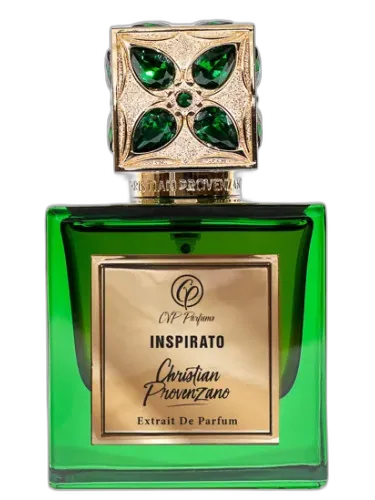
Christian Provenzano Parfums
Inspirato Extrait De Parfum Christian Provenzano Parfums
Shared accords: aromatic, citrus, fresh
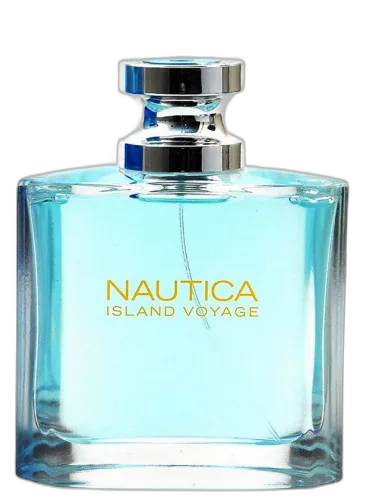
Nautica
Nautica Island Voyage Nautica
Shared accords: aromatic, citrus, fresh

Vyrao
I Am Verdant Vyrao
Shared accords: aromatic, citrus, fresh