


Poésie Du Chaos Theatre Des Parfums
Fragrance Story
Poésie du Chaos by Theatre des Parfums is a Floral Fruity Gourmand fragrance for women and men. The nose behind this fragrance is Bertrand Duchaufour.
Composition Profile
About the Perfumer

Bertrand Duchaufour
Bertrand Duchaufour is a renowned French perfumer with a prolific career spanning many brands. He has created fragrances for Acqua di Parma, including Blu Mediterraneo - Cipresso Di Toscana and Colonia Assoluta, as well as for Aedes de Venustas, such as Café Tabac and Copal Azur. His style is known for its complexity and use of natural ingredients.
Fragrance Notes
All Notes
Complete scent profile
 Iris
Iris
 Plum
Plum
 Strawberry
 Vanilla
 Chocolate
 Woody Notes
 Cardamom
 Musk
Musk
Poésie Du Chaos Theatre Des Parfums by Theatre des Parfums offers a distinctive olfactory experience that stands out from other fragrances in its category.
Crafted with the finest ingredients and a blend of traditional and modern perfumery techniques, this fragrance represents the pinnacle of the perfumer's art.
Poésie Du Chaos Theatre Des Parfums embodies the distinctive style of Theatre des Parfums while adding a unique chapter to their fragrance portfolio.
Character Profile
The Lover Archetype: Portrait of Poésie Du Chaos Theatre Des Parfums
Essence
Poésie Du Chaos is not a fragrance for those who seek comfort in the familiar. It is a scent that thrives in the liminal spaces-where beauty meets dissonance, where structure dissolves into art. The person who cherishes this fragrance is not merely drawn to its notes but to the philosophy it embodies: a celebration of the ephemeral, a dance between order and entropy. They are, at their core, a Poet-not necessarily in profession, but in spirit.
Style & Aesthetic
The Poet thrives in environments that allow for both solitude and stimulation. They might be writers, artists, or musicians-or they might work a mundane job while secretly filling notebooks with fragments of verse. Their home is a sanctuary of curated disorder: stacks of books, half-drunk cups of tea, candles burned down to stubs. They are most alive at night, when the world quiets and thoughts expand.
But their shadow is self-indulgence. The Poet can become lost in their own inner world, neglecting practicalities. Bills go unpaid, appointments forgotten, friendships strained by their tendency to disappear into reverie. They resent routine, yet without it, they risk dissolving into pure abstraction.
Philosophy & Values
The Poet’s philosophy is one of transcendence through contradiction. They do not believe in pure good or pure evil, but in the tension between them. They are drawn to thinkers like Nietzsche, Rilke, or Pessoa-those who saw beauty in struggle, meaning in ambiguity. They value authenticity above all, but their version of authenticity is not raw honesty-it is the deliberate shaping of experience into something more profound.
They reject dogma, yet they are not nihilists. Instead, they seek ephemeral truths-those that flicker into existence and vanish before they can be pinned down. This makes them both deeply introspective and frustratingly elusive in conversation. They speak in layers, in half-finished thoughts that demand interpretation.
Relationships
The Poet does not love lightly, nor do they love predictably. Their relationships are intense, sometimes tumultuous, because they seek not just companionship but a mirror for their own depths. They are drawn to people who intrigue them-those with hidden wounds, quiet mysteries, or unspoken passions.
Yet, their shadow emerges here: they idealize too easily. The Poet falls in love with potential, with the idea of a person rather than the reality. When the illusion shatters, they retreat, leaving behind confusion and wounded hearts. Their partners often accuse them of being emotionally distant, not because they lack feeling, but because they feel too much and fear the weight of it.
Shadow
Every archetype has its dark inversion. For the Poet, it is the Martyr-the one who drowns in their own sensitivity. When unbalanced, they may wallow in melancholy, mistaking suffering for profundity. They may manipulate their own emotions, seeking pain as a form of artistic fuel.
The greatest challenge for the Poet is to ground their vision in reality. To learn that beauty does not always require torment, that love does not have to be tragic to be meaningful. If they can temper their idealism with wisdom, they become not just dreamers, but alchemists-those who transform the raw material of existence into something luminous.
Conclusion
The Poet does not merely experience life; they transmute it. Their senses are heightened, their perceptions sharpened to the point where even the mundane carries weight. They are the kind of person who pauses in the middle of a crowded street to watch the way light fractures through a rain-soaked window, who finds meaning in the scent of old books and the texture of crumbling plaster. Their tastes are refined but never conventional-they prefer the haunting over the harmonious, the complex over the simple.
In style, they favor textures that tell a story: a well-worn leather jacket, a silk scarf with an irregular weave, jewelry that looks as though it was unearthed from an ancient ruin. Their wardrobe is not curated for trends but for resonance-each piece a fragment of a larger narrative. They might collect odd trinkets, handwritten letters, or faded postcards, not out of nostalgia, but because these objects hum with latent poetry.
Similar Fragrances
Fragrances with a comparable profile - shared accords, notes, and character.

Donna Karan
Dkny Be Delicious Electric Vivid Orchid Donna Karan
Shared accords: fruity, iris, musky
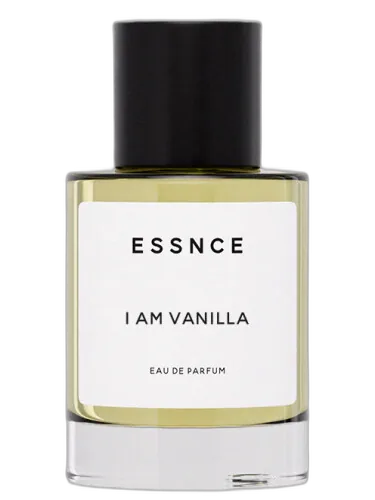
ESSNCE
I Am Vanilla Essnce
Shared accords: fruity, musky, powdery

L’Occitane Au Brésil
Abraço L’occitane Au Brésil
Shared accords: fruity, musky, powdery

KV by Kateryna Vel'menko
El Badia Kv By Kateryna Vel'menko
Shared accords: musky, powdery, sweet
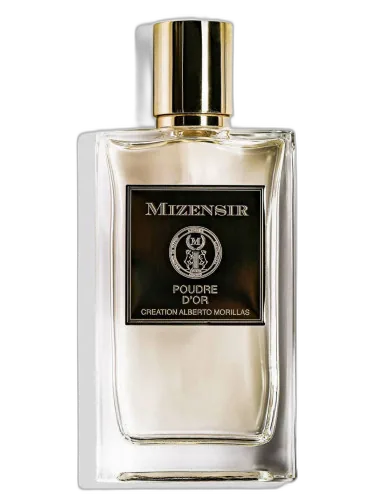
Mizensir
Poudre D'or Mizensir
Shared accords: iris, musky, powdery