
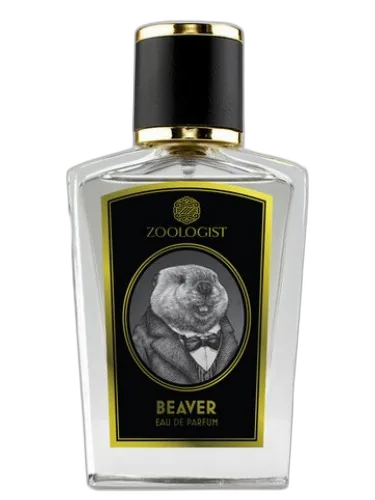

Beaver Edition 2016 Zoologist Perfumes
At a glance
Is Beaver Edition 2016 Zoologist Perfumes worth trying?
Beaver Edition 2016 by Zoologist Perfumes is a Oriental Woody fragrance for women and men.
- Best match
- Evening, Special Occasion wear in Fall, Winter
- Performance feel
- Very Good longevity with Strong sillage
- Signature profile
- leather, musky, aquatic with Ozonic notes, Lime (Linden Blossom), Green Notes
The first impression
Beaver Edition 2016 by Zoologist Perfumes is a Oriental Woody fragrance for women and men. Beaver Edition 2016 was launched in 2016. The nose behind this fragrance is Chris Bartlett. Top notes are Ozonic notes, Lime (Linden Blossom), Green Notes and Woody Notes; middle notes are Watery Notes, Musk and Woodsy Notes; base notes are Musk, Leather, Castoreum, dark woodsy notes, Amber and Vanilla.
What shapes the scent
The perfumer behind it

Chris Bartlett
Chris Bartlett is a British perfumer and the founder of Pell Wall Perfumes, where he creates a wide range of fragrances. His catalog includes classics like 1953 Eau De Toilette and 1953 Pour Homme, as well as more unique offerings such as Anjin, Devana, Equistem, Green Carnation, Jacinth, and Lasting Lavender. His work often explores traditional and modern perfumery techniques.
Notes pyramid
Top Notes
First impression · 15-30 min
 Ozonic notes
 Lime (Linden Blossom)
 Green Notes
 Woody Notes
Heart Notes
Core character · 2-4 hours
Watery Notes
 Musk
Woodsy Notes
Musk
Woodsy Notes
Base Notes
Lasting impression · 4+ hours
Musk
 Leather
 Castoreum
dark woodsy notes
Castoreum
dark woodsy notes
 Amber
Amber
 Vanilla
The mood it creates
The Lover Archetype: Portrait of Beaver Edition 2016 Zoologist Perfumes
Essence
This person is most closely aligned with the Wild Sage, a fusion of the Sage and the Outlaw archetypes. They possess the Sage’s introspective wisdom and the Outlaw’s defiance of convention, seeking truth not in books but in the raw, unfiltered pulse of existence. The scent of Beaver Edition 2016-earthy, musky, with a hint of damp wood and animalic warmth-mirrors their essence: primal yet refined, untamed yet deliberate.
Style & Aesthetic
Their aesthetic is organic minimalism-linen, wool, leather, materials that age with character. They favor muted tones, but with textures that invite touch: rough-hewn wood, unpolished stone. Their home is a sanctuary of curated wildness-dried herbs, handmade ceramics, perhaps a taxidermy specimen or a well-worn fur throw.
In art, they gravitate toward the liminal-works that hover between beauty and unease. They might admire the paintings of Zdzisław Beksiński or the music of Wardruna. Their reading list leans toward ecological philosophy, myth, and speculative fiction-Annie Dillard, Ursula K. Le Guin, and Donna Haraway are likely favorites.
They thrive in liminal spaces-the edges of forests, old industrial districts repurposed into studios, fog-draped coastlines. If they live in a city, they seek out its forgotten corners, the places where nature seeps through the cracks.
Their daily rituals are deliberate: morning tea brewed from foraged herbs, long walks without destination, journaling in half-legible scrawl. They may practice a craft-woodworking, leatherwork, or brewing-something that demands patience and yields tangible, imperfect results.
Philosophy & Values
They reject the sanitized, the artificial, the overly polished. Life, to them, is best lived in contact with its rough edges-where instinct and intellect meet. Their philosophy is one of embodied wisdom: knowledge is not merely abstract but must be felt, smelled, tasted. They distrust dogma, preferring the ambiguity of nature’s cycles-decay and rebirth, predator and prey.
Their values are rooted in authenticity and self-sufficiency. They admire those who carve their own path, yet they are not reckless; their wildness is tempered by observation. They might quote Nietzsche: "One must still have chaos in oneself to be able to give birth to a dancing star."
Relationships
They are selectively intimate, forming deep but few bonds. Their friendships are built on shared silences as much as conversation-companions who understand that not all truths need to be spoken. Romantic partners must respect their need for solitude; they will not be tamed, though they are fiercely loyal to those who earn their trust.
In groups, they are the quiet observer, the one who speaks sparingly but with precision. They dislike small talk, preferring exchanges that crack open the mundane to reveal something raw beneath. Some mistake their reserve for aloofness, but those who listen closely detect dry wit and a sharp, unflinching insight.
Shadow
For all their wisdom, they risk isolation. Their disdain for the superficial can harden into contempt, their independence into stubborn self-exile. They may romanticize suffering, mistaking loneliness for depth. At their worst, they become the misanthrope in the woods, convinced that no one else understands the world as they do.
Yet their shadow also holds a paradoxical yearning for connection. Beneath the self-sufficiency lies a fear of dependence-of needing others too much. They must learn that wildness does not require solitude, that even the beaver builds its lodge in community.
Conclusion
They are neither wholly beast nor sage, but something in between-a creature of thoughtful instinct. Their love for Beaver Edition 2016 is no accident: it is a scent that bridges animal warmth and human artistry, just as they bridge intuition and reason.
To meet them is to glimpse a world where civilization has not won, where the wild still breathes beneath the surface. They are a reminder that wisdom does not always come from books-sometimes, it rises from the damp earth, carried on the wind.
If you like this, try these
Fragrances with a comparable profile - shared accords, notes, and character.
Panah London
Rose Grandeur Panah London
Shared base notes: amber, dark woodsy notes, musk

Bvlgari
Black Bvlgari
Shared base notes: amber, leather, musk

Gustave Eiffel
Anne De Russie Gustave Eiffel
Shared base notes: amber, castoreum, leather

Katana Parfums
Orange Cordoue Katana Parfums
Shared heart notes: musk

Renier Perfumes
Ris Tanama Renier Perfumes
Shared base notes: amber, castoreum, musk