
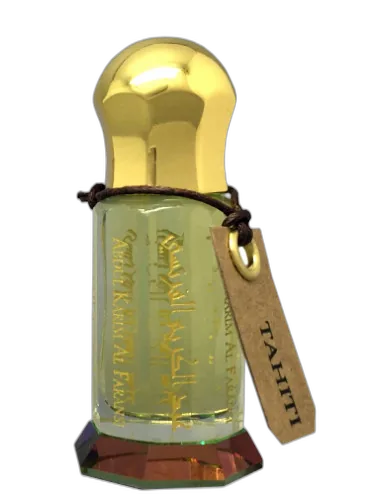

Tahiti Abdul Karim Al Faransi
Fragrance Story
Tahiti by Abdul Karim Al Faransi is a Oriental fragrance for women and men. Tahiti was launched in 2014. The nose behind this fragrance is Anthony Abdul Karim Marmin. Top notes are Tahitian Vanilla and Cotton Flower; middle notes are Coconut and White Musk; base notes are Sandalwood and White Oud.
Composition Profile
About the Perfumer

Anthony Abdul Karim Marmin
Anthony Abdul Karim Marmin is a perfumer closely associated with the house of Abdul Karim Al Faransi, where he has created a wide range of fragrances. His style spans bold, resinous compositions like Amber 4000 and Amber Afghani, as well as more complex, evocative scents such as Al Quds and Amazonia. Known for blending traditional Middle Eastern ingredients with modern accords, his work often features rich amber, oud, and spice notes.
Fragrance Notes
Top Notes
First impression · 15-30 min
 Tahitian Vanilla
 Cotton Flower
Heart Notes
Core character · 2-4 hours
 Coconut
White Musk
Coconut
White Musk
Base Notes
Lasting impression · 4+ hours
 Sandalwood
 White Oud
Tahiti Abdul Karim Al Faransi by Abdul Karim Al Faransi offers a distinctive olfactory experience that stands out from other fragrances in its category.
Crafted with the finest ingredients and a blend of traditional and modern perfumery techniques, this fragrance represents the pinnacle of the perfumer's art.
Tahiti Abdul Karim Al Faransi embodies the distinctive style of Abdul Karim Al Faransi while adding a unique chapter to their fragrance portfolio.
Character Profile
The Alchemist Archetype: Portrait of Tahiti Abdul Karim Al Faransi
Essence
The person who gravitates toward Tahiti Abdul Karim Al Faransi is an embodiment of the Alchemist-a seeker of transformation, a connoisseur of the rare and the refined. This fragrance, with its exotic blend of oud, spices, and tropical florals, is not merely a scent but a statement: it speaks of a soul drawn to the mystical, the luxurious, and the deeply personal. The Alchemist does not simply wear a perfume; they inhabit it, as if the fragrance were a distillation of their own essence.
This individual thrives on the interplay between the tangible and the intangible. They are not content with surface pleasures; they crave depth, meaning, and alchemical change-whether in art, relationships, or self-discovery. Their life is an ongoing experiment, a quest to transmute the ordinary into the extraordinary.
Style & Aesthetic
Their tastes are an intricate tapestry of the opulent and the enigmatic. They are drawn to textures that whisper of distant lands-handwoven silks, aged leather, dark woods polished by time. Their wardrobe is not dictated by trends but by a private mythology, a personal code of elegance that blends the antique with the avant-garde.
In art, they favor the symbolic-pre-Raphaelite paintings, Sufi poetry, the films of Tarkovsky. Music for them is not mere entertainment but a portal; they might lose themselves in the hypnotic drones of Middle Eastern maqams or the layered harmonies of classical Indian ragas. Their home is a sanctuary of curated oddities: an antique astrolabe on the desk, a well-worn copy of The Conference of the Birds on the nightstand, incense curling in the air like a silent invocation.
Their life is a carefully orchestrated paradox-structured yet spontaneous, disciplined yet decadent. They might rise at dawn to meditate, then spend the afternoon sipping absinthe in a dimly lit café, scribbling notes for a book they may never finish. They are equally at home in a bustling souk as in a silent library.
They are not bound by conventional career paths. They might be a perfumer, a philosopher, a wandering artist, or a corporate strategist who secretly writes esoteric poetry. What matters is that their work allows them to transmute-to turn ideas into gold, whether literal or metaphorical.
Philosophy & Values
They do not believe in fixed truths but in the fluidity of perception. Their philosophy is one of becoming rather than being-a perpetual metamorphosis. They might quote Heraclitus: "No man ever steps in the same river twice." For them, stagnation is a kind of death.
Their values are rooted in authenticity, but not in the simplistic sense of "being oneself." Rather, they see authenticity as an act of creation-a deliberate shaping of one’s soul through experience, reflection, and choice. They despise dogma but revere wisdom, often finding it in unexpected places: in the laughter of a street vendor, in the silence of an empty cathedral, in the slow decay of autumn leaves.
Relationships
They do not collect acquaintances; they cultivate disciples and fellow travelers. Their friendships are intense, sometimes overwhelming, built on shared obsessions and midnight conversations that spiral into dawn. They are drawn to those who mirror their own depth-or challenge it.
In love, they are both passionate and elusive. They crave connection but fear confinement. Their partners must understand that they are not a possession but a force of nature, shifting like the wind. They will write love letters in vanishing ink, compose sonnets in a language only the beloved can decipher. But they may also retreat without warning, disappearing into their own labyrinthine thoughts.
Shadow
Yet every archetype has its shadow. The Alchemist’s brilliance is also their curse. Their relentless pursuit of transformation can become a form of escapism-a refusal to ever arrive. They may grow restless, discarding relationships, projects, even selves, before they reach fruition.
Their love of the rare can tip into elitism, a quiet disdain for those who do not share their refined tastes. They may mistake obscurity for profundity, dismissing simplicity as banality. And in their quest for the extraordinary, they risk overlooking the quiet magic of the ordinary-the warmth of a shared meal, the comfort of routine, the beauty of an uncomplicated love.
Conclusion
To wear Tahiti Abdul Karim Al Faransi is to declare oneself a citizen of an invisible realm-a place where the senses and the spirit merge. The Alchemist lives in the liminal, always on the threshold of another revelation. Their life is not easy, nor is it meant to be. But it is theirs-a work of art in perpetual progress, a fragrance that lingers long after they have left the room.
Similar Fragrances
Fragrances with a comparable profile - shared accords, notes, and character.
Abdul Karim Al Faransi
Tahiti Abdul Karim Al Faransi
Shared accords: coconut, lactonic, musky
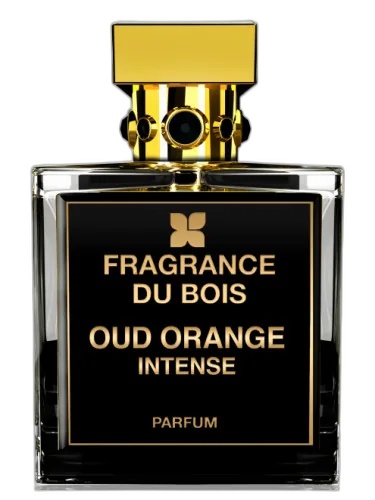
Fragrance Du Bois
Oud Orange Intense Fragrance Du Bois
Shared accords: coconut, lactonic, musky
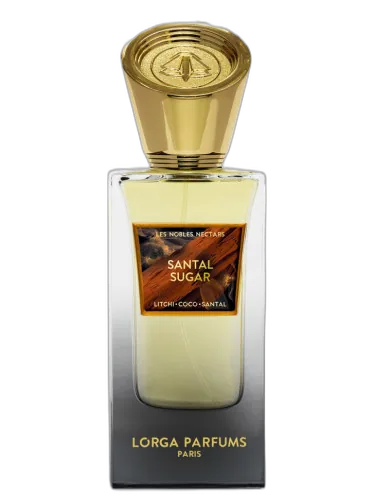
Lorga Parfums
Santal Sugar Lorga Parfums
Shared accords: coconut, lactonic, powdery

Xerjoff
Symphonium 2015 Xerjoff
Shared accords: musky, oud, powdery
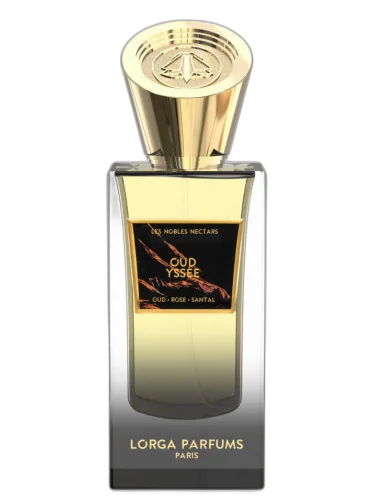
Lorga Parfums
Oud Yssee Lorga Parfums
Shared accords: lactonic, oud, powdery