


Fougère Gothique Barrister And Mann
Fragrance Story
Fougère Gothique by Barrister and Mann is a Aromatic Fougere fragrance for women and men. Fougère Gothique was launched in 2017. The nose behind this fragrance is William Carius. Top notes are Cedar, Lavender, Ash and Bergamot; middle notes are Smoke, Sandalwood, Woody Notes, Leather, Tuberose and Geranium; base notes are Mushroom, Oakmoss, Balsam Fir, Musk, Tonka Bean and Vetiver.
Composition Profile
About the Perfumer

William Carius
William Carius is a perfumer known for his work with Barrister and Mann, a brand specializing in shaving soaps and fragrances. He created all listed scents, including Fougère Gothique, Just Right For A Tuesday, and Seville, which often draw on classic barbershop and fougère traditions. His compositions are noted for their depth and adherence to traditional perfumery techniques.
Fragrance Notes
Top Notes
First impression · 15-30 min
 Cedar
Cedar
 Lavender
 Ash
Ash
 Bergamot
Heart Notes
Core character · 2-4 hours
 Smoke
Smoke
 Sandalwood
 Woody Notes
 Leather
 Tuberose
 Geranium
Base Notes
Lasting impression · 4+ hours
 Mushroom
 Oakmoss
 Balsam Fir
 Musk
Musk
 Tonka Bean
 Vetiver
Fougère Gothique Barrister And Mann by Barrister and Mann offers a distinctive olfactory experience that stands out from other fragrances in its category.
Crafted with the finest ingredients and a blend of traditional and modern perfumery techniques, this fragrance represents the pinnacle of the perfumer's art.
Fougère Gothique Barrister And Mann embodies the distinctive style of Barrister and Mann while adding a unique chapter to their fragrance portfolio.
Character Profile
The Sage Archetype: Portrait of Fougère Gothique Barrister And Mann
Essence
This person is most closely aligned with the Sage archetype, though not the kind who dwells in sunlit libraries or ivory towers. Their wisdom is shadowed, draped in the velvet of melancholy and the leather of defiance. They seek knowledge not for its own sake, but to understand the hidden structures beneath reality-the unseen forces that shape human nature, history, and decay. Yet, unlike the pure Hermit or the detached Philosopher, their wisdom is sensual, rooted in the material world. They do not merely contemplate darkness-they wear it, breathe it, and refine it into something beautiful.
Fougère Gothique-a fragrance of damp earth, moss, incense, and leather-mirrors their essence. It is both intellectual and visceral, a scent that speaks of ancient libraries and midnight graveyards. It does not shy from decay but embraces it as part of life’s texture.
Style & Aesthetic
Their tastes are deliberate, curated with the precision of a scholar and the flair of a Romantic poet. They prefer the weight of leather-bound books, the richness of dark red wines, and the slow burn of aged whiskey. Their wardrobe leans toward structured elegance-tailored coats, deep jewel tones, and fabrics that whisper rather than shout. They appreciate the craftsmanship of a well-made watch, the grain of aged wood, the patina of time on brass and silver.
Philosophically, they are drawn to thinkers who explore the interplay of beauty and decay-Nietzsche’s amor fati, Schopenhauer’s contemplation of suffering, or the Gothic Romanticism of Edgar Allan Poe. They do not fear pessimism, but neither do they wallow in it. Instead, they find a strange comfort in the transience of things, believing that meaning is carved from the tension between creation and ruin.
Their values are rooted in authenticity. They despise pretense, hollow optimism, and blind conformity. They respect those who face the abyss without flinching, who acknowledge life’s brutality yet still choose to create, love, and endure.
They thrive in environments that balance order and mystery-a dimly lit study lined with books, a garden where roses grow wild among tombstones, a city apartment where the hum of nightlife seeps through the windows. Their daily life is structured yet poetic: mornings spent with black coffee and dense literature, evenings with slow music and slower conversation.
They may be writers, historians, perfumers, or artists-any vocation that allows them to explore the interplay of shadow and form. Even if their work is pragmatic, they infuse it with meaning, treating the mundane as sacred simply because it is fleeting.
Relationships
They do not suffer fools gladly, nor do they seek the approval of the crowd. Their friendships are few but profound, built on shared intellectual passions, dark humor, and mutual respect for solitude. They are drawn to people who can match their intensity-those who understand that silence can be more intimate than chatter.
In love, they are neither sentimental nor cold, but fiercely loyal. They do not love lightly; when they commit, it is with the understanding that all things end, and that makes the bond more precious. Their relationships are marked by deep conversations, shared rituals (a carefully chosen record played at midnight, a favorite book read aloud), and an unspoken pact to face life’s uncertainties together.
Yet, they are not without their shadows.
Shadow
Their greatest strength-their refusal to delude themselves-can curdle into a corrosive cynicism. They may dismiss joy as naivety, mistaking their own disillusionment for wisdom. At their worst, they retreat into a self-imposed exile, convinced that no one truly understands them, reinforcing their loneliness with intellectual pride.
Their love of the macabre can also tip into morbidity, a fascination with death that borders on the obsessive. They must guard against the temptation to romanticize suffering, to mistake melancholy for depth. True wisdom, they must remember, is not just in seeing darkness but in choosing light despite it.
Conclusion
They are not merely a connoisseur of gloom but an alchemist who transforms it. Fougère Gothique is their signature because it is more than a scent-it is a philosophy. It acknowledges rot and yet finds elegance in it, just as they acknowledge life’s impermanence and yet live with purpose.
Their challenge is to remain open-to let light pierce their shadows without diluting their depth. If they succeed, they become not just a thinker of dark thoughts, but a guide who helps others navigate the night without fear.
Similar Fragrances
Fragrances with a comparable profile - shared accords, notes, and character.
Barrister and Mann
Fougère Gothique Barrister And Mann
Shared accords: aromatic, earthy, fresh spicy
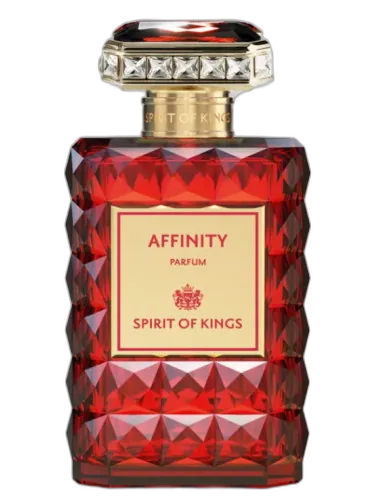
Spirit Of Kings
Affinity Spirit Of Kings
Shared accords: aromatic, earthy, fresh spicy

Weil
Weil Pour Homme Weil
Shared accords: aromatic, earthy, fresh spicy

Bohdidharma
Tobacco Flower Bohdidharma
Shared accords: aromatic, earthy, fresh spicy

Geoffrey Beene
Grey Flannel Geoffrey Beene
Shared accords: aromatic, earthy, fresh spicy