


Eye, Hatshepsut Charenton Macerations
Fragrance Story
Eye, Hatshepsut by Charenton Macerations is a Oriental Floral fragrance for women and men. Eye, Hatshepsut was launched in 2016. The nose behind this fragrance is Cecile Hua.
Composition Profile
About the Perfumer

Cecile Hua
Cecile Hua has composed fragrances for 4711, Amouroud, Arielle Shoshana, and Atelier Cologne. Her work ranges from fresh citrus blends like 4711 Acqua Colonia Pink Pepper & Grapefruit to deeper floral and woody creations such as Dark Orchid. She is known for her ability to balance clarity with complexity across different styles.
Fragrance Notes
All Notes
Complete scent profile
 Musk
Musk
 Papyrus
 Blue Lotus
 Red Wine
Orris
Red Wine
Orris
 Smoke
Smoke
 Cinnamon
 Patchouli
 Incense
 Labdanum
Eye, Hatshepsut Charenton Macerations by Charenton Macerations offers a distinctive olfactory experience that stands out from other fragrances in its category.
Crafted with the finest ingredients and a blend of traditional and modern perfumery techniques, this fragrance represents the pinnacle of the perfumer's art.
Eye, Hatshepsut Charenton Macerations embodies the distinctive style of Charenton Macerations while adding a unique chapter to their fragrance portfolio.
Character Profile
The Alchemist Archetype: Portrait of Eye, Hatshepsut Charenton Macerations
Essence
This person is most closely defined by the Sage archetype-a seeker of truth, wisdom, and transformation. The fragrance Eye, Hatshepsut by Charenton Macerations is not merely a scent but a statement: it is resinous, smoky, and enigmatic, evoking ancient temples and sacred rites. Like the pharaoh Hatshepsut herself, this individual is drawn to the intersection of power and mysticism, where knowledge is both weapon and sanctuary.
The Sage does not simply accumulate facts; they distill them into meaning. Their mind is a crucible where history, philosophy, and personal experience merge into a singular vision. Yet, as with all archetypes, the Sage has a shadow-one that risks becoming lost in abstraction, detached from the visceral pulse of life.
Style & Aesthetic
Their presence is striking but not ostentatious-like the fragrance they wear, which is bold yet refined. They favor textures that evoke antiquity: raw linen, aged leather, oxidized metals. Their wardrobe is a curated archive, each piece carrying a story, a memory, or a symbolic weight.
They are drawn to minimalism with depth-spaces that feel like sanctuaries rather than mere dwellings. Their home may feature incense burners, well-worn books, and artifacts from distant cultures, arranged not for decoration but as talismans of thought.
Their days are structured yet fluid, governed by rituals of thought and sensation. Morning might begin with black coffee and a weathered journal, evenings with obscure texts or solitary walks under dim streetlights. They are drawn to places where time feels suspended-museums, libraries, ruins-where the past whispers to the present.
Yet their reverence for the profound can make them disdainful of the mundane. They may neglect practicalities, dismissing them as trivial distractions. Bills go unpaid, meals are skipped-not out of carelessness, but because their mind is elsewhere, chasing some elusive revelation.
Philosophy & Values
They believe in the alchemy of perception-that reality is not fixed but shaped by the lenses through which we view it. Their philosophy is neither rigid nor dogmatic, but fluid, drawing from esoteric traditions, existential thought, and the quiet wisdom of natural cycles. They value intellectual independence, resisting easy answers in favor of nuanced inquiry.
Yet this very strength can become a weakness. Their relentless pursuit of deeper truths sometimes leads them to dismiss simpler pleasures or emotional immediacy. They may grow impatient with those who do not share their hunger for the unseen, retreating into a self-made labyrinth of ideas.
Relationships
They are selective in their connections, valuing depth over breadth. Their closest relationships are with those who can engage them in intellectual sparring or share their fascination with the arcane. They are not cold, but they do not easily surrender to sentimentality-love, for them, is often expressed through shared exploration rather than overt displays of emotion.
Their shadow emerges in moments of emotional austerity. They may unintentionally distance themselves, assuming others should meet them on their philosophical plane rather than descending to the realm of raw feeling. This can leave partners or friends feeling like outsiders in their inner world.
Shadow
The Sage’s greatest danger is isolation-both chosen and inevitable. The more they refine their understanding, the harder it becomes to communicate it. They may grow frustrated with a world that seems content with superficiality, withdrawing into a self-sufficient but lonely existence.
At their worst, they become dogmatic in their skepticism, mistaking cynicism for wisdom. They may dismiss joy as naivety, love as illusion, forgetting that even the most profound truths must be lived, not merely contemplated.
Conclusion
This person is neither wholly of this world nor entirely beyond it. They walk the line between scholar and mystic, their mind a blade that cuts through illusion-yet sometimes, in their zeal to see beyond, they forget to see what is right before them.
But when they strike the balance, when wisdom tempers rather than consumes them, they become something rare: a guide without pretense, a thinker who does not merely know but understands. And in those moments, their presence-like the scent of Eye, Hatshepsut-lingers long after they have passed, an echo of something ancient and inexhaustible.
Similar Fragrances
Fragrances with a comparable profile - shared accords, notes, and character.
Charenton Macerations
Eye, Hatshepsut Charenton Macerations
Shared accords: amber, cinnamon, floral
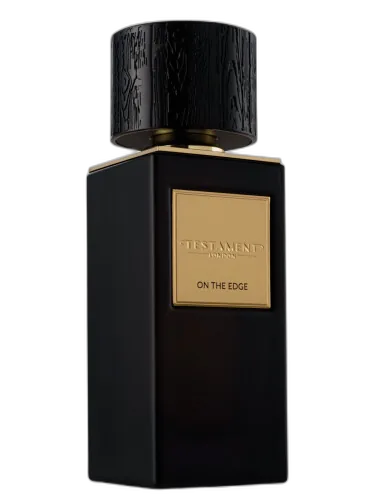
Testament London
On The Edge Testament London
Shared accords: amber, iris, musky

WIDIAN
I Widian
Shared accords: amber, cinnamon, musky

SWITCH Perfumes
№ 4 Switch Perfumes
Shared accords: amber, musky, powdery
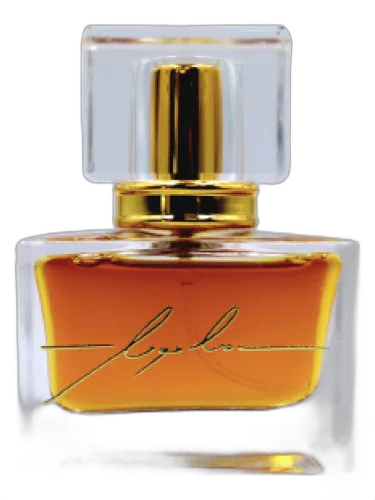
Angelos Créations Olfactives
Grâce D' Orient Angelos Créations Olfactives
Shared accords: amber, floral, iris