
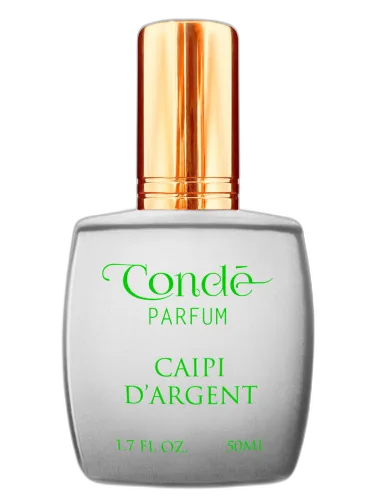

Caipi D' Argent Condé Parfum
Fragrance Story
Caipi d' Argent by Condé Parfum is a Aromatic Fougere fragrance for women and men. This is a new fragrance. Caipi d' Argent was launched in 2023. The nose behind this fragrance is Fábio Condé. Top notes are Lime, Boozy Notes, Sicilian Lemon, Lemon Verbena, Bergamot and Litsea Cubeba; middle notes are Mint, Peppermint, Lavender, Rhubarb and Basil; base notes are Ambroxan, Coumarin, Vetiver, Virginia Cedar and Guaiac Wood.
Composition Profile
About the Perfumer

Fábio Condé
Fábio Condé is a Brazilian perfumer and founder of Condé Parfum, creating a wide range of scents including Ambré Beige, Bois D'orange, and Cuir Vert. His work explores diverse olfactory themes from fresh colognes to rich leathers. Condé's fragrances are known for their vibrant and modern character.
Fragrance Notes
Top Notes
First impression · 15-30 min
 Lime
Lime
 Boozy Notes
 Sicilian Lemon
 Lemon Verbena
 Bergamot
 Litsea Cubeba
Heart Notes
Core character · 2-4 hours
 Mint
Peppermint
Mint
Peppermint
 Lavender
 Rhubarb
 Basil
Basil
Base Notes
Lasting impression · 4+ hours
 Ambroxan
 Coumarin
 Vetiver
Virginia Cedar
Vetiver
Virginia Cedar
 Guaiac Wood
Character Profile
The Lover Archetype: Portrait of Caipi D' Argent Condé Parfum
Essence
The person who adores Caipi D’Argent Condé Parfum is, above all, a disciple of pleasure. Their soul is ruled by the Hedonist archetype, though not in its crudest form-this is no mere seeker of fleeting thrills, but a refined sensualist who worships beauty in all its manifestations. They believe life should be savored, not merely endured, and their fragrance-a sparkling, citrusy, yet subtly decadent elixir-mirrors their philosophy.
Like Dionysus, the god of ecstasy and wine, they dance between indulgence and artistry, never fully surrendering to excess but always flirting with its edges. They are drawn to the golden moments where time slows, where laughter mingles with the clink of glasses, where the world softens into a dream.
Style & Aesthetic
In love, they are both generous and elusive. They adore romance-the slow unfurling of attraction, the poetry of stolen glances-but they resist possession. Their relationships thrive on freedom and intensity, not obligation. They are drawn to those who match their passion but respect their independence.
Yet, this very magnetism can become their undoing. Some lovers mistake their warmth for permanence, only to find that their heart is a moving feast, not a fixed destination. They are not cruel, but they are transient-like their favorite fragrance, lingering just long enough to leave an imprint before dissolving into memory.
Philosophy & Values
For them, pleasure is not escapism but a form of wisdom. They reject asceticism, seeing it as a denial of life’s richness, yet they are not slaves to their appetites. Their hedonism is a disciplined pursuit-they know the difference between true enjoyment and hollow excess.
They believe in the sacredness of small joys: the first sip of espresso in the morning, the scent of rain on warm pavement, the weight of a lover’s hand in theirs. They do not chase happiness; they cultivate it, like a rare orchid that blooms only under the right conditions.
Shadow
But every archetype has its dark twin. The Hedonist’s shadow is the Decadent-the one who mistakes sensation for meaning, who drowns in pleasure rather than savoring it. When unbalanced, they may slip into a restless hunger, chasing novelty to fill an inner void.
Their greatest flaw is a fear of stillness. They avoid solitude, for in silence, they must confront the question: Is this all there is? Beneath their radiant exterior, there is sometimes a whisper of melancholy, the knowledge that no moment, no matter how exquisite, lasts forever.
Conclusion
The lover of Caipi D’Argent is neither saint nor sinner, but a poet of the senses. They teach us that life’s sweetness is fleeting-and that is precisely why it must be tasted fully. Their existence is a testament to the idea that joy is not frivolous, but a kind of courage.
Yet, like all who live by sensation, they must learn the hardest lesson: that even the most intoxicating perfume fades. The true mastery lies not in clinging to the moment, but in letting it go-gracefully, gratefully-and stepping, once more, into the unknown.
Similar Fragrances
Fragrances with a comparable profile - shared accords, notes, and character.
Condé Parfum
Caipi D' Argent Condé Parfum
Shared accords: aromatic, citrus, fresh spicy

Smell Bent
The Spray Tan Incident Smell Bent
Shared accords: aromatic, citrus, fresh spicy
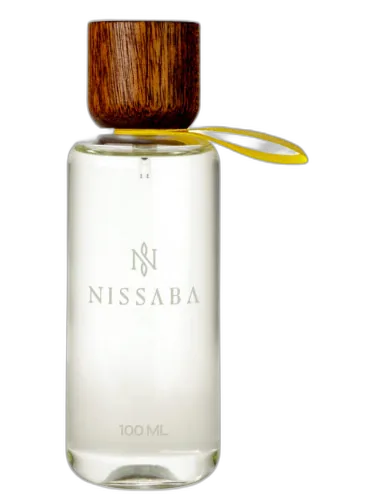
Nissaba
Chaco Nissaba
Shared accords: aromatic, citrus, fresh spicy

Goutal
Les Nuits D'hadrien Goutal
Shared accords: aromatic, citrus, fresh spicy

Boka
Zelen Boka
Shared accords: aromatic, citrus, fresh spicy