
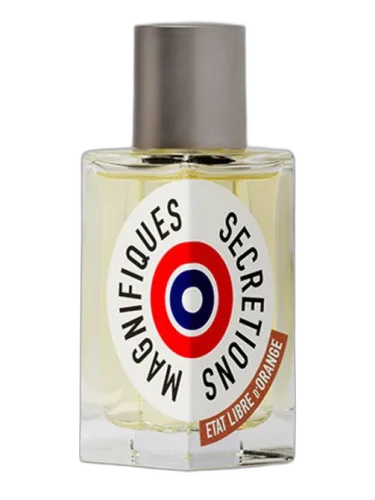
Secretions Magnifiques Etat Libre D'orange
Fragrance Story
Secretions Magnifiques by Etat Libre d'Orange is a Woody fragrance for women and men. Secretions Magnifiques was launched in 2006. The nose behind this fragrance is Antoine Lie.
Composition Profile
About the Perfumer

Antoine Lie
Antoine Lie is a French perfumer trained at Givaudan and known for his work with brands like Burberry and Avon. His style often blends bold contrasts, pairing fresh or woody accords with unexpected gourmand or metallic touches. He created the earthy, resinous Sequoia for Abbott New York City and the spicy, incense-laced Sword for CZAR, showcasing his skill with complex, atmospheric compositions.
Fragrance Notes
All Notes
Complete scent profile
 Seaweed
 Milk
Milk
 Coconut
 Iris
Iris
 Opoponax
 Sandalwood
Secretions Magnifiques Etat Libre D'orange by Etat Libre d'Orange offers a distinctive olfactory experience that stands out from other fragrances in its category.
Crafted with the finest ingredients and a blend of traditional and modern perfumery techniques, this fragrance represents the pinnacle of the perfumer's art.
Secretions Magnifiques Etat Libre D'orange embodies the distinctive style of Etat Libre d'Orange while adding a unique chapter to their fragrance portfolio.
Character Profile
The Alchemist Archetype: Portrait of Secretions Magnifiques Etat Libre D'orange
Essence
The person who embraces Secretions Magnifiques by Etat Libre d'Orange is not merely a wearer of fragrance but a provocateur of the senses, an alchemist who transmutes disgust into fascination, taboo into art. Their dominant archetype is the Trickster-the boundary-breaker, the one who mocks convention and forces others to question their own limits. The Trickster does not seek approval but revels in the discomfort they provoke, exposing the fragility of social norms.
This individual thrives on contradiction, embodying both the sacred and the profane. They are drawn to the scent’s unsettling blend of blood, sweat, and semen-not for shock value alone, but because it mirrors their own refusal to sanitize human experience. Where others see vulgarity, they see honesty; where others recoil, they lean in.
Style & Aesthetic
Their tastes are an exercise in controlled dissonance. They might admire the raw eroticism of Francis Bacon’s paintings, the grotesque elegance of Georges Bataille’s literature, or the industrial noise of Throbbing Gristle. Their wardrobe is a mix of high fashion and deliberate imperfection-perhaps a tailored suit with a stain left conspicuously unremoved, or a delicate silk blouse paired with torn fishnets.
They reject the idea that beauty must be palatable. Instead, they seek the sublime in what is usually discarded or hidden. Their home is not a minimalist sanctuary but a curated chaos: taxidermy, medical diagrams, vintage pornography, and decaying flowers in vases. They are collectors of the macabre and the intimate, treating both with the same reverence.
They do not live comfortably. Their existence is a series of calculated disruptions-shocking dinner party conversations, deliberately controversial art projects, public acts of defiance against decorum. They are not reckless, but neither are they safe.
Professionally, they may thrive in avant-garde art, experimental perfumery, or radical psychology-any field where the breaking of taboos is not just tolerated but necessary. They are not motivated by money or fame but by the thrill of seeing others unsettled, forced to confront what they would rather ignore.
Philosophy & Values
Their philosophy is one of radical authenticity. They believe that civilization is a thin veneer over primal truths, and they take perverse pleasure in reminding others of this fact. They do not shy away from the body’s secretions-its fluids, its odors, its decay-because to deny them is to deny humanity itself.
Yet this is not nihilism. Beneath their provocations lies a deep respect for truth, however ugly. They value courage-not the heroism of battle, but the bravery required to face what society deems unacceptable. They despise hypocrisy, especially the kind that masks desire behind politeness. Their moral code is unconventional but fiercely held: they would rather be hated for their honesty than loved for their lies.
Relationships
Their relationships are intense, often short-lived, and never simple. They attract those who are either repelled or fascinated by them-rarely anything in between. Lovers are drawn in by their unapologetic nature but often flee when confronted with the full force of their worldview.
They do not seek stability in companionship but rather a kind of mutual unmasking. Their ideal partner is someone who can match their intellectual ferocity and emotional rawness without flinching. Friendships, too, are built on a foundation of shared transgression-artists, philosophers, outsiders who understand that some truths can only be spoken in the dark.
Shadow
For all their brilliance, the Trickster has a shadow: the compulsion to provoke for its own sake. What begins as a quest for truth can devolve into mere contrarianism, a reflexive need to oppose rather than to understand. They risk becoming trapped in their own performance, mistaking shock for depth.
Their greatest weakness is their inability to appreciate subtlety when brutality will do. They may alienate even those who would otherwise admire them, leaving them isolated in their self-made exile. And in their relentless pursuit of the raw and real, they sometimes forget that tenderness, too, is a truth worth embracing.
Conclusion
This is not a person who will ever be at peace with the world-nor would they want to be. They are the thorn in the side of complacency, the one who forces us to smell our own humanity in all its messy glory. They are flawed, excessive, sometimes insufferable-but in a world that sanitizes and sterilizes, they are a necessary reminder that life is not clean, not polite, and never simple.
And perhaps, in their own way, they are the most honest of us all.
Similar Fragrances
Fragrances with a comparable profile - shared accords, notes, and character.
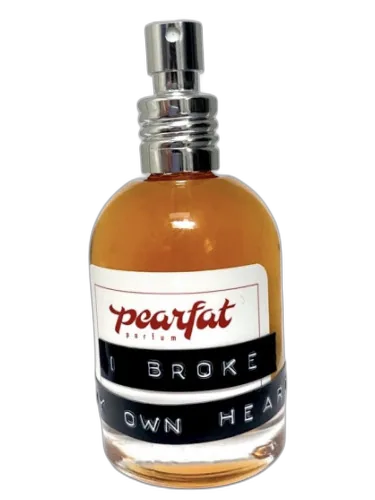
Pearfat Parfum
I Broke My Own Heart Pearfat Parfum
Shared accords: aquatic, aromatic, coconut

To Summer | 观夏
Ink 黑松墨 To Summer | 观夏
Shared accords: amber, aromatic, coconut
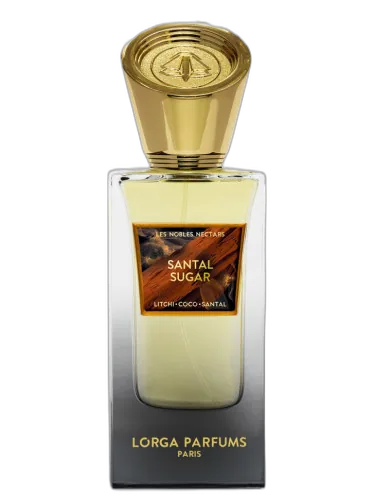
Lorga Parfums
Santal Sugar Lorga Parfums
Shared accords: aromatic, coconut, lactonic

Adam Powell
Vicious Sweet For Her Adam Powell
Shared accords: amber, coconut, iris
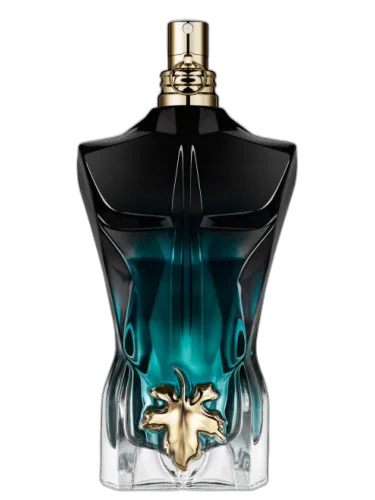
Jean Paul Gaultier
Le Beau Le Parfum Jean Paul Gaultier
Shared accords: amber, coconut, iris