
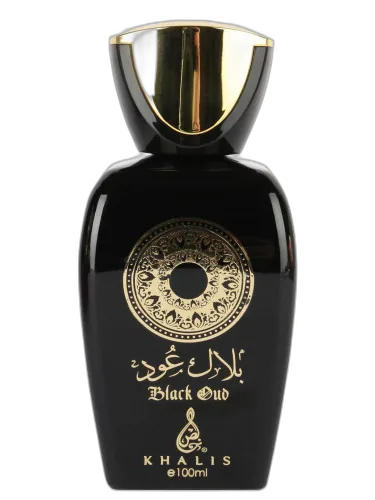
Black Oud Khalis
At a glance
Is Black Oud Khalis worth trying?
Black Oud by Khalis is a Oriental fragrance for women and men.
- Best match
- Evening wear in Winter
- Performance feel
- Excellent longevity with Strong sillage
- Signature profile
- oud, animalic, woody with Laotian Oud, Thailand Oud, Agarwood (Oud)
The first impression
Black Oud by Khalis is a Oriental fragrance for women and men. Black Oud was launched in 2017.
What shapes the scent
The perfumer behind it

Unknown Perfumer
Notes pyramid
All Notes
Complete scent profile
 Laotian Oud
 Thailand Oud
 Agarwood (Oud)
 Indian Oud
 Cambodian Oud
 White Oud
The mood it creates
The Sage Archetype: Portrait of Black Oud Khalis
Essence
The one who favors Black Oud Khalis is not merely drawn to scent-they are drawn to essence. This fragrance, dark and resinous, smoky yet refined, speaks to the Sage archetype. The Sage seeks knowledge, wisdom, and depth, valuing truth above comfort, substance above spectacle. Like the oud itself-rare, complex, enduring-they are drawn to what is profound, even if it is not easily understood.
Yet the Sage is not merely a passive observer. They are a seeker, a thinker, a distiller of meaning. Their love for Black Oud Khalis is no accident: it is an olfactory mirror of their soul-intense, layered, unapologetically deep.
Style & Aesthetic
Their aesthetic is deliberate, never accidental. They favor textures that speak of time-aged leather, dark woods, heavy fabrics like wool and cashmere. Their wardrobe is minimal but precise: a well-tailored coat, a watch with history, perhaps a single piece of jewelry with personal significance.
In art and music, they gravitate toward the timeless-Baroque compositions, Persian miniatures, the poetry of Rumi or Pessoa. They do not chase trends but instead cultivate a personal canon, a private museum of influences that shape their worldview.
They are drawn to solitude, to spaces that allow contemplation-a dimly lit study, a quiet café at midnight, a forest path in autumn. Their home is a sanctuary, filled with books, incense, perhaps a collection of rare objects, each with a story.
They are not ascetics, but they are disciplined. They may practice meditation, journaling, or long walks-rituals that sharpen the mind. Yet their shadow lurks here too: they can become too detached, mistaking isolation for enlightenment. The Sage must remember that wisdom is useless if it does not touch the world.
Philosophy & Values
They believe in the examined life. To them, wisdom is not merely accumulated knowledge but the ability to see patterns, to discern truth beneath illusion. They may be drawn to Stoicism, Zen Buddhism, or existentialism-systems that demand rigor and self-awareness.
Their highest value is authenticity. They despise pretense, small talk, and hollow social rituals. This can make them seem aloof, but it is not indifference-it is a refusal to engage in what they deem meaningless.
Relationships
Their connections are few but deep. They do not collect acquaintances; they cultivate kindred spirits. In love, they seek a partner who is both an equal and a mystery-someone who challenges them, who does not fear their intensity.
Yet their shadow emerges here: their pursuit of depth can become a demand for perfection. They may unintentionally push others away by expecting too much, by dismissing what they see as superficiality. Their relationships thrive when they learn that wisdom includes grace-that not every interaction must bear the weight of eternity.
Shadow
But the Sage’s strength can become their weakness. Their love of depth can turn into disdain for the mundane. Their pursuit of truth can harden into dogma. They may grow impatient with those who do not share their intensity, dismissing them as shallow.
The greatest challenge for the Sage is to temper wisdom with warmth-to remember that even the deepest truths must sometimes be whispered, not declaimed.
Conclusion
The one who wears Black Oud Khalis does not merely enjoy a fragrance-they embody it. Like oud, they are rich, complex, unyielding. Their life is a search for meaning, a refusal to settle for the superficial.
But the Sage must learn the final lesson: that wisdom is not just in seeing clearly, but in loving what is flawed. The smoke of oud does not merely obscure-it reveals. And so must they.
If you like this, try these
Fragrances with a comparable profile - shared accords, notes, and character.
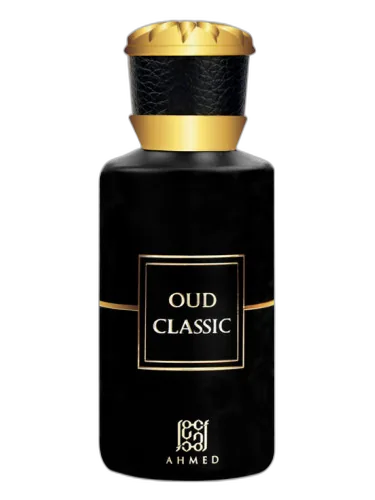
Ahmed Al Maghribi
Oud Classic Ahmed Al Maghribi
Shared top notes: agarwood (oud), cambodian oud, indian oud
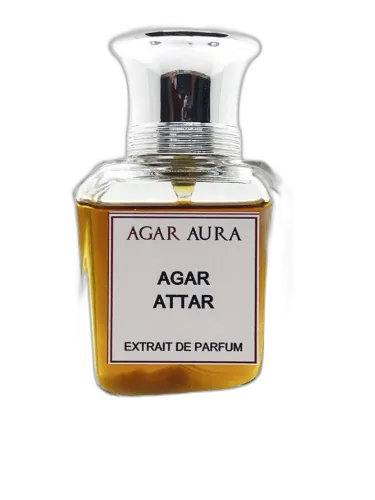
Agar Aura
Agar Attar Agar Aura
Shared top notes: agarwood (oud), cambodian oud, thailand oud

Fueguia 1833
Muskara Aquilaria Fueguia 1833
Shared top notes: agarwood (oud), indian oud, laotian oud
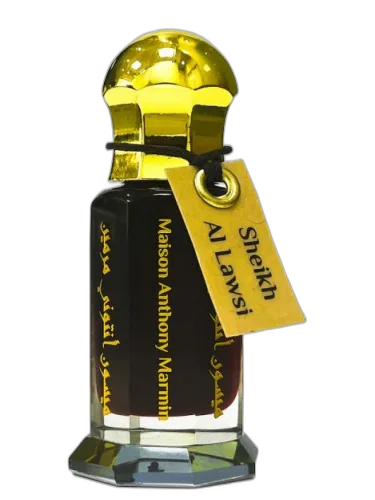
Maison Anthony Marmin
Sheikh Al Lawsi Maison Anthony Marmin
Shared top notes: laotian oud
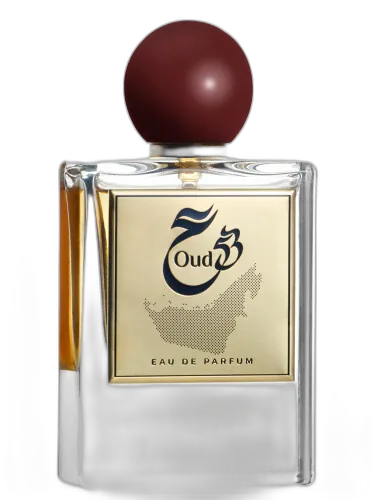
Scentify
Oud 53 Scentify
Shared top notes: thailand oud