
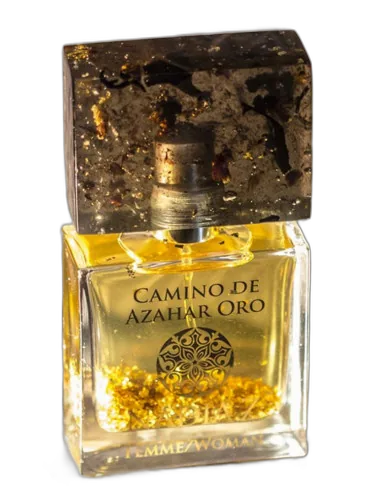

Camino De Azahar Oro Nadia Z
At a glance
Is Camino De Azahar Oro Nadia Z worth trying?
Camino de Azahar Oro by Nadia Z is a Floral Woody Musk fragrance for women.
- Best match
- Evening wear in Fall
- Performance feel
- Very Good longevity with Strong sillage
- Signature profile
- sweet, woody, fruity with Honey, Vanilla, Lemon Verbena
The first impression
Camino de Azahar Oro by Nadia Z is a Floral Woody Musk fragrance for women. The nose behind this fragrance is Nadia Zuodar.
What shapes the scent
The perfumer behind it

Nadia Zuodar
Nadia Zuodar is a perfumer and founder of the Nadia Z brand, offering fragrances such as Anji Bamboo Mist, Camino De Azahar, Camino De Azahar Oro, Celestial Violet Man and Woman, Espiritu Pirata, and Fleur De Loukoum Day and Night. Her creations often blend floral, citrus, and woody elements with a Mediterranean influence. Zuodar's work emphasizes elegance and natural inspiration.
Notes pyramid
All Notes
Complete scent profile
 Honey
Honey
 Vanilla
 Lemon Verbena
 Exotic Fruits
 Mahogany
Precious Woods
Mahogany
Precious Woods
 Neroli
 Lily
Lily
 Chestnut
 Persimmon
 Champaca
 Ylang-Ylang
 Resins
The mood it creates
The Lover Archetype: Portrait of Camino De Azahar Oro Nadia Z
Essence
To wear Camino De Azahar Oro by Nadia Z. is to embrace a fragrance that is luminous, opulent, and intoxicating-orange blossom steeped in honey, amber, and vanilla, a scent that lingers like the memory of a perfect afternoon. The person who chooses this fragrance is not merely drawn to beauty; they demand it, cultivate it, and insist upon its presence in every facet of their existence. They are, at their core, an embodiment of the Lover archetype-one who lives through sensation, passion, and the pursuit of what stirs the soul.
Style & Aesthetic
Their world is one of texture and warmth, where every object, every interaction, must resonate with meaning. They surround themselves with rich fabrics-velvet, silk, cashmere-colors that shimmer in candlelight, deep golds and burnt oranges, as if their life were an extension of the fragrance they adore. Their home is not merely decorated but composed, each piece chosen for its ability to evoke pleasure: a Moroccan tea set, a well-worn leather-bound book, a single peony in a glass vase. They are drawn to art that thrums with life-Caravaggio’s chiaroscuro, the poetry of Rilke, the music of Debussy-anything that speaks to the senses first, the intellect second.
They do not simply eat; they savor. A meal is an event, a ritual. They know the exact moment when the crust of bread is perfectly crisp, the way wine changes with the temperature of the room, the pleasure of ripe figs bursting on the tongue. To them, pleasure is not indulgence but a form of reverence.
Philosophy & Values
For them, life’s purpose is to experience and to connect-deeply, unreservedly. They believe in the transformative power of beauty, not as an escape but as a way of being fully present. They reject asceticism, seeing it as a denial of life’s richness. Instead, they embrace the philosophy that to love-people, art, the world itself-is the highest form of wisdom.
Yet, this devotion to beauty is not frivolous. They understand that true appreciation requires discipline. They are not passive hedonists but connoisseurs, willing to refine their tastes, to seek out the rare and the exquisite. They value authenticity above all; a cheap imitation of beauty offends them more than outright ugliness.
Relationships
In love, they are both generous and exacting. They do not give affection lightly; when they do, it is with an intensity that can overwhelm. They seek partners who match their depth of feeling, who understand that love is not just comfort but alchemy-something that transforms both people.
Yet, their idealism can be a double-edged sword. They are prone to disappointment when others fail to meet their romantic visions. They may mistake infatuation for destiny, projecting their longing onto another person rather than seeing them clearly. Their shadow emerges when passion curdles into possessiveness, when the need for ecstasy becomes a fear of ordinariness.
Shadow
The Lover’s greatest weakness is their intolerance for the mundane. When life fails to meet their heightened expectations, they may slip into melancholy or restless dissatisfaction. They might chase after new sensations, new lovers, new experiences, not out of genuine desire but out of a fear of stillness. At their worst, they become decadent rather than discerning, mistaking excess for depth.
They may also struggle with vanity, not in the shallow sense, but in their need to be seen as someone who understands beauty. Their pride in their taste can make them dismissive of simpler pleasures, or worse-secretly contemptuous of those who do not share their passions.
Conclusion
Yet, when balanced, the Lover is a radiant force. They remind others that life is not merely to be endured but celebrated. They teach by example that pleasure, when pursued with intelligence and grace, is not a distraction but a path to meaning. Their presence is a kind of alchemy-turning the ordinary into the extraordinary, the fleeting into the eternal.
They are not without flaws, but their flaws are the price of their intensity. To love the world as fiercely as they do is to risk heartache, but they would rather ache than live half-awake. And so they walk, leaving behind them the golden trail of Camino De Azahar Oro-a scent that lingers, like the memory of a life lived in full color.
If you like this, try these
Fragrances with a comparable profile - shared accords, notes, and character.

Avon
Far Away Gold Avon
Shared accords: amber, balsamic, floral

Providence Perfume Co.
Orange Blossom Honey Providence Perfume Co.
Shared top notes: honey, neroli, vanilla
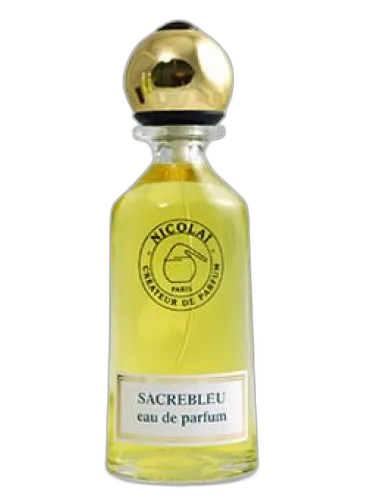
Nicolai Parfumeur Createur
Sacrebleu Nicolai Parfumeur Createur
Shared accords: amber, balsamic, floral

Duduar Milano
Deliziosa Duduar Milano
Shared accords: amber, citrus, floral
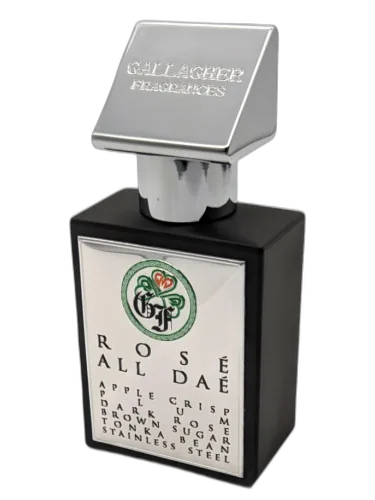
Gallagher Fragrances
Rosé All Daé Gallagher Fragrances
Shared top notes: honey, vanilla