
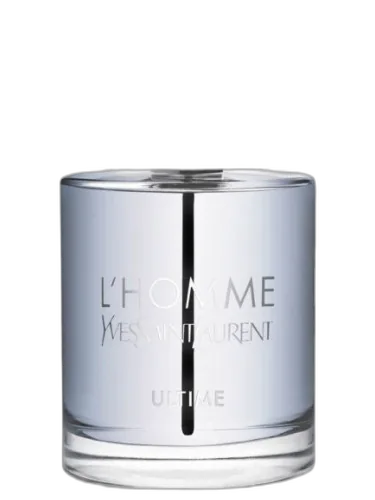

L'homme Ultime Yves Saint Laurent
Fragrance Story
L'Homme Ultime by Yves Saint Laurent is a Woody Floral Musk fragrance for men. L'Homme Ultime was launched in 2016. L'Homme Ultime was created by Anne Flipo, Dominique Ropion and Juliette Karagueuzoglou. Top notes are Ginger, Grapefruit, Cardamom and Bergamot; middle notes are Rose, Sage, Geranium and Apple; base notes are Cedar, Vetiver and Cashmere Wood.
Composition Profile
About the Perfumer

Anne Flipo
Anne Flipo is a French perfumer and a master of delicate, luminous compositions, often working with IFF and known for her refined floral and woody accords. Her style balances transparency with depth, creating scents that feel both airy and substantial, as seen in the ethereal Pleine Lune and the sophisticated Serpent Bohème. Among her notable creations are the bold 212 Vip Black and the radiant Joyphoria, showcasing her versatility across modern and classic aesthetics.
Fragrance Notes
Top Notes
First impression · 15-30 min
 Ginger
 Grapefruit
 Cardamom
 Bergamot
Heart Notes
Core character · 2-4 hours
 Rose
Rose
 Sage
Sage
 Geranium
 Apple
Apple
Base Notes
Lasting impression · 4+ hours
 Cedar
Cedar
 Vetiver
 Cashmere Wood
Character Profile
The Sage Archetype: Portrait of L'homme Ultime Yves Saint Laurent
Essence
To wear L’Homme Ultime by Yves Saint Laurent is to embody a paradox-a man who is both refined and restless, cerebral yet sensual. The fragrance itself is a study in contrasts: the sharp, intellectual freshness of grapefruit and bergamot softened by the warmth of geranium and vetiver. It is not loud, nor does it demand attention, yet it lingers in the mind like an unresolved thought. The man who chooses this scent is, above all, a seeker-one who moves through life with quiet intensity, drawn to depth, meaning, and the subtle interplay of shadow and light.
The Sage is a thinker, an observer, a man who values knowledge not merely as a tool but as a way of being. He is not content with surface-level truths; he seeks to understand the hidden mechanics of the world. His mind is his greatest asset, but it is also his burden, for he can become lost in abstraction, detached from the immediacy of life. The Sage is not a ruler, nor a warrior, nor a lover in the traditional sense-he is a guide, a philosopher, a man who navigates existence with quiet precision.
Style & Aesthetic
His wardrobe is a study in deliberate minimalism-tailored but never ostentatious, elegant without being flashy. He favors neutral tones, structured silhouettes, and fabrics that suggest quiet luxury: fine wool, cashmere, and crisp cotton. His accessories are understated-a well-worn leather notebook, a discreet watch, perhaps a single ring. He is not one for trends, but neither is he rigidly traditional. His style is an extension of his philosophy: form should serve function, and beauty should be effortless.
In art and music, he gravitates toward complexity-jazz that rewards close listening, literature that demands interpretation, films that leave room for ambiguity. He admires artists like Tarkovsky or Borges, creators who weave intellect into emotion. His taste in food and drink follows the same principle: he prefers a perfectly balanced cocktail over excess, a dish that harmonizes flavors rather than overwhelms.
His days are structured but not rigid. He rises early, values solitude, and carves out time for reading, writing, or contemplation. He may practice meditation, not as a trend but as a means of sharpening focus. His career is likely one that engages his intellect-perhaps academia, law, design, or technology. He is not driven by wealth or status, but by mastery.
Yet, his discipline can curdle into asceticism. He may deny himself simple pleasures, mistaking austerity for virtue. The Sage must remember that wisdom is not only found in books but in lived experience-in laughter, in touch, in the unplanned moments that defy analysis.
Philosophy & Values
He believes in the examined life. Stoicism appeals to him-not as a rigid doctrine, but as a framework for navigating chaos with composure. He values rationality, but he is not cold; he understands that emotion, too, has its logic. His greatest fear is superficiality, the kind of existence that never questions its own assumptions. He is drawn to philosophy, psychology, and science, not as academic exercises but as tools for living.
Yet, his pursuit of wisdom can become a form of evasion. He may intellectualize his emotions, turning pain into abstraction rather than facing it directly. His mind, so adept at dissecting problems, can also paralyze him-endless analysis replacing decisive action.
Relationships
He is not a man of many friends, but those he keeps are bound to him by shared depth. He values conversation that goes beyond pleasantries, connections built on mutual curiosity rather than obligation. In love, he is slow to trust but fiercely loyal once he does. He does not fall easily; he observes, considers, and then-if the calculus of intellect and feeling aligns-he commits.
Yet, his detachment can frustrate those who crave spontaneity. He may withhold vulnerability, mistaking emotional restraint for strength. His partners may feel they are being studied rather than embraced. The Sage must learn that wisdom without warmth is merely cleverness, and that love requires surrender as much as understanding.
Shadow
His greatest strength-his intellect-can become his prison. When unbalanced, he withdraws into his mind, mistaking thought for action. He may grow cynical, dismissing what he cannot immediately understand. His pursuit of perfection can make him intolerant of human frailty-including his own.
To transcend this, he must learn that wisdom is not control, but the ability to navigate uncertainty. The Sage must step out of his library, must allow himself to be foolish, to feel without dissecting. Only then does he become not just a thinker, but a man fully alive.
Similar Fragrances
Fragrances with a comparable profile - shared accords, notes, and character.
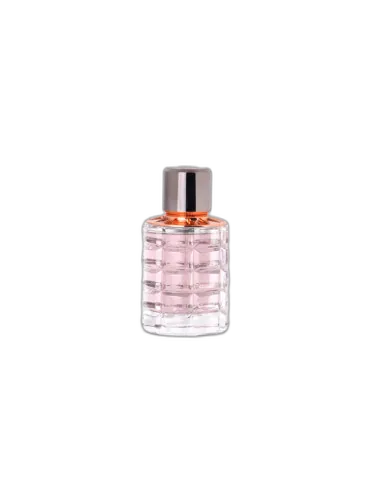
RING
Bright Ring
Shared accords: aromatic, citrus, fresh spicy

Brunello Cucinelli
Vie Eteree Brunello Cucinelli
Shared accords: aromatic, citrus, fresh
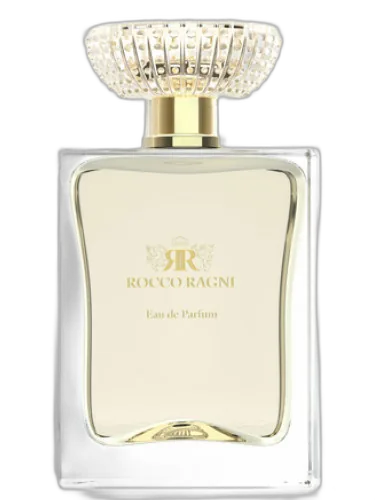
Rocco Ragni
Cashmere Sandalwood Rocco Ragni
Shared accords: aromatic, citrus, floral
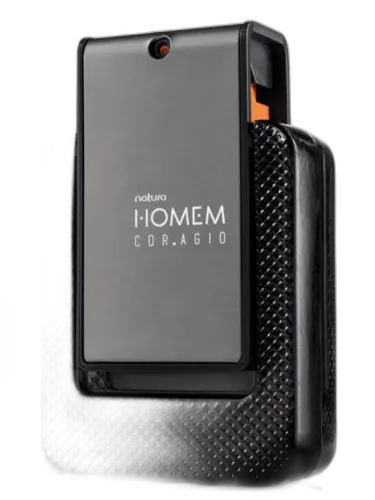
Natura
Homem Cor.agio Natura
Shared accords: aromatic, citrus, floral

Bienaimé
Monsieur Bienaimé
Shared accords: aromatic, citrus, fresh spicy