


Morning In Tipasa 7.2 Pierre Guillaume Paris
Fragrance Story
Morning In Tipasa 7.2 by Pierre Guillaume Paris is a Citrus fragrance for women and men. Morning In Tipasa 7.2 was launched in 2021. The nose behind this fragrance is Pierre Guillaume.
Composition Profile
About the Perfumer

Pierre Guillaume
Pierre Guillaume is a French perfumer and founder of the niche brand Parfumerie Generale. He has created fragrances for Laboratorio Olfattivo and Phaedon, among others. His style is known for its artistic and conceptual approach. Guillaume's work often features complex and evocative blends.
Fragrance Notes
All Notes
Complete scent profile
 Lemongrass
 Peppermint
 Pine Tree
 Honey
Honey
 Jujube Blossom
 Bergamot
Morning In Tipasa 7.2 Pierre Guillaume Paris by Pierre Guillaume Paris offers a distinctive olfactory experience that stands out from other fragrances in its category.
Crafted with the finest ingredients and a blend of traditional and modern perfumery techniques, this fragrance represents the pinnacle of the perfumer's art.
Morning In Tipasa 7.2 Pierre Guillaume Paris embodies the distinctive style of Pierre Guillaume Paris while adding a unique chapter to their fragrance portfolio.
Character Profile
The Lover Archetype: Portrait of Morning In Tipasa 7.2 Pierre Guillaume Paris
Essence
This person is, at their core, a Seeker-one who is perpetually drawn to the liminal, the fleeting, the moments just before clarity. Morning in Tipasa 7.2 is a fragrance of transition: citrus and fig leaf dissolving into woody warmth, like the first light breaking over ancient ruins. The Seeker thrives in these thresholds, always chasing the next revelation, the next awakening. They are not content with stasis; they are restless, curious, and deeply attuned to beauty in its most ephemeral forms.
Style & Aesthetic
Their aesthetic is unforced elegance-clothes that suggest rather than declare, fabrics that breathe, colors that shift with the light. They favor linen, raw silk, and well-worn leather, materials that age gracefully. Their home is a sanctuary of muted tones, art that rewards contemplation, and objects that carry stories.
In music, they are drawn to compositions that unfold slowly-ambient soundscapes, jazz improvisations, classical pieces that build toward revelation. They read poetry more than novels, preferring the weight of a single perfect line to the sprawl of plot. Their taste in food leans toward the elemental: ripe figs, bitter greens, dark chocolate, wine that tastes of earth and time.
They rise early, not out of obligation but because dawn is their sacred hour. Their mornings are rituals: black coffee in a handmade cup, a slow walk through empty streets, the deliberate savoring of silence. Their work, if they have found their calling, is creative or intellectual-something that allows for both structure and spontaneity.
They travel often, not for escapism but for the alchemy of new perspectives. Yet they are not rootless; they carry home within them, in the form of books, scents, and small talismans that anchor their wandering soul.
Philosophy & Values
For them, life is an experiment in perception. They do not merely exist-they notice. The scent of morning air, the texture of sun-warmed stone, the way shadows shift at dusk-these are not trivialities but essential truths. Their philosophy is one of aesthetic empiricism: meaning is found in sensory experience, not dogma. They distrust rigid ideologies, preferring instead the fluidity of intuition.
Yet this devotion to the ephemeral carries a paradox. While they revere the present moment, they are also haunted by its passing. Their values orbit around authenticity, freedom, and depth, but they sometimes mistake intensity for permanence. They seek the sublime but must reconcile themselves with the fact that no dawn lasts forever.
Relationships
They are magnetic but elusive, drawing others in with their quiet intensity yet maintaining an inner reserve. Their relationships are deep but few, as they cannot abide superficiality. They love with a quiet ferocity but are wary of possession-they need space to wander, both physically and emotionally.
Romantically, they are drawn to those who mirror their own complexity: partners who are self-contained yet passionate, who understand that love, like morning mist, cannot be grasped too tightly. Their friendships are built on shared silences as much as conversation.
Shadow
The Seeker’s greatest strength-their relentless curiosity-is also their flaw. They risk becoming eternal pilgrims, always chasing the next horizon but never fully inhabiting where they are. Their aversion to routine can tip into restlessness; their love of the ephemeral can become an inability to commit.
At times, they may romanticize solitude to the point of isolation, mistaking detachment for wisdom. Their pursuit of beauty can also veer into aestheticism, where experience is valued more for its poetic resonance than its lived truth. They must learn that depth is not only found in the fleeting-sometimes it lingers in the ordinary.
Conclusion
To wear Morning in Tipasa 7.2 is to embody the Seeker’s paradox-to love the dawn precisely because it does not last. This person is neither entirely grounded nor entirely untethered; they exist in the space between, where light meets shadow, where longing meets presence.
Their challenge is not to forsake the search but to recognize that sometimes, the greatest discovery is learning to stay.
Similar Fragrances
Fragrances with a comparable profile - shared accords, notes, and character.
Pierre Guillaume Paris
Morning In Tipasa 7.2 Pierre Guillaume Paris
Shared accords: aromatic, citrus, floral
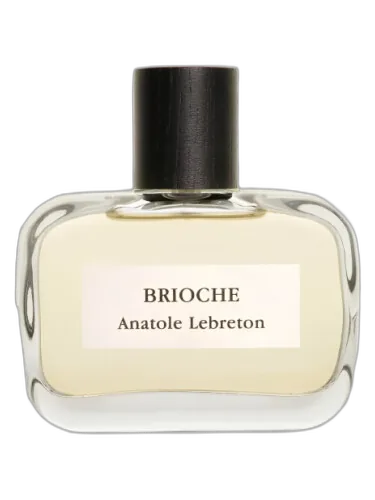
Anatole Lebreton
Brioche Anatole Lebreton
Shared accords: aromatic, floral, fresh spicy

Condé Parfum
Caipi D' Argent Condé Parfum
Shared accords: aromatic, citrus, fresh spicy

Smell Bent
The Spray Tan Incident Smell Bent
Shared accords: aromatic, citrus, fresh spicy

Natura
Amor América Paramela Natura
Shared accords: aromatic, citrus, floral